How to read a cricket scorecard properly, line by line
Every number on a scorecard is answering a question. Once you know which, the card tells you what happened without anyone having to describe it.
A cricket scorecard looks like a spreadsheet and reads like a narrative. Every column is answering a specific question, and once you know which, you can reconstruct a day's play from it without having watched any.
- The batting card tells you how each innings ended, not just how many runs
- The bowling card's four columns are overs, maidens, runs, wickets, in that order
- Extras are a team's discipline, and they can decide a close match
- Fall of wickets is the column that tells you the story
The batting card
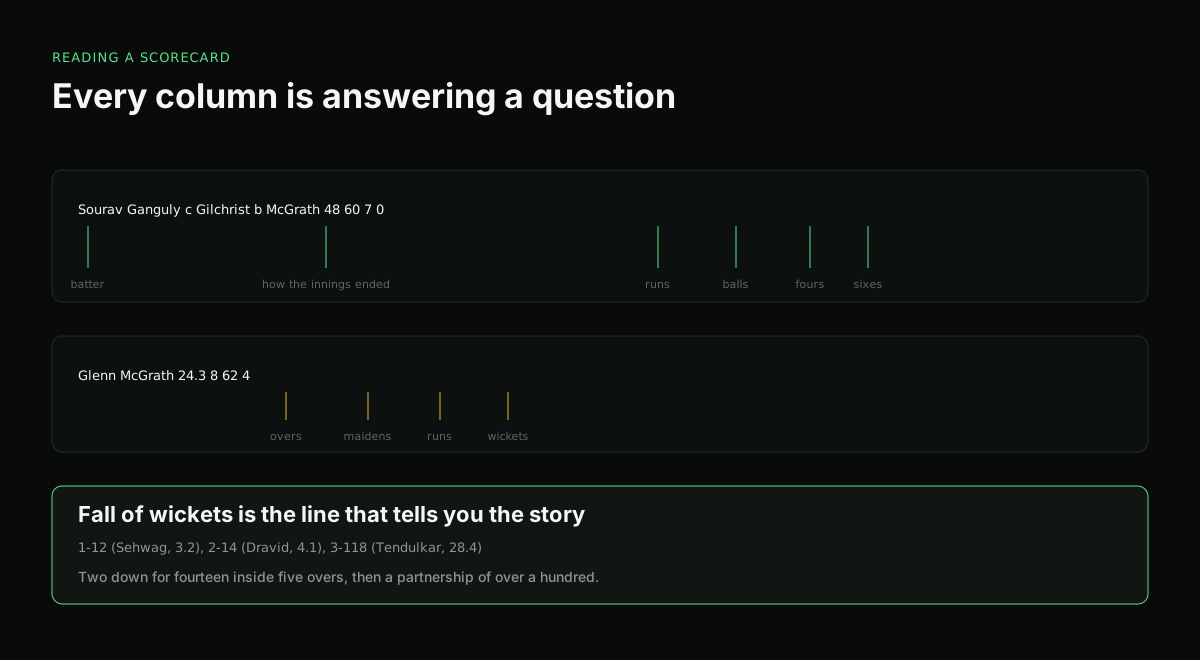
Sourav Ganguly c Gilchrist b McGrath 48 60 7 0
Six pieces of information, in order:
| Field | What it means |
|---|---|
| Name | the batter |
| Dismissal | how the innings ended, and who to credit |
| R | runs scored |
| B | balls faced |
| 4s / 6s | boundaries |
c Gilchrist b McGrath means caught by Gilchrist, bowled by McGrath — the wicket is credited to McGrath, the catch to Gilchrist. lbw b Kumble means Kumble alone gets it. run out (Ponting) credits no bowler at all, which matters for a bowler's figures.
not out at the end of an innings does not mean the batter was undefeated in any moral sense; it means the innings closed around them, and it changes their batting average permanently.
A card reads "st Dhoni b Harbhajan". Who is credited with the wicket?
A stumping is credited to the bowler. Only run outs go uncredited, which is why a fielding side that runs out four batters has taken four wickets and no bowler has taken any.
The bowling card
Glenn McGrath 24.3 8 62 4
Four numbers, always in the same order: overs, maidens, runs, wickets.
24.3 is twenty-four overs and three balls, not 24.3 overs — see why overs are written in base six. Eight maidens from twenty-four overs is a third of them, which is the number that tells you he was hard to score off.
Divide runs by overs and you have the economy rate, which most cards now print as a fifth column.
Extras, and why they matter
Extras (b 4, lb 7, w 9, nb 2) 22
| Code | Meaning | Credited against the bowler? |
|---|---|---|
| b | byes: past the bat and the keeper, nobody touched it | no |
| lb | leg byes: off the body, not the bat | no |
| w | wides | yes |
| nb | no-balls | yes |
Twenty-two extras is a batter in the top six. Nine wides is an over and a half of free deliveries. In a match decided by fewer than twenty runs, the extras column is often the whole explanation.
Fall of wickets, the column that tells the story
1-12 (Sehwag, 3.2), 2-14 (Dravid, 4.1), 3-118 (Tendulkar, 28.4)
Read as: first wicket at 12, second at 14, third at 118. Two down for fourteen inside five overs, then a partnership of over a hundred.
That single line describes a collapse and a recovery more precisely than a paragraph would. If you read one thing on a card, read this.
- The total
- The top score
- Who took the most wickets
- The result
- Fall of wickets
- Balls faced next to the runs
- Maidens, and the economy rate
- The extras column, in a close match
The dismissal line, read properly
The "how out" column is written in a shorthand that carries more information than it looks like it does.
c Smith b Jones means Jones bowled it and Smith caught it. c and b Jones means Jones did both, off his own bowling. c †Smith b Jones — the dagger marks the wicketkeeper, so this is a caught behind. st Smith b Jones is a stumping, which tells you Jones was a spinner or slow enough to bring the keeper up. run out (Smith) names the fielder who threw or broke the stumps, and no bowler is credited at all.
That last one matters when you are reading a bowling card. A side that lost four wickets to run outs has a bowling card that accounts for only six, and the bowling figures underrate what the fielding did.
What the totals line is telling you
The total is written as runs for wickets, and the extra information is in what follows it.
245 all out means ten wickets fell. 245 for 7 declared means a captain chose to stop. 245 for 3 in a chase means the side won with seven wickets in hand — and in a limited-overs match, the overs used matter as much as the wickets, because that is what net run rate is computed from.
The overs figure attached to the total is the honest measure of the innings. 245 in 50 overs and 245 in 34 overs are separated by a gulf that the runs column cannot show you, and it is the first thing to look at before forming any opinion about who batted well.
Reading a bowling card for what the captain was thinking
The order bowlers appear in is the order they were used, and the overs column tells you how much the captain trusted each of them.
Two bowlers with eighteen overs each and a third with four is a captain who found something early and rode it. Five bowlers with eight overs each is a captain without a plan, or a pitch that offered nothing to anyone. A part-time spinner with two overs at the very bottom of the card usually appeared for one reason: to get through an over cheaply before a break, or because a left-hander was on strike and the captain wanted a mismatch.
The maiden column is the one that dates a card. Maidens are common in Test cricket, rare in ODIs and close to extinct in T20, so a T20 card with a maiden on it is recording something unusual — either a very good over or a batting side that had already given up on the chase.
The three things a scorecard cannot tell you
The pitch. 180 all out is a collapse on a flat deck and a good total on a seamer. Nothing on the card distinguishes them, which is why the same score reads completely differently depending on what the other innings did.
Who was bowling at whom. A batter's 70 might have come entirely against the fifth bowler while their partner took the frontline attack. The card shows two scores and hides the arrangement between them.
Dropped catches. The single largest source of runs that should not exist appears nowhere at all. A batter who was put down on 4 and made 120 has the same line on the card as one who batted flawlessly, and the fielding side's figures carry the cost without the explanation.
Putting it together
Take a card, read the fall of wickets, then look at which bowler was operating during the collapse, then check the balls-faced column of whoever survived it. Three glances and you know the shape of the innings.
That is exactly what our Scorecard puzzle asks you to do: it shows a real card with every name removed and asks you to name the match.
- Dismissal notation says who to credit; only run outs credit nobody
- Bowling figures are overs, maidens, runs, wickets, in that order, always
- Extras are a discipline statistic and decide close matches
- Fall of wickets is the line that tells you what actually happened
For the ten ways the dismissal column can read, see every way a batter can be out.