Every kind of wide, and why they differ by format
A delivery that is legal in a Test can be a wide in a T20. The Law is the same; what changes is how strictly it is applied and where the lines are painted.
A wide is a delivery the batter could not reasonably have played from a normal stance. That definition sounds vague because it is, and the vagueness is why the same ball can be a wide in one format and a good ball in another.
- One Law, applied strictly in white-ball cricket and loosely in Tests
- The tramlines on the pitch mark the limit for a batter standing normally
- A batter who moves changes where the line is, in both directions
- A wide costs a run and a delivery, but never brings a free hit
The Law, and the discretion inside it
The Law asks whether the ball passed wide of where the striker was standing and out of reach of a normal cricket stroke. Two words are doing the work: normal and reach.
In a Test, an umpire applies that generously. A bowler is entitled to bowl a line outside off stump for hours; that is a plan, not an error. Leg-side wides are called more readily, because there is no legitimate reason to bowl there.
In white-ball cricket the same Law is applied strictly, and there are painted lines to help.
The tramlines
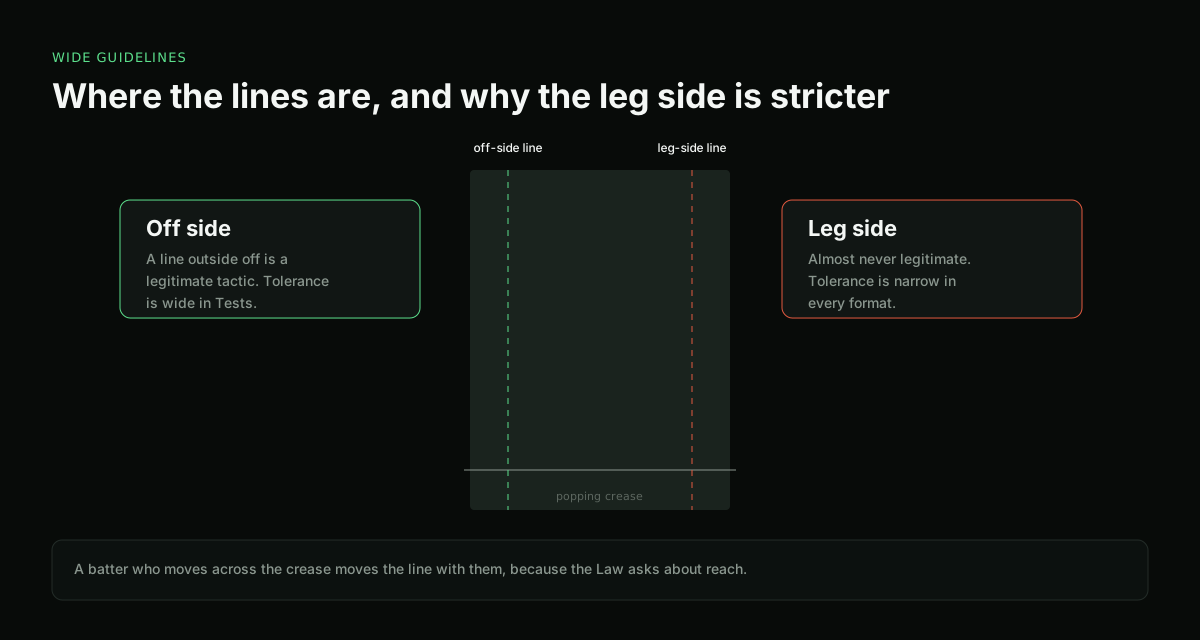
The wide guidelines on a limited-overs pitch are the two extra lines either side of the return crease. A ball passing outside the off-side line, with the batter in a normal position, is a wide.
They are guidelines rather than absolutes, because the Law still asks about reach. If the batter has walked across their stumps, the line effectively moves with them.
A batter shuffles well outside off stump before the ball is bowled. The bowler follows them and the ball passes outside the painted line. What should the umpire call?
The Law asks whether the ball was out of reach of the batter where they were standing. Moving across changes where reach is. Following a moving batter is how bowlers avoid being punished for it.
Leg side is stricter than off side, everywhere
Any ball down the leg side that the batter cannot play is a wide in every format, and the tolerance is far narrower than on the off side.
The asymmetry is deliberate. Off-side lines are a legitimate tactic; leg-side lines are almost always a mistake, and cricket has spent a century discouraging them. It is the same instinct that produced the leg-side fielding limit after Bodyline.
A ball down the leg side that the batter gets a touch on is not a wide. This is why keepers appeal so enthusiastically for the faintest glove.
Format by format
| Test | ODI | T20 | |
|---|---|---|---|
| Off-side tolerance | wide | strict, tramlines apply | strictest |
| Leg-side tolerance | strict | very strict | very strict |
| Bouncer above head | wide, usually | wide | wide |
| Effect on the over | one run, one ball | one run, one ball | one run, one ball |
| Free hit | no | no | no |
That last row surprises people. A no-ball usually brings a free hit in white-ball cricket. A wide never does, however badly it was bowled.
The bouncer that becomes a wide
A short ball passing above the batter's head, when they are standing upright, is called a wide in limited-overs cricket rather than a no-ball. Above shoulder height but reachable is usually neither.
The distinction depends on the competition's playing conditions, which is why commentators sometimes disagree with a call that is correct under that tournament's rules and would be wrong under another's.
The rule that saved bowlers from the reverse sweep
Until recently a batter could ruin a good delivery by moving. Shuffle two feet across to the off side as the bowler ran in, let a perfectly good ball pass where you used to be standing, and it was a wide down the leg side — a run and a rebowl for a ball the bowler had put exactly where they intended.
The Laws now judge the wide against where the batter was standing when the bowler began their run-up or bowling action, as well as where they ended up. If the ball would have been within reach at the original position, it is not a wide, however far the batter has since travelled.
This is one of the few law changes in the last twenty years that moved something back towards the bowler, and it did it without adding a judgement call: the umpire already watches the batter's position at that moment, because it is the same moment they check the front foot.
The batter keeps one protection. Movement before the bowler starts is allowed and counts as the original position — you can take guard two feet outside leg if you like. What you cannot do is start there, wait, and then move once the ball is on its way.
Wides on a free hit, and other combinations
A wide on a free hit is still a wide: a run, a rebowl, and the free hit continues. The same is true of a wide off a no-ball, which costs two runs — one for each — and is rebowled once.
The combinations get counted in a specific order and it is worth knowing which extras attach to whom.
| Ball | Runs to the batting side | Charged to the bowler | Rebowled |
|---|---|---|---|
| Wide | 1, plus any run or boundary from it | yes, all of it | yes |
| No-ball | 1, plus runs off the bat | yes, all of it | yes |
| Bye | as run | no | no |
| Leg bye | as run | no | no |
Byes and leg byes are the pair people mix up with wides. Both are runs the batting side takes off a legal delivery that the bat did not hit, and neither is charged to the bowler. A ball that goes through to the keeper and is run is a bye. A ball that hits the pad and is run is a leg bye — provided the batter tried to play it or to avoid it, which is a genuine judgement the umpire has to make.
What it did to death bowling
The narrow white-ball tramlines changed how the last four overs are bowled, and not in the direction the lawmakers expected.
A yorker missed by six inches on the off side used to be a dot ball to a beaten batter. Now it is a wide: a run, and the ball again, to a batter who has just had a look at the bowler's best delivery. The margin for error on the most valuable ball in the format is smaller than the margin for error on the shot that answers it.
The response has been the wide yorker aimed inside the line rather than outside it, the slower bouncer, and the field set squarer. It has also produced a generation of bowlers who would rather be hit for four than concede a wide, because a wide gives the batter another attempt and a boundary does not.
How a wide becomes five runs
The ball is still live. If it beats the keeper and runs to the boundary, that is one for the wide plus four, recorded as five wides.
Batters can also run on a wide, and can be stumped or run out on one. A batter charging down the pitch, missing, and being stumped off a wide is dismissed — the wide is not a get-out clause.
- One run, one extra delivery
- No free hit, ever
- Batter can be stumped or run out
- Judged on reach from a normal stance
- One run, one extra delivery
- Usually a free hit in white-ball cricket
- Batter can only be run out
- Judged on a fixed rule: foot, height, bounce, placement
- One Law, applied strictly in white-ball cricket and generously in Tests
- The tramlines are guidelines; a batter who moves moves the line
- Leg side is stricter than off side in every format, on purpose
- A wide never brings a free hit, and a batter can still be stumped off one
For the other extra, see what counts as a no-ball. For how both appear on a scorecard, see how to read a scorecard.