What counts as a no-ball, and the five ways to bowl one
The front foot is the famous one and the least interesting. Height, bounce, fielding positions and the ball reaching the batter on the full all qualify.
Most people think a no-ball is a front-foot infringement. That is one of at least five ways to bowl one, and in modern cricket the others decide more matches.
- Front foot, height, bounce, fielding placement and delivery method all qualify
- Every no-ball costs a run, adds a delivery, and cannot be a legal dismissal
- In white-ball cricket most no-balls now bring a free hit as well
- The front-foot call has been moved to the third umpire in many competitions
The five categories
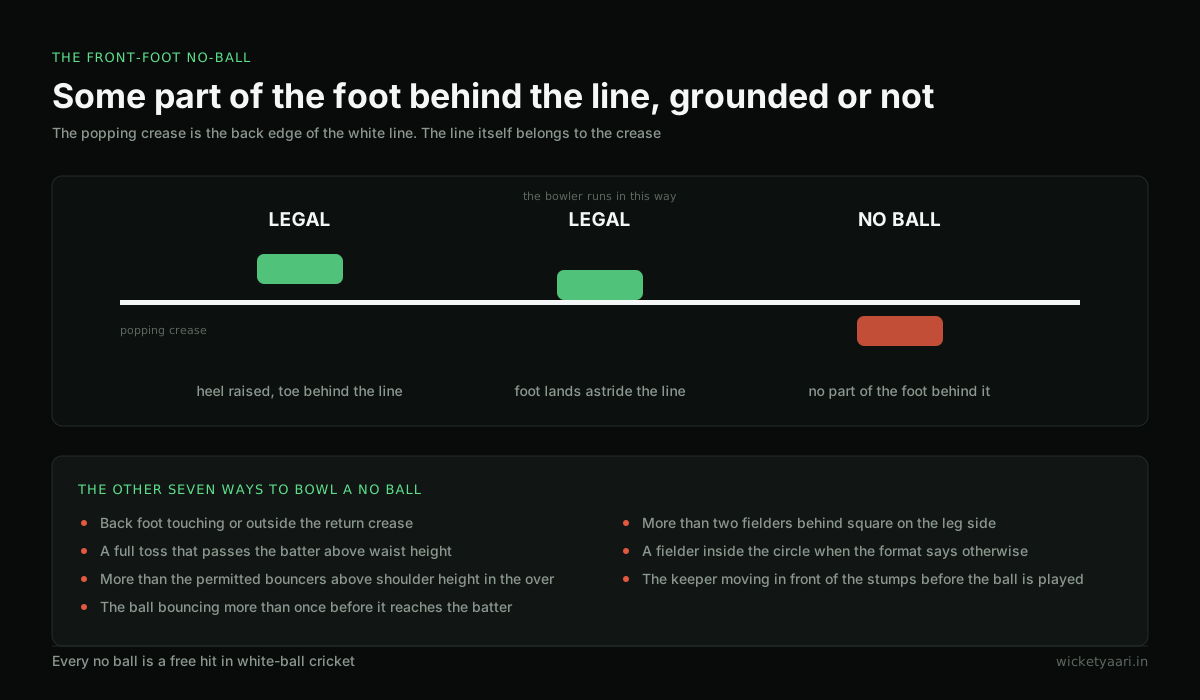
One: the front foot. Some part of the bowler's front foot must land behind the popping crease. It does not have to be grounded behind it — the heel may be in the air beyond the line — but something must be behind it.
Two: height. A full-pitched ball passing above the batter's waist when they are standing upright at the crease is a no-ball. This one is judged on where the batter was, not where they ended up after ducking.
Three: bounce. Too many short deliveries passing above shoulder or head height, depending on format, becomes a no-ball rather than a wide. The limit per over varies by competition.
Four: fielding placement. More than two fielders behind square on the leg side is a no-ball. That limit exists because of Bodyline and nothing else. Fielders inside the circle during a powerplay are the same category.
Five: the delivery itself. Throwing rather than bowling, an underarm delivery, or the ball bouncing more than once before reaching the batter.
A bowler's front foot lands with the heel raised, entirely beyond the popping crease, but the toe is behind the line. What is the call?
Some part of the front foot must be behind the popping crease. It does not have to be grounded. A raised heel behind the line is legal, which is why bowlers land on their toes.
The height rule, and why it was rewritten
The waist-height no-ball used to depend on who was bowling. A full toss above waist height was a no-ball from a fast bowler; from a slow bowler you needed it above shoulder height before anything was called. Umpires were therefore making a judgement about pace before they could make a judgement about height, in real time, on a ball that had already been hit.
The Laws now treat every full toss the same: above the waist, standing upright at the crease, is a no-ball whatever the bowler's pace. It is a rare example of a rule change that made an umpire's job simpler rather than harder.
Two details still catch people out. The measurement is taken at the crease, not where the batter actually was — advance down the wicket to a waist-high full toss and it is your own doing, not a no-ball. And it is the batter's waist, so a delivery can be legal to one batter and a no-ball to their partner, in the same over, at exactly the same height.
Bouncers, and why the limit keeps moving
Short deliveries passing above shoulder height are not illegal. They are counted, and the count is what makes them a no-ball.
The permitted number per over has changed more than once, and it differs by format and by competition. The direction of travel has been upward — the game decided that one bouncer an over made the short ball a formality rather than a weapon — but the current number for any given match is in that competition's playing conditions, and a post written last year is not a reliable place to learn it.
What has not changed is the shape of the rule. Exceed the count and it is a no-ball, with everything a no-ball brings. Bowl a beamer, above waist height on the full, and in most conditions the bowler can be removed from the attack for the rest of the innings after a warning.
What it does to the bowler's figures
Every run off a no-ball is charged to the bowler, including the penalty run itself. A no-ball that is then hit for six costs seven, all of it on the bowler's card, and the delivery does not count towards the over.
This is where the death-overs arithmetic gets ugly. A no-ball hit for four, followed by a free hit hit for six, is eleven runs from what should have been one delivery, and the over is still six balls long. Bowlers who overstep in the nineteenth over of a T20 are not being careless about a run; they are handing over an extra ball at a moment when a ball is worth about ten.
Why bowlers overstep at all
Almost never on purpose, and almost always for one of three reasons.
Fatigue. The stride shortens as the legs go, and the bowler compensates by starting fractionally further forward. Late spells produce more no-balls than opening ones.
A changed run-up. New ground, different soil, wet footholes, or a bowler who has been working on their action. The run-up is calibrated to a mark and the mark is not portable.
Trying for extra pace. The chase for another two kilometres an hour lengthens the delivery stride, and the front foot lands further forward than the bowler has ever practised.
Which is why coaches treat repeated no-balls as an early warning rather than a discipline problem: it usually means something in the action has changed and nobody has noticed yet.
What a no-ball costs
Three things, and the third is the one that matters.
A run. Added to the batting side as an extra, credited to no batter.
A delivery. The over is extended; the ball must be bowled again.
The dismissal. A batter cannot be out bowled, caught, lbw, stumped or hit wicket off a no-ball. They can still be run out. This is why a bowler who takes a wicket and hears the call has taken nothing.
The free hit
In most white-ball competitions the delivery after a no-ball is a free hit: the batter cannot be dismissed on it except by run out, and the field may not be changed unless the strike has changed.
The effect on the game is larger than the single run. A no-ball in the death overs of a T20 hands the batting side one guaranteed swing with no consequence, and the expected value of that swing is far more than one run. It is why a no-ball at the death is treated as one of the worst things a bowler can do.
- One run
- One extra delivery
- The wicket, if there was one
- One run
- One extra delivery
- The wicket, if there was one
- A free hit, worth roughly another two runs on average
Why the call moved upstairs
Front-foot no-balls were historically called live by the standing umpire, who had to watch the foot land and then look up in time to judge the delivery. That is genuinely difficult and the miss rate was real.
Several competitions now have the third umpire watching every front foot and calling it back within seconds. The on-field umpire is freed to watch the batter's end, which is where the lbw and caught-behind decisions are made.
The trade-off is a short delay and the occasional wicket that is celebrated and then withdrawn.
The one people get wrong
A ball that pitches outside the pitch entirely, or that goes so far down the leg side the batter cannot reach it, is a wide, not a no-ball. Only the five categories above make a no-ball. The distinction matters because a wide does not bring a free hit and a no-ball usually does.
- Five categories, and the front foot is the least interesting
- Costs a run, a delivery, and cancels five of the ten dismissals
- A free hit in white-ball cricket is worth more than the run itself
- The leg-side fielding limit exists because of Bodyline
For the sibling extra, see every kind of wide, and for the full list of dismissals a no-ball cancels, see every way a batter can be out.