Every way a batter can be out, including the ones nobody sees
Ten methods exist in the Laws. Four account for almost everything, three are rare, and three have been given so seldom they are trivia.
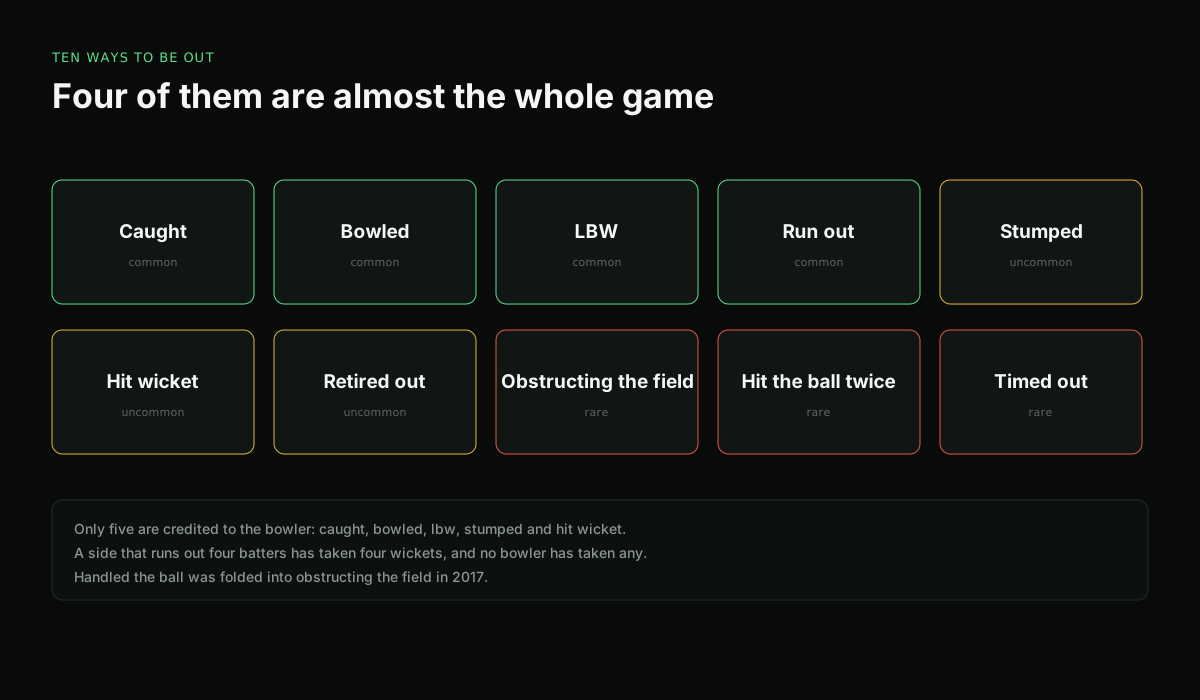
There are ten ways to be dismissed in cricket. Four of them account for nearly every wicket ever taken. The rest range from occasional to almost mythical, and one of them was quietly deleted in 2017.
- Caught, bowled, lbw and run out are almost the entire list in practice
- Stumped and hit wicket are uncommon but ordinary
- Obstructing the field, hit the ball twice and timed out are effectively trivia
- Handled the ball no longer exists as a separate method
The four that matter
Caught. The most common dismissal in every format. The ball must come off the bat or the glove holding the bat, and be taken cleanly before it touches the ground.
Bowled. The ball hits the stumps and dislodges a bail. It does not matter what it hit on the way, including the batter, as long as it did not touch another fielder.
Leg before wicket. Four questions in a fixed order, covered properly in how lbw actually works.
Run out. The wicket is broken while no batter is grounded behind the crease. The only dismissal that can happen to a batter who is not facing.
The three that are uncommon but normal
Stumped. The keeper breaks the stumps while the batter is out of the crease and not attempting a run. It is a run out in mechanism and a different dismissal in the scorebook, credited to the bowler.
Hit wicket. The batter disturbs the stumps with bat, body or equipment while playing or setting off for a run. Falling on your own stumps counts. A helmet falling onto them counts.
Retired out. A batter who leaves the field without an umpire's permission and without injury is out. Distinct from retired hurt, where the batter may return. It is rare, and it has been used tactically in T20.
A batter's helmet falls off and dislodges a bail while they are playing a shot. What is the decision?
Hit wicket covers bat, body and equipment. A helmet, a glove or a boot dislodging a bail while playing the ball or setting off for a run is a dismissal.
The three that are effectively trivia
Obstructing the field. Deliberately preventing a fielder from making a play. Since 2017 this also absorbs the old "handled the ball" method: deliberately using a hand to stop the ball now counts as obstruction rather than its own dismissal.
Hit the ball twice. Deliberately striking the ball a second time for any reason other than defending the stumps. It has been given in Test cricket about as often as a team has followed on and won.
Timed out. A new batter who is not ready to face within the allotted time after a wicket falls. It went uncalled in international cricket for over a century and then happened in a World Cup, which is how most people found out it existed.
- Caught
- Bowled
- Leg before wicket
- Stumped
- Hit wicket
- Run out
- Retired out
- Obstructing the field
- Hit the ball twice
- Timed out
That column matters more than it looks. A bowler's average and strike rate count only the left-hand column, which is why a fielding side that runs out four batters has taken four wickets and no bowler has taken any.
Who gets the wicket, and who gets nothing
Five of the ten are credited to the bowler. Five are not, and the split is not about difficulty — it is about whether the bowler caused it.
| Credited to the bowler | Credited to nobody |
|---|---|
| Bowled | Run out |
| Caught | Stumped is credited, but obstructing is not |
| Leg before wicket | Hit the ball twice |
| Stumped | Timed out |
| Hit wicket | Retired out |
A bowler who beats the bat, sees the batter wander, and watches the keeper break the stumps gets a wicket. A bowler who beats the bat, sees the batter set off for a suicidal single, and watches mid-on hit the stumps gets nothing at all. The same delivery, the same confusion, two different scorecards.
This matters more than it sounds. Bowling averages, strike rates and the record boards are all built on credited wickets, so a bowler whose economy forces run outs at the other end is doing work that never appears in their figures.
Every one of them needs an appeal
An umpire cannot give a batter out on their own initiative. Not for the most obvious bowled in history — although in practice a batter walking off after their stumps are flattened saves everybody the formality.
The appeal is what asks the question, and until it is asked the umpire has no question in front of them. This is why you occasionally see a fielding side realise too late that nobody appealed, and why a captain withdrawing an appeal — which they are allowed to do, with the umpire's consent — is treated as a significant sporting gesture rather than a technicality.
It is also why "howzat" survives. It is not a shout of celebration. It is literally the question: how is that?
Timed out, which happened for real
For most of cricket's history, timed out was a rule that existed and never occurred at international level. An incoming batter has a set time — three minutes in the Laws, two in many playing conditions — to be ready to face after the previous wicket falls, and everybody simply was.
Then in the 2023 World Cup, Angelo Mathews arrived at the crease within the time but discovered his helmet strap was broken, went to change it, and was given out timed out on appeal by Bangladesh. It was the first timed out in international cricket of any format.
The reaction told you more about cricket than the dismissal did. Nothing illegal had happened. The appeal was valid, the umpires had no discretion once it was made, and the argument that followed was entirely about whether it should have been made at all — which is a question the Laws deliberately do not answer.
Retired out is not retired hurt
These are different things and only one of them is a dismissal.
Retired hurt means a batter left the field injured or ill. They are not out, their innings is suspended, and they may return when a wicket falls or at the end of the innings. The scorecard says "retired not out".
Retired out means a batter chose to leave without the umpire's consent, or left for a reason other than injury or illness. That is a dismissal. It counts towards their average. It is credited to no bowler.
For a century it was almost unheard of as a tactic. T20 changed that: a set batter who cannot accelerate is worth less than a fresh hitter with four overs left, and sides have started walking players off deliberately. It is legal, it is rational, and it still causes an argument every single time.
What "the ball is dead" changes
None of these can happen once the ball is dead. The ball becomes dead when it finally settles with the bowler or keeper, when a boundary is scored, when a batter is dismissed, or when the umpire calls over.
This is why a fielder who breaks the stumps after the ball has settled has done nothing, and why the timing of a run-out appeal is occasionally the entire argument.
The one that was removed
Handled the ball existed as a separate method until the 2017 rewrite of the Laws. It was folded into obstructing the field because the two overlapped almost completely: deliberately stopping the ball with a hand is obstruction by any reasonable reading.
Seven batters were ever given out handled the ball in Test cricket. The method is gone; their scorecards still say it.
- Ten methods, four of which are almost the whole game
- Only five are credited to a bowler, which is why run outs do not help an average
- Nothing can happen once the ball is dead
- Handled the ball was absorbed into obstructing the field in 2017
If you want to see how the rare ones sit in a real scorecard, the match pages show full dismissal columns, and today's Scorecard puzzle asks you to name a match from one.