Home advantage in cricket, measured rather than assumed
Home sides win around half of all Test matches and lose about a quarter, and the gap grew through the 2010s while it shrank in almost every other sport.
Everybody knows home advantage is real. What is less widely known is how large it is in cricket compared with other sports, and that it has been growing at exactly the point when travel, technology and coaching should have been shrinking it.
- Home sides win around half of Test matches and lose roughly a quarter
- The advantage is largest in Tests and smallest in T20
- Pitch preparation is the single biggest component and it is entirely legal
- Home advantage in Tests grew through the 2010s, against the trend in other sports
The size of it
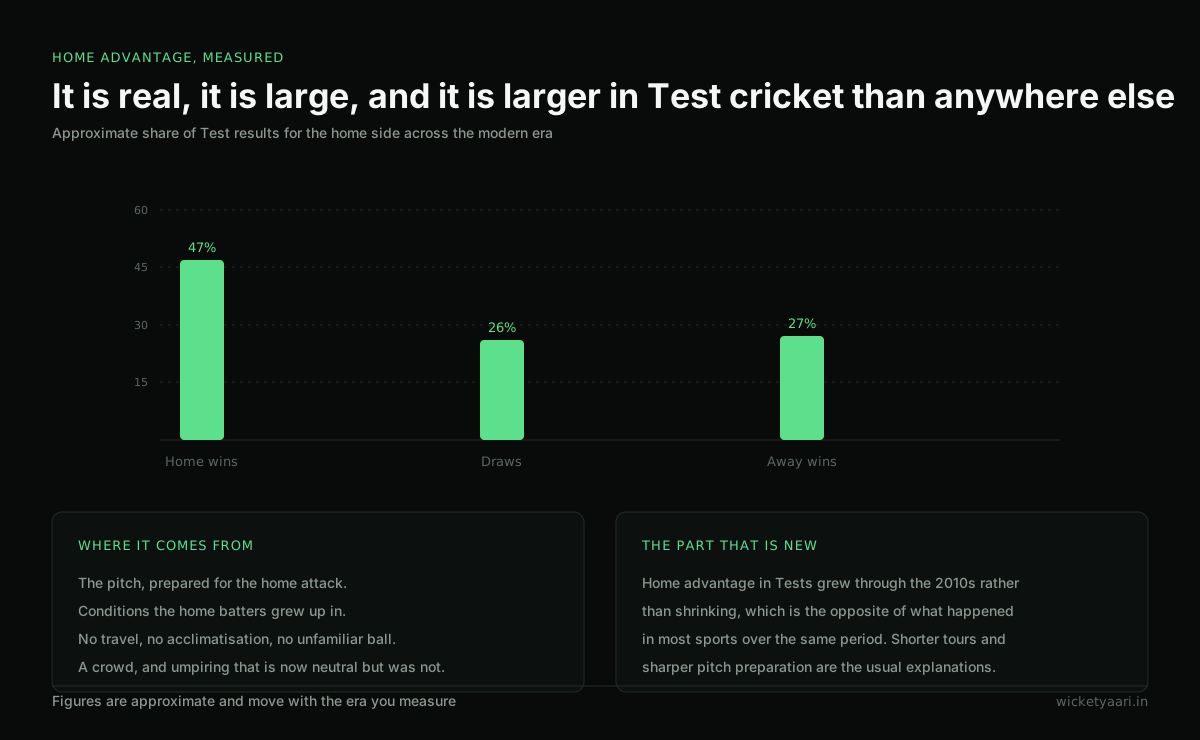
Across the modern era of Test cricket, home sides win something close to half of all matches, away sides win a little over a quarter, and the rest are drawn. The precise figures depend on the decade you pick and how you treat neutral venues, and any source quoting them to a decimal place is over-claiming.
The important part is the ratio rather than the number. A home side is winning roughly twice as often as a visiting one. In football, home advantage in the major European leagues has fallen towards something closer to a 45-30 split over the same period. Cricket went the other way.
Where it comes from
Five components, in rough order of size.
The pitch. Home boards prepare surfaces that suit their attack, which is legal and unregulated except for extremes. A side with two front-line spinners asks for a dry surface. A side with four fast bowlers asks for grass and moisture. This is the largest single factor and nothing in the Laws restrains it.
Familiarity with conditions. A batter who has faced the local ball, in the local light, on the local bounce since they were twelve has a set of instincts a visitor is building from scratch in three weeks.
Travel and acclimatisation. Modern tours are shorter than they were. A side arriving eight days before the first Test has one warm-up match rather than three, which removes almost the entire adjustment period.
The crowd. Real but smaller than commonly assumed, and its main effect appears to be on marginal decisions rather than on player performance.
Umpiring, which used to be a significant component and has been mostly neutralised. Neutral officials and the review system removed the largest source of home bias in the game, which makes the growth of the advantage since even harder to explain.
Why it grew
Three explanations, and the honest answer is probably all three at once.
Tours got shorter. A visiting side in 1980 played four or five first-class warm-up matches before the first Test. A visiting side now often plays one, or a two-day match against a scratch eleven. There is no longer time to learn the conditions before they start counting.
Pitch preparation got less subtle. Boards worked out that the marginal value of a home Test win rose as the world championship structures made results matter more, and prepared accordingly. Surfaces that turn from the first hour, or seam for two days, are now common and are within the rules.
Squads specialised. A side built to win at home is not the same side as one built to win anywhere, and boards facing a full home season and a short away tour optimise for the season.
| Component | Direction since 1990 | Why |
|---|---|---|
| Umpiring bias | almost eliminated | neutral officials, then DRS |
| Travel fatigue | reduced | faster flights, better recovery |
| Preparation time | sharply reduced | shorter tours, congested calendars |
| Pitch tailoring | increased | results matter more, rules unchanged |
Why it is smaller in the short formats
The advantage shrinks as the format shortens, and the reason is time.
A Test gives a pitch five days to express whatever the groundsman built into it. A surface that turns square on day four is a weapon that simply does not exist in a match lasting three hours. Twenty-over cricket is played almost entirely on the flattest phase of any surface, which compresses the difference between grounds.
The second reason is that franchise cricket scrambled familiarity. A player in a global T20 circuit has played at most major grounds, often for the home team, and "unfamiliar conditions" has stopped meaning very much when half the visiting side has a contract at that ground in another competition.
What it does to careers
Home advantage distorts the record books in a way nobody adjusts for.
A batter who plays two-thirds of their Tests at home, on surfaces prepared for their own attack, will finish with a better average than an equally good player whose board schedules more away cricket. A spinner from a country that prepares turning pitches will take more wickets than an equally skilled one who does not, at a better average, with no dishonesty involved anywhere.
This is why the home-and-away split is the first thing a serious argument about a player reaches for. It is not a gotcha — a career average of 50 built from 58 at home and 41 away is a genuinely different career from one built from 51 and 49, and both are legitimate. The split says what kind of player they were, not whether they were good.
Neutral umpires and ball tracking removed most of the umpiring bias that favoured home sides. What happened to home advantage in Test cricket afterwards?
Home advantage in Tests rose through the 2010s despite umpiring bias being largely removed, which points to pitch preparation and shorter tours as the dominant factors rather than officiating.
There is one further distortion worth naming. Because home boards schedule most of their own fixtures, the number of home Tests a player gets is not evenly distributed across countries, and it is not stable across eras either. Two contemporaries with identical ability can finish with visibly different records purely because one of their boards arranged more home cricket than the other, and no record book carries a column for that.
What could be done about it
Nothing that anybody has agreed to, and the proposals are worth knowing because they recur.
Regulating pitches would require a definition of an unacceptable surface that goes beyond safety, and no such definition has ever survived a committee. A pitch that turns is not a bad pitch; it is a pitch that suits somebody.
Mandating warm-up fixtures is the most practical idea and is blocked by the calendar. There is no room for a three-week tour that used to take six.
Neutral venues would fix it and would destroy the economics of home Test cricket, which is what funds most boards.
The honest position is that cricket has decided home advantage is a feature. Home conditions are part of what makes an away series win worth talking about, and a sport that eliminated it would lose the thing that makes touring mean anything.
- Umpiring bias, via neutral officials and DRS
- Travel fatigue, via better scheduling of flights
- Ball inconsistency, via standardised suppliers
- Pitch preparation, which is unregulated
- Preparation time, which has been cut
- Familiarity, which cannot be legislated
- Home sides win roughly twice as often as visitors in Tests
- The pitch is the largest component, and preparing it is entirely legal
- The advantage grew even after umpiring bias was removed
- It is smallest in T20, because three hours is not long enough for a surface to matter
The short version
Home advantage in cricket is larger than in most sports, is dominated by pitch preparation rather than crowds or officiating, and has grown rather than shrunk. It is not a scandal — it is a design decision the sport has never quite made explicit.
For what a groundsman actually controls, see how a pitch is prepared and what green means, and for what the captain does with it, the toss and how much it is actually worth.