Waqar Younis by the numbers, and the yorker that broke toes
373 Test wickets at 23.56 with a strike rate of 43.4, taken almost entirely by bowling fast, full and straight at the base of the stumps.
Waqar Younis took a Test wicket every 43.4 balls, which is the second-best strike rate of anybody with 300 or more, and he did it with essentially one delivery: a reverse swinging yorker at pace.
- 373 Test wickets at 23.56, with a strike rate of 43.4
- 416 one-day wickets, and 13 five-wicket hauls in that format
- The method was reverse swing at the base of the stumps, at 145 kilometres an hour
- He and Wasim Akram are the most effective new-ball pair Pakistan has had
The record
| Format | Matches | Wickets | Average | Strike rate |
|---|---|---|---|---|
| Tests | 87 | 373 | 23.56 | 43.4 |
| ODIs | 262 | 416 | 23.84 | 30.5 |
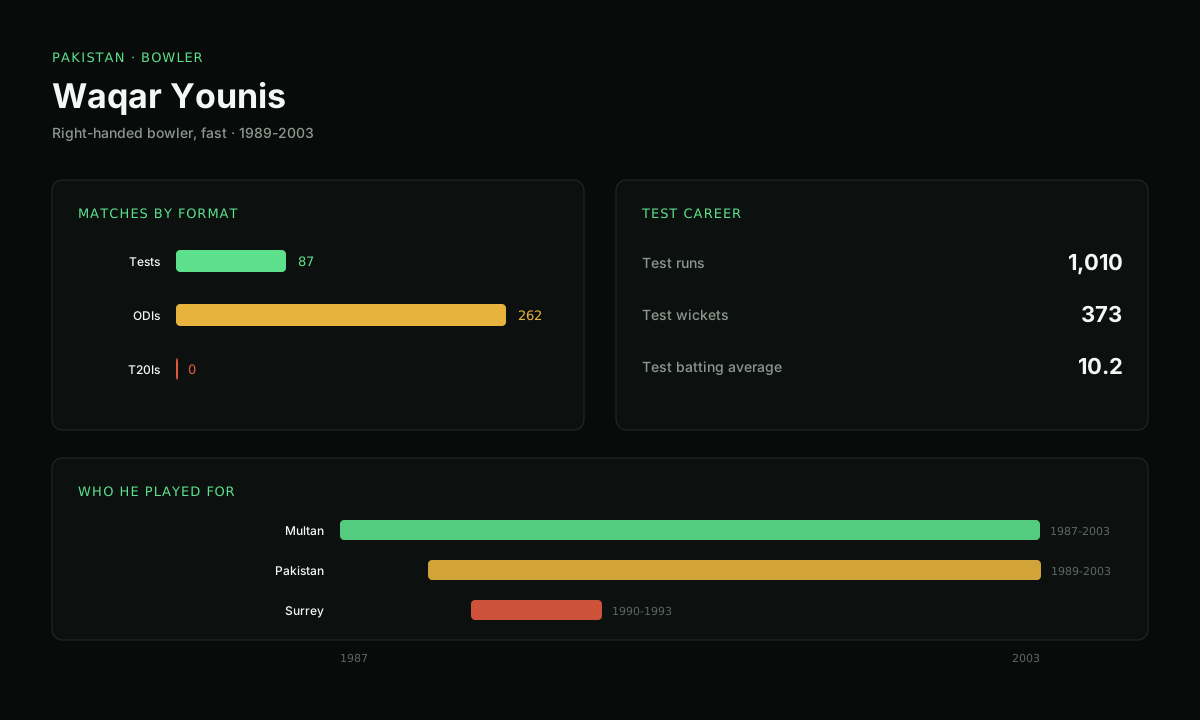
The full record is on his player page.
The strike rate
43.4 balls per wicket is second only to Dale Steyn's 42.3 among bowlers with 300 or more Test wickets, and it is the number that describes what he was.
A wicket every seven overs means a bowler who is not holding an end. He attacked from the first ball of every spell, bowled full, and accepted the boundaries that came with it. The economy rate of around 3.25 is high for a Test bowler of his standing and it is the price of the strike rate.
That trade — expensive, and constantly threatening — is unusual in Test cricket and is the shape of a bowler built for shorter formats who happened to be devastating in the long one as well.
The delivery
He bowled one ball better than anybody: a full-length delivery, at around 145 kilometres an hour, swinging in late to the right-hander with an old ball.
Reverse swing at that pace at that length is close to unplayable. The batter has no time to adjust, the ball is moving in the opposite direction from what the seam suggests, and it arrives at the base of the stumps or the front foot.
A striking proportion of his wickets were bowled or lbw, which is the signature of the method: batters were not edging him to slip, they were being beaten by a ball that went under the bat.
He also broke a substantial number of toes and feet, which is not a statistic anybody records and which several of his contemporaries mention unprompted.
The partnership with Akram
They opened the bowling together for a decade and are one of the two or three most effective new-ball pairs in the sport's history.
The two of them were complementary rather than similar. Akram was left-arm, more varied, and could swing it both ways; Waqar was right-arm, faster, and did one thing better than anybody has done it.
The combination meant a batting side that survived Akram's variations faced Waqar's yorker, and a side that got through both had a forty-over-old ball reversing at both ends. Pakistan's best Test period is exactly the period both were fit.
The one-day record
416 wickets from 262 matches, with 13 five-wicket hauls, which is the record for the format.
The white-ball version of his method was even more effective. A yorker at 145 at the death, with a ball that reverses under lights, is the single hardest delivery to score off in limited-overs cricket, and he bowled it for fifteen years.
He was part of the 1992 World Cup squad but missed the tournament through a stress fracture in his back, which is one of the more significant absences from a winning campaign anybody has had.
The injuries
Stress fractures in the back, twice, which is the classic fast bowler's injury and is directly related to how he bowled.
A very fast arm, a front-on action and a full length produce enormous forces through the lower back. He missed extended periods in the early 1990s and again later, and the pace dropped noticeably in the second half of his career.
The wickets kept coming at a slower pace with more skill, which is the standard trajectory, and the strike rate of the later years is much closer to normal.
Country and role narrow it to a small group. The wickets column separates him from his opening partner.
Waqar Younis — Reverse swing at pace, and toe-crushing yorkers that changed how fast bowling was taught. Full record
The record against the best
His figures against the strong sides of his era — Australia, West Indies, South Africa — are close to his overall record, which is not true of every bowler with a similar strike rate.
The reason is that his method did not depend on conditions in the way swing or seam does. Reverse swing needs a dry, abrasive outfield, which Pakistan and the subcontinent provide reliably, and pace at the stumps works anywhere. His away record in Australia and England is good rather than exceptional and it does not collapse the way some subcontinental bowlers' does.
The captaincy and after
He captained Pakistan in 17 Tests and later coached them across two spells, and both periods coincided with the governance turbulence that has been constant in Pakistani cricket.
His career also ran alongside the ball-tampering accusations of the 1990s, which attached to the whole Pakistani attack because nobody outside the country understood reverse swing yet. He was suspended for one one-day international in 2000 for altering the condition of the ball, which remains the only sanction against him.
The wider argument is covered in reverse swing explained.
- A wicket every 43 balls
- The best reverse-swinging yorker anybody bowled
- Genuine pace, front-on
- 416 one-day wickets
- An economy rate around 3.25
- A method that depended on an old ball
- Two stress fractures in the back
- A missed World Cup in 1992 through injury
The debut, and how he was found
He was picked for Pakistan at 17 having played almost no first-class cricket, after Imran Khan saw him bowling on television and asked for him to be included in a squad.
That is the second time Imran did exactly that — the first being Wasim Akram, found in a net session — and between them the two discoveries gave Pakistan the best new-ball pair in its history within four years of each other.
Neither came through a development system. Both were identified by one person who happened to be the captain and who had the authority to pick whoever he wanted, which is a route into international cricket that no longer exists anywhere.
Why the average is what it is
23.56 is very good and it is higher than several bowlers with worse strike rates, which looks contradictory and is not.
A bowler who takes a wicket every 43 balls while conceding 3.25 an over will average 23.56, because the arithmetic requires it: average is economy multiplied by strike rate divided by six. He was expensive and he took wickets very quickly, and the average is what those two numbers produce together.
The identity is explained in bowling economy rate explained, and Waqar is one of the clearest examples of it in the record books.
Where he sits in our dataset
Difficulty tier 1 on the player list. Pakistan, bowler, 1989 to 2003 puts him next to Akram, and the Tests and wickets columns separate the two.
- 373 Test wickets at 23.56, at a wicket every 43 balls
- 416 one-day wickets and 13 five-wicket hauls, both records for the format
- One delivery, bowled better than anybody has bowled it
- Two stress fractures in the back, and a missed World Cup in 1992
The short version
He bowled the fastest reverse-swinging yorker in the history of the game and took a wicket every seven overs doing it. The economy rate is the price and the strike rate is the record.
For the bowler at the other end, see Wasim Akram by the numbers, and for the delivery itself, the yorker and why it is hard to bowl.