Wasim Akram by the numbers, and what he did with an old ball
414 Test wickets and 502 in one-day cricket, from a left-armer off a twelve-pace run who could swing a forty-over-old ball both ways at 145 kilometres an hour.
Wasim Akram took more one-day international wickets than anybody had before him and 414 in Tests, and he did it with a skill that most of the cricket world did not believe existed until he had been using it for a decade.
- 414 Test wickets at 23.62, and 502 one-day wickets
- Left-arm fast, off a short run, with an unusually late and quick arm action
- The foremost exponent of reverse swing, before it was widely understood
- 257 not out in a Test match, batting at number eight
The record
| Format | Matches | Wickets | Average | Span |
|---|---|---|---|---|
| Tests | 104 | 414 | 23.62 | 1985-2002 |
| ODIs | 356 | 502 | 23.52 | 1984-2003 |
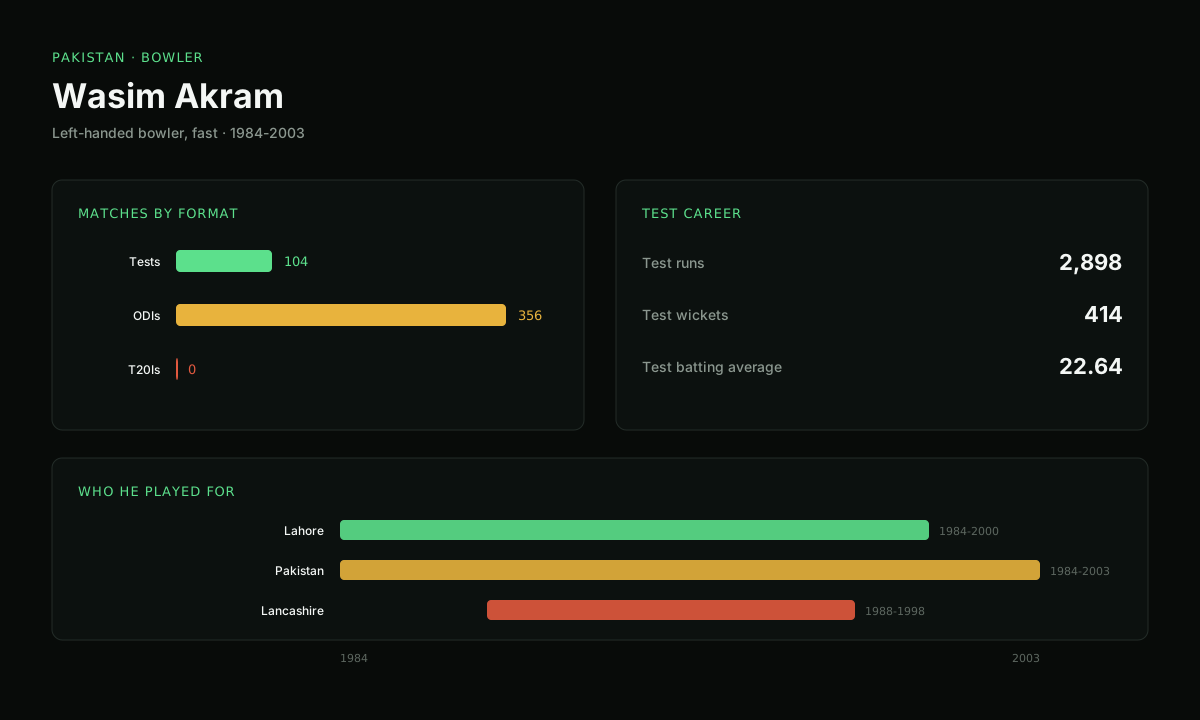
The full record is on his player page.
The action
He bowled left-arm fast off a run-up of about a dozen paces, which is short for a bowler operating in the mid-140s.
The pace came from a very fast arm and a whippy, late release rather than from momentum. That has two consequences: it is difficult for a batter to pick up the ball early, because the arm arrives quickly out of a compact action, and it is extremely difficult to read which way the ball is going to move.
The short run also meant he could bowl long spells and bowl them at the end of a day. A fast bowler who does not need a thirty-metre approach is a fast bowler a captain can use in short bursts all afternoon.
Reverse swing
He is the bowler most associated with reverse swing and, with Waqar Younis, the reason the rest of the cricketing world eventually learned what it was.
The skill is bowling an old, scuffed ball so that it swings towards the shiny side — the opposite direction from conventional swing, and therefore the opposite direction from what the seam position suggests. At high pace, late, into a batter's toes, it is close to unplayable.
For most of the 1980s and early 1990s it was not understood outside Pakistan, and the assumption in England and Australia was that anything a forty-over-old ball did must involve tampering. That argument ran for years and was resolved in the end by science and by other sides learning the skill.
The full mechanism is covered in reverse swing explained.
Both ways, at pace, with an old ball
The specific difficulty for a batter was that he could do it in either direction without any change in the action.
A left-armer bowling over the wicket to a right-hander already has an awkward angle. Add a ball that could swing in to the pads or away towards the slips, at 145 kilometres an hour, delivered late, at a full length, and the batter's decision becomes a guess.
His two most productive deliveries were the inswinging yorker and the one that went the other way from the same release. The second is why the first worked.
The 1992 World Cup final
Two deliveries in the final at Melbourne are the ones most often replayed.
Allan Lamb was bowled by a ball that swung in late; Chris Lewis was bowled next ball by one that went the other way. England, chasing 250, lost both in successive deliveries and the match with them.
Pakistan won their only World Cup and Akram was man of the match, with 3 for 49 and 33 from 18 balls with the bat.
There was one more thing the batting did: it let Pakistan play five bowlers. A side with a genuine batting threat at eight can pick an extra seamer, which for a country that produced fast bowlers faster than it produced batters was a structural advantage. Several Pakistani totals of that era are 220 for 7 becoming 340 all out, and the mechanism was usually him.
The batting
2,898 Test runs at 22.64, with three centuries, and a highest score of 257 not out against Zimbabwe in 1996 — batting at number eight.
That innings included 12 sixes, which was a Test record at the time. It is the highest score by anybody batting at eight or lower in Test cricket.
He was a genuinely dangerous lower-order batter rather than a bowler who could hold a bat, and Pakistan's totals in that era frequently depended on it.
Country and role narrow it fast. The wickets column separates him from the bowler he opened with.
Wasim Akram — Two wickets in two balls in the 1992 World Cup final, and the finest left-arm seamer there has been. Full record
Discovered at a net session
The origin story is unusual and true. He was picked for a Pakistan training camp having played almost no first-class cricket, on the recommendation of somebody who had seen him bowling in a club match, and was in the Test side within months.
He was eighteen and took ten wickets in his second Test, against New Zealand. There was no first-class apprenticeship, no age-group system that had developed him, and no coaching structure behind it.
That route into international cricket has become almost impossible. Modern pathways select at fourteen and develop over years, which produces better prepared cricketers and misses the ones who were never in the system. He was found in a net, and the reason it is worth mentioning is that Pakistan has produced more fast bowlers that way than any structured system has.
The other half of the record
He captained Pakistan in 25 Tests and 109 one-day internationals, in a period of Pakistani cricket that was turbulent in ways that had very little to do with the cricket.
His career ran alongside a decade of match-fixing allegations, judicial inquiries and board politics that swept up most of the senior players of the era. He was censured in one inquiry and never charged with anything, and the shadow attached to the whole generation rather than to individuals.
The playing record is not in dispute and that period is part of the honest account of it.
The partnership
He and Waqar Younis opened the bowling together for a decade and are one of the two or three most effective new-ball partnerships in the sport's history.
They were different bowlers doing complementary jobs: Waqar quicker and straighter, with a yorker that broke toes, and Akram more varied and more skilful with the older ball. A batting side that survived one of them had the other waiting, and both were better with a forty-over-old ball than most attacks are with a new one.
- The ball must have been tampered with
- A short run means less pace
- Left-armers swing it one way
- A number eight is a tail-ender
- Reverse swing, which nobody outside Pakistan understood
- The pace came from arm speed, not the run-up
- He swung it both, from an identical action
- 257 not out, with twelve sixes
The one-day bowler
502 wickets from 356 matches, at 23.52, with an economy rate under four.
The one-day record is arguably the stronger half. He bowled the opening overs with a new white ball that swung, and the closing overs with an old one that reversed, which meant he was the specialist for both phases of an innings — a combination almost nobody else has managed.
The yorker was the death-overs delivery and it was more reliable than anybody's, because a left-armer angling it in at the base of leg stump gives a right-handed batter nowhere to swing. He bowled it at the end of hundreds of one-day innings and the record suggests it worked most of the time.
Where he sits in our dataset
Difficulty tier 1 on the player list. Pakistan, bowler, 1984 to 2003 is close to unique, and the wickets column finishes it.
- 414 Test wickets at 23.62 and 502 in one-day cricket
- Left-arm fast off a twelve-pace run, with a very late release
- The foremost exponent of reverse swing before the rest of the world understood it
- 257 not out at number eight, with twelve sixes
The short version
He could make an old ball do at pace what most bowlers cannot make a new one do, in both directions, from an action that gave the batter almost no warning. The wicket totals are the record and the skill is the reason.
For how the skill works, see reverse swing explained, and for the delivery he bowled better than almost anybody, the yorker and why it is hard to bowl.