Curtly Ambrose by the numbers, and the spells that ended matches
405 Test wickets at 20.99, including 7 for 1 in Perth and 6 for 24 in Trinidad, from a bowler whose length was almost impossible to leave or to drive.
Curtly Ambrose took 405 Test wickets at 20.99 and produced two of the most destructive spells in the history of the game. He also declined to talk to the press for essentially his entire career, which is why less is written about him than the record deserves.
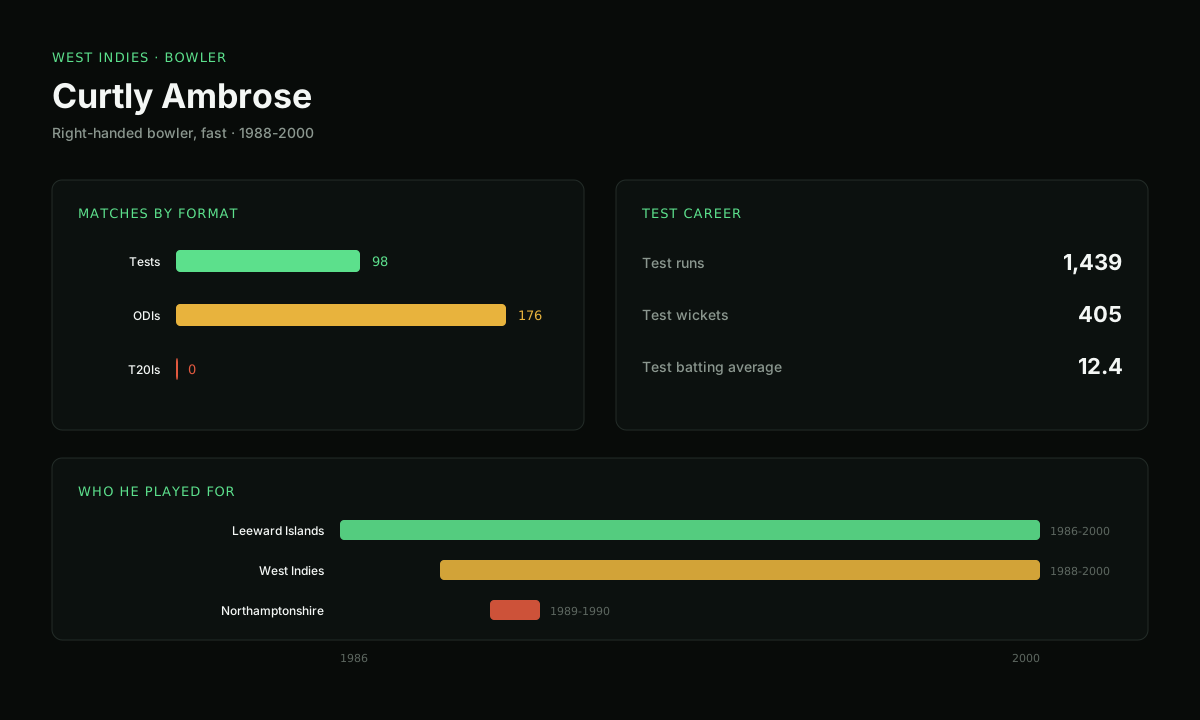
- 405 Test wickets at 20.99, from 98 Tests
- 7 for 1 in 32 balls against Australia at Perth in 1993
- 6 for 24 against England at Port-of-Spain in 1994, who were bowled out for 46
- An economy rate of 2.30, which is the lowest of any bowler with 400 wickets
The record
| Format | Matches | Wickets | Average | Economy |
|---|---|---|---|---|
| Tests | 98 | 405 | 20.99 | 2.30 |
| ODIs | 176 | 225 | 24.12 | 3.48 |
The full record is on his player page.
The length
He was 201 centimetres tall and he bowled a length that almost nobody else could bowl.
From that height, a ball pitching on a normal good length arrives at the batter's chest. Ambrose pitched it slightly fuller — around off stump, on a length that from a shorter bowler would be driveable — and it arrived at the splice.
The consequence is that a batter could neither leave it nor drive it. Leaving meant the ball was too close to off stump; driving meant reaching for something bouncing above the expected height. The only options were to defend and hope, or to play back to a ball that was too full for it.
That length, bowled at around 140 kilometres an hour with movement off the seam, is why the economy rate is 2.30. There was nothing to score off.
Perth, 1993
Australia were 85 for 2 chasing a first-innings lead in the fourth Test, with the series level at 1-1.
Ambrose took 7 for 1 in 32 deliveries. Australia were bowled out for 119. West Indies won by an innings and the series 2-1.
Seven wickets for one run is the most destructive spell in the modern history of the sport by any reasonable measure, and it happened in a series decider against the side that would shortly take over as the best in the world.
Port-of-Spain, 1994
England needed 194 to win in the third Test and were bowled out for 46.
Ambrose took 6 for 24, most of them in the evening session of the fourth day when England went from 40 for 8 to all out. It remains one of the lowest totals in modern Test cricket.
Two spells, eleven months apart, both of which ended a Test match inside an hour.
The economy rate
2.30 runs an over across 98 Tests is the lowest of any bowler with 400 or more wickets.
That number does more work than it looks. A bowler conceding 2.30 in a side where the other three seamers are also conceding under three is a batting side that cannot score anywhere, which is how West Indies won matches in the period after the great batting had gone.
It also means his wickets were not bought. Several great fast bowlers take wickets by attacking constantly and paying for it; he took 405 while giving nothing away, which is the harder version.
The silence
He gave almost no interviews across a fifteen-year career, and the phrase attributed to his manager — "Curtly talk to no man" — became the standard way of describing it.
The relevant consequence for the record is that a great deal of what is known about other bowlers of his standing, from their own accounts, does not exist for him. There is no book explaining the plans, no commentary career, and comparatively little first-person material.
What exists is the footage and the figures, and both are unusually clear.
Country and role narrow it to a handful. The height is not on the board, but the average and the wickets are.
Curtly Ambrose — Seven wickets for one run against Australia in Perth in 1993. Full record
The Kingston 1994 rebuild
There is a piece of context that explains why the economy rate matters so much and it is about the side rather than the bowler.
By the mid-1990s West Indies had lost Richards, Greenidge, Haynes, Marshall, Garner and Holding, and had not replaced any of them. The batting was thin, the totals were modest, and the bowling had to defend 250 rather than 450.
A fast bowler defending a small total needs to concede nothing, not to attack. That is the job Ambrose did for six years, and the reason the strike rate is good rather than outstanding while the economy is the best of anybody at his level.
It is also why the two famous spells stand out so much in his record. They are the occasions where containment turned into destruction, and the rest of the career was the containment.
The one-day record
225 wickets at 24.12 with an economy under 3.5, from 176 matches, and two World Cup appearances.
The same method translated exactly. A bowler who concedes 2.30 in Tests concedes under 3.5 in one-day cricket, and in a format where the fielding restrictions are supposed to make that impossible, it is arguably the more impressive of the two figures.
The late career
He and Courtney Walsh opened the bowling together for a decade in a West Indian side that had lost its batting and most of its depth.
The two of them took over 900 Test wickets between them and kept a declining side competitive for far longer than the rest of the team justified. West Indies through the 1990s were a side with a world-class new-ball pair and very little else, which is a specific and unusual shape for a Test team.
He retired in 2000, at 36, and Walsh a year later. West Indies did not win a Test series of consequence for a decade afterwards.
- 201 centimetres, and a fuller length than his height implies
- Movement off the seam at 140
- Two match-ending spells
- No interviews for fifteen years
- Nothing to leave and nothing to drive
- An economy rate of 2.30
- 7 for 1 and 6 for 24
- Very little written about him relative to the record
The batting, for completeness
1,439 runs at 12.40, with one fifty, from 98 Tests.
He was a tail-ender and made no claim otherwise. What he did do, repeatedly, was occupy an end for half an hour while a recognised batter scored, which in a side whose seventh wicket often fell for very little was worth more than the average suggests.
He also played basketball to a good standard in Antigua before switching to cricket in his late teens, which is the reason he came to fast bowling late and played only 98 Tests despite a career of twelve years.
Where he sits in our dataset
Difficulty tier 1 on the player list. West Indies, bowler, 1988 to 2000 puts him with Walsh, and the wickets column separates the two.
- 405 wickets at 20.99, with the lowest economy of anybody with 400
- A length nobody of his height had bowled before
- 7 for 1 at Perth and 6 for 24 at Port-of-Spain, eleven months apart
- He and Walsh carried West Indian cricket for a decade after the batting went
The short version
He bowled a length that could not be left or driven, from a height nobody else had, for nothing an over, and twice took a Test match away from the opposition inside an hour. He said almost nothing about any of it.
For the attack he inherited, see the rise of the West Indies, and for the bowler he is most often compared with, Malcolm Marshall by the numbers.