Test cricket explained for someone watching their first day
Five days, two innings each, and a result that can be a draw. What is actually happening on day two when nobody appears to be trying to win.
Test cricket is the five-day format. Two innings each, no limit on overs, and a match that can end with nobody winning and both sides satisfied.
If you have arrived from T20, almost everything will look wrong. Here is what is actually going on.
- Five days, two innings each side, and a draw is a legitimate result
- Wickets are the scarce resource; time is not, until the fifth day
- Batting slowly is often correct, and is not the same as batting badly
- The ball, the pitch and the light all change, and all of it is tactical
The shape of a match
| Days | up to 5 |
| Innings | 2 per side, in alternating order |
| Overs per day | minimum 90 |
| Sessions | 3 per day, split by lunch and tea |
| Ball | one per innings, red, replaced after 80 overs if asked for |
| Result | win, loss, draw or, twice in history, a tie |
Sides bat in order: A, B, A, B — unless the follow-on is enforced, which lets a side with a 200-run lead make the opposition bat twice in a row.
Why a draw is not a failure
A Test ends in a draw when the five days expire without one side taking twenty wickets. That is not a technicality; it is the strategic heart of the format.
It means a side losing heavily on day three can still avoid defeat by batting out day five. Watching eleven players survive four sessions with no prospect of winning is one of the tensest things cricket produces, and it does not exist in any other format.
A side is 300 runs behind with two days left and no chance of winning. What are they playing for?
A Test is only lost when twenty wickets fall. Batting out the remaining time is a full result, and defending it is a genuine skill.
Why batting slowly can be right
Because wickets are the scarce resource and time usually is not.
A batter who scores 40 off 140 balls has used up two hours of the opposition's day, tired their bowlers, and taken the ball 40 overs closer to being old. In a T20 that innings loses a match. In a Test it can win one.
The corollary is that a bowling side is not only trying to take wickets; it is trying to make batters play at deliveries they do not have to. That is what commentators mean by "building pressure", and it is what a maiden over is for.
The four things that change
The ball. New and hard for the first 25 overs, then soft. After 80 overs a new one can be taken. Reverse swing appears around the fortieth over in the right conditions.
The pitch. It dries, cracks and takes more spin as the match goes on. Batting last is usually hardest, which is why a side winning the toss often bats first.
The light. Play stops when it becomes dangerous, and fast bowlers are the reason. This is why floodlit day-night Tests with a pink ball exist.
The bowlers. They tire. A five-day match is a workload problem as much as a skill one.
- Six dot balls
- A batter leaving deliveries
- A field with three slips and a gully
- Forty runs in a session
- The batter has been made to play at four of them
- Refusing a plan designed to draw an edge
- The captain is attacking, not defending
- The other side has bowled 30 overs and has 60 left today
What each day is usually for
The five days have shapes, and a match that follows them is easier to read than one that does not.
Day one belongs to whoever won the toss. The pitch is at its freshest, which usually means fastest and most helpful to seam, and a side batting first is trying to survive the first two hours to reach the flat middle of the match.
Day two is the flattest cricket of the game. If the first innings is still going at tea, the side batting is winning. If it ended before lunch, the side bowling probably is.
Day three is where the match is decided and where nothing appears to happen. The pitch begins to take spin, the second new ball matters, and a first-innings lead is established. Almost every Test that is won is won by a position built on day three.
Day four is the accelerator. Declarations, targets, and the fourth-innings question. A captain who declares too early loses; a captain who declares too late draws.
Day five is a shootout between a chase and a clock, and it is the only day where a draw is a legitimate objective for one of the sides.
What a session actually feels like
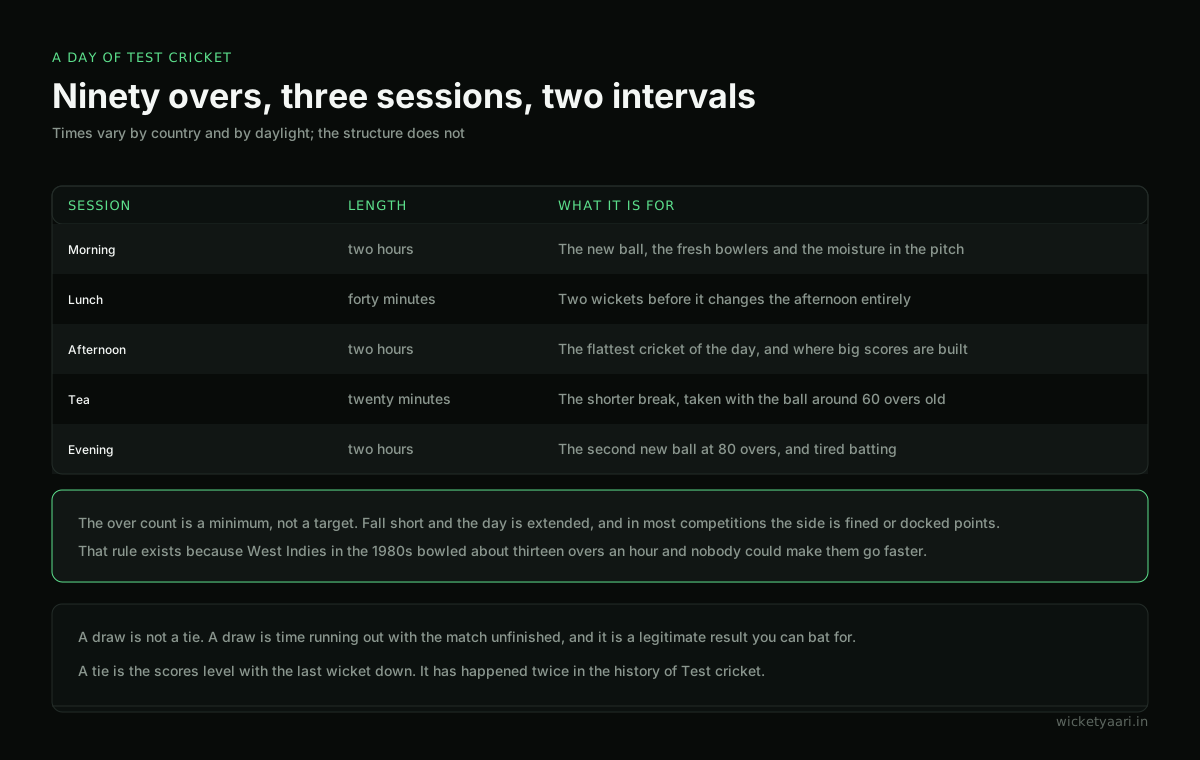
A session is two hours and roughly thirty overs, and it is the unit the players think in. Nobody in a Test match is thinking about the whole day; they are thinking about getting through to the next interval without losing two wickets, or about taking two before it.
That is the reason for the strange rhythm new watchers notice. Ten minutes before lunch, the batting side stops trying to score and the bowling side brings back its fastest bowler, because a wicket in the last over before an interval is worth more than one at any other time: the new batter has to face the rest of the over, then sit with it for forty minutes, then come back and start again against a bowler who has also rested.
Nothing in the score reflects any of this, and it is most of what the players are doing.
The five things to watch that are not the ball
New watchers look at the ball. Everything interesting is elsewhere.
The field. Three slips and a gully means the bowling side thinks a wicket is coming. A sweeper on the boundary in the first hour means it does not.
The ball's age. Ask how many overs old it is and half the match makes sense. A new ball is hard, shiny and bounces; a sixty-over-old ball is soft, reverses if the conditions allow, and does very little else.
The over rate and the clock. A side behind the rate will bowl spin to catch up, which changes the cricket for reasons that have nothing to do with the pitch.
Which end each bowler wants. Slope, wind and rough all favour one end, and a bowler moved to the other end is usually a captain trying something rather than a plan working.
The batter's feet. Getting forward to a fast bowler is confidence; going back to a spinner on day four is respect for the turn. Neither shows up in a score.
How to watch day two
Pick one contest and follow it. Not the match, one bowler against one batter.
Notice where the field is, and what shot it is inviting. Notice whether the bowler is moving the ball away or in. Notice whether the batter is playing at balls they could leave.
Test cricket is not a sequence of highlights with gaps. The gaps are the argument.
- Five days, two innings each, and a draw is a real and often hard-won result
- Wickets are scarce, time mostly is not, so patience is a tactic
- The ball, pitch, light and bowlers all degrade, and all of it is planned around
- Watch one bowler against one batter rather than the whole match
For how the other two formats differ, see Test, ODI and T20. For the ten ways an innings ends, see every way a batter can be out.