Why a cricket bat has a sweet spot, and where it is
A bat is a spring made of willow, and one place on the blade returns most of the energy. Modern bats did not get heavier — the good part got bigger.
Every batter knows the feeling of hitting one properly: no sound from the hands, a noise off the bat that is different, and the ball goes further than the effort suggests. That place on the blade is not folklore. It is physics, and it has moved.
- A bat is a spring: willow compresses on impact and returns the energy
- The sweet spot is low in the blade, roughly a third up from the toe
- Modern bats are not heavier; the sweet spot is larger
- That is why mistimed shots now clear the rope
What a bat actually does
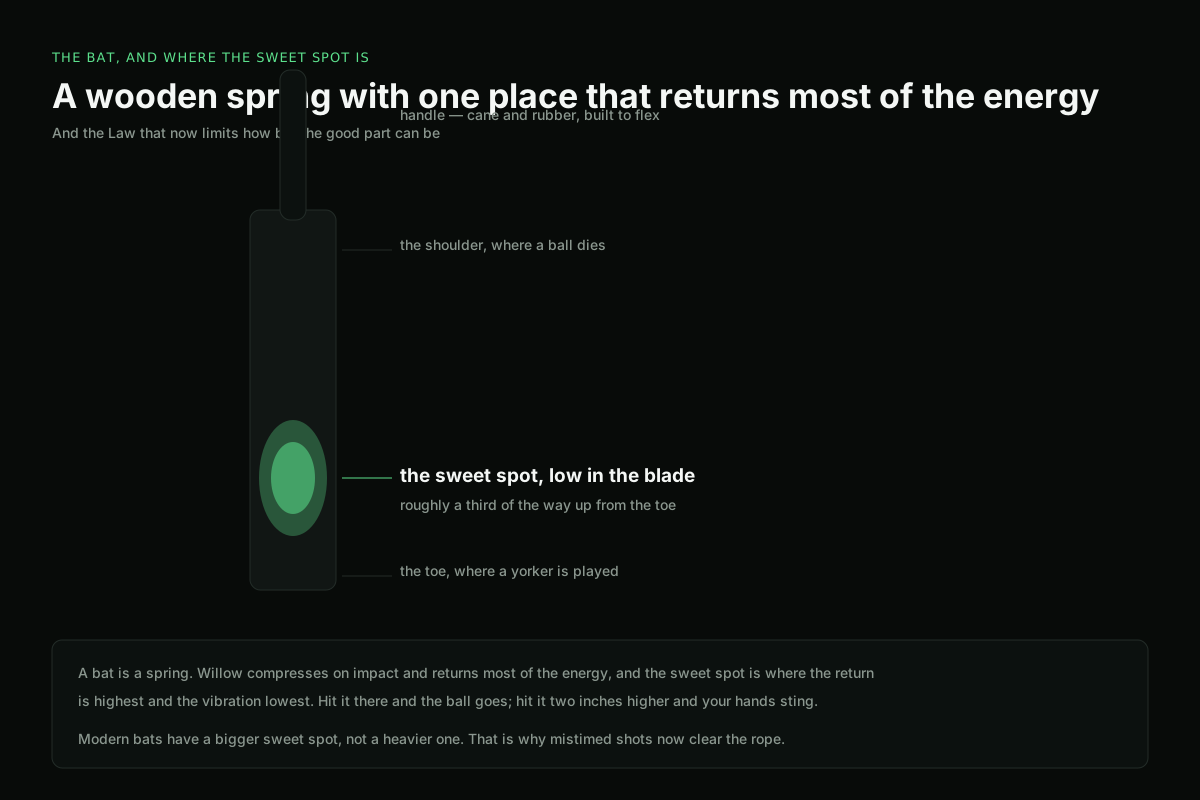
A cricket bat is not a club. Willow is chosen because it compresses on impact and springs back, returning a large proportion of the energy to the ball rather than absorbing it.
How much comes back depends on where the ball hits. At one particular region of the blade, the compression is efficient and the vibration set up in the bat is minimal. Away from it, more energy goes into shaking the bat — which the batter feels in their hands — and less goes into the ball.
That region is the sweet spot, and on a traditional bat it sits low, roughly a third of the way up the blade from the toe.
Why it is where it is
Two things have to line up: the node of the bat's main vibration, and the point of maximum thickness in the blade.
Every bat vibrates when struck, and that vibration has nodes — points that barely move. A ball hitting a node produces almost no shake, which means almost no energy lost to the bat and none of the sting in the hands.
The blade is also thickest low down, which is where the wood can compress and rebound most. Bat makers shape the blade so the thickest part sits near the node, and that is the sweet spot.
Raising it — putting the maximum thickness higher up the blade — is possible and some bats are made that way for players who like to drive on the up. It costs something at the bottom, which is where the yorker arrives.
What changed in modern bats
The most common belief is that bats got heavier. They mostly did not: the usual range has been broadly stable for a century, and a very heavy bat is slower through the line, which costs more than it gains.
What changed is the shape. Modern bats have:
Deeper edges. The blade is thicker at the sides, so a shot hit off-centre still finds substantial wood.
A pronounced bow. The blade curves, which moves mass towards the middle and enlarges the effective hitting zone.
Better-pressed willow. The pressing process — compressing the face before the bat is finished — is more precisely controlled, which produces a more consistent spring across a larger area.
The combined effect is not that a middled shot goes further. It is that a mistimed one does.
| What changed | Effect on a middled shot | Effect on a mistimed shot |
|---|---|---|
| Deeper edges | almost none | large |
| Pronounced bow | small | large |
| Better pressing | small | moderate |
| Heavier bat | small, and costs bat speed | small |
Why that matters more than it sounds
A well-timed shot was always going to the boundary. The batter who middles a drive in 1985 and in 2025 gets a similar result.
The difference is at the margin. The top edge that used to be caught at deep square leg now clears the rope. The drive off the inside half of the bat that used to be a single now runs away for four. The slog that gets thick outside edge now goes over third man rather than to a fielder.
Across an innings that is worth a substantial number of runs, and it is a large part of why run rates rose across every format without any rule changing.
The limits that were introduced
Bat dimensions were effectively unregulated for most of cricket's history — the Laws specified a maximum width and length and said nothing about thickness.
That changed when the edges got deep enough that the balance between bat and ball was visibly affected. The Laws now cap the depth of the blade and the thickness of the edge, and bats are gauged with a template.
It is worth noting what the limits did not do. They stopped the trend continuing; they did not reverse it. Bats at the current legal maximum are far larger than bats of forty years ago, and the effect on mistimed shots remains.
Why bats are knocked in
A new bat is not ready to use, and the reason is the same physics.
Willow arrives with fibres that are not yet bound together at the surface. Struck by a hard ball at speed, those fibres separate and the face cracks. Knocking in — striking the face repeatedly with a mallet, for hours, working from the edges inwards — compresses and binds the surface so it can take an impact.
A properly knocked-in bat also performs better, not just longer. The compressed face returns energy more efficiently, which is the same effect the manufacturer's pressing produces, continued by hand.
Players who skip it find out within a week: an edge splits, the toe goes, or the face develops a crack that opens every time it is struck in the same place. It is the least glamorous part of using the equipment and the part that most affects how long it lasts.
What a batter feels
The practical version, and it is why players are so particular about their bats.
A ball struck outside the sweet spot sends a vibration up the handle. The handle is built from cane and rubber specifically to damp it, which is why a handle is layered rather than solid, but enough gets through that the batter knows immediately.
A ball struck on the sweet spot produces almost nothing in the hands and a distinct sound. Batters describe not feeling the ball at all, which is exactly right: the energy went into the ball rather than into the bat.
That feedback is instant and it is how a batter knows what they have done before they look up.
Modern bats produce far more runs from mistimed shots than bats of forty years ago. What is the main reason?
Bats are not much heavier and the sweet spot has not moved far. Deeper edges and a pronounced bow enlarge the effective hitting area, so shots hit away from the centre still get substantial energy return.
- Bats got heavier
- Middled shots go further
- The sweet spot moved up
- Nothing regulates bat size
- Weights are broadly unchanged
- Middled shots go about as far as they did
- It is still low in the blade
- Depth and edge thickness are now capped and gauged
- Willow is a spring, and the sweet spot is where the return is highest
- It sits where the blade is thickest and the vibration is lowest
- Bigger edges and a bow made the good area larger, not the bat heavier
- The gain is entirely in mistimed shots, which is where the extra runs come from
The short version
A bat has one place that gives the energy back and modern manufacturing made that place bigger. Nothing about a perfectly struck shot changed. Everything about an imperfectly struck one did.
For the other equipment that shaped the modern game, see what a Kookaburra ball does that a Dukes does not, and for the trend the bats contributed to, why run rates rose across every format.