Kookaburra, Dukes and SG: why the ball changes the cricket
Three balls with identical dimensions behave completely differently, and the reason is the seam. It decides how long a bowler can swing it and which bowlers get picked.
Three manufacturers supply the balls used in Test cricket, the dimensions are the same, and the cricket they produce is not remotely similar. The whole difference sits in a line of stitching.
- Dukes is hand stitched with a pronounced seam and swings for forty overs
- Kookaburra is machine stitched, flattens early, and stops moving around fifteen
- SG has a thick hand-stitched seam and is built for reverse swing
- The ball changes selection, not just the bowling
What differs
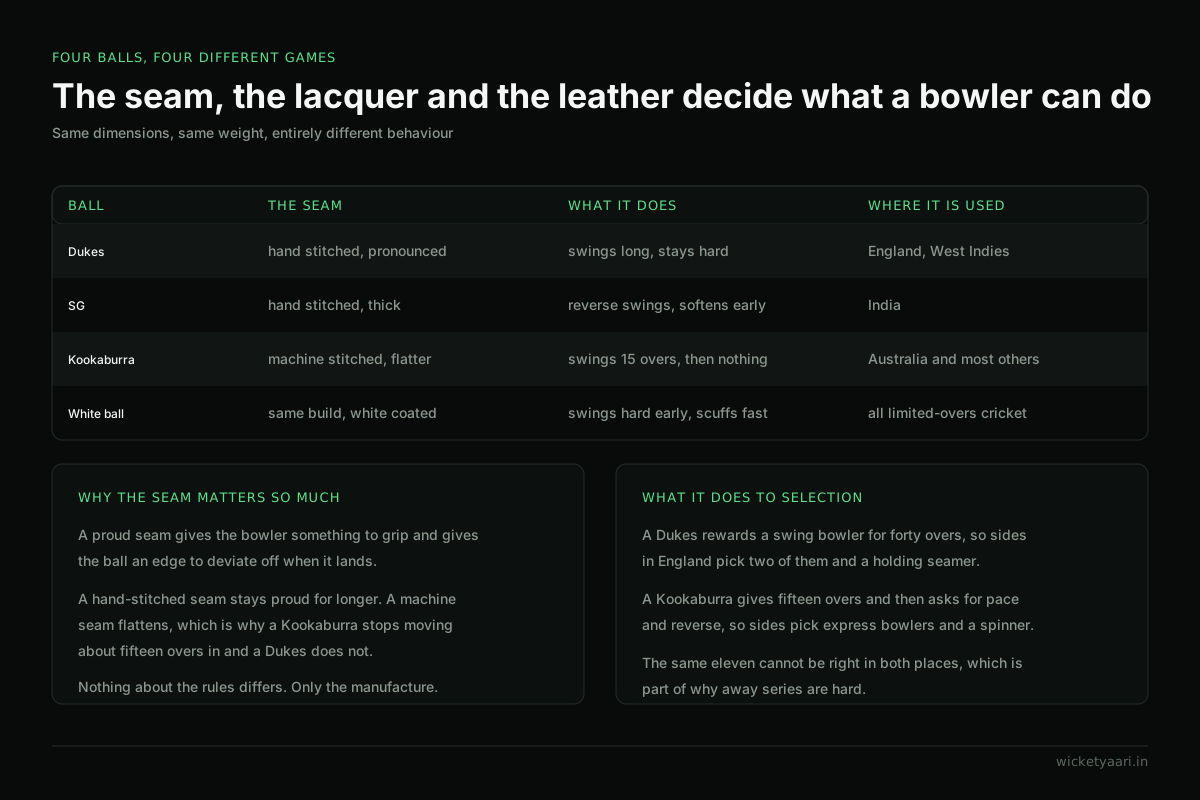
All three balls are leather, four quarters, roughly 156 grams, and legal everywhere. What differs is how the seam is made and what it does as the ball ages.
A Dukes is hand stitched with a proud, prominent seam. It stays proud for a long time, which means the bowler has something to grip and the ball has an edge to deviate off for most of an innings.
A Kookaburra is machine stitched with the outer rows done by machine. The seam is flatter to begin with and it goes soft quickly. For roughly the first fifteen overs it swings; after that it is a hard, smooth ball that comes on to the bat.
An SG is hand stitched with the thickest seam of the three. It scuffs early on the abrasive surfaces it is used on, which is exactly the condition reverse swing needs, and the seam survives long enough to be gripped when the ball is old.
What each does to a day's play
| Ball | Overs 0-15 | Overs 15-40 | Overs 40-80 |
|---|---|---|---|
| Dukes | swing and seam | still swinging | still doing something |
| Kookaburra | swing and seam | very little | reverse, if it is dry and fast |
| SG | some swing | seam and grip for spin | reverse, and the seam is still there |
The middle column is where the difference is decided. Batting through overs 15 to 40 against a Kookaburra is the easiest batting in Test cricket, and it is why Australian and South African pitches have historically produced high first-innings scores from sides who survive the new ball.
The same period against a Dukes in English conditions is still hard work, which is why England Tests produce low totals and short matches more often than anywhere else.
What it does to selection
This is the part that matters and it is not obvious from the ball itself.
A ball that swings for forty overs rewards a bowler with control and movement, at 80 miles an hour, who can bowl long spells. A side playing in those conditions picks two or three of them.
A ball that stops swinging at fifteen overs rewards pace and bounce, because once the movement has gone the only ways to take a wicket are speed, steep bounce and reverse swing. A side playing in those conditions picks express bowlers and someone who can reverse it.
Those are different bowlers. The same eleven is not correct in both places, which is a substantial and under-discussed reason that away Test series are so hard to win — the visiting side has often arrived with an attack optimised for a ball it is not going to be using.
Why the same ball behaves differently in different countries
The ball is only half of it. The other half is the surface and the air.
Abrasive, dry outfields scuff one side of a ball quickly, which is what reverse swing needs. Lush green outfields keep both sides in similar condition for far longer, so reverse rarely appears. Humidity and cloud cover affect conventional swing, though the mechanism is argued about more than it is understood.
Which is why the same Kookaburra can produce fifteen overs of swing in one country and five in another, and why a bowler who reverses it at home may find the ball simply never gets into that condition on tour.
The white ball, and why it is different again
A white ball is built the same way and coated differently, and the coating changes everything.
The lacquer that makes it white and visible also makes it shine hard for the first several overs, which produces sharp early swing. Then the coating wears, the ball scuffs, and it goes soft — faster than a red ball, because a white ball has to be seen under lights and the coating is not as durable as leather dyed red.
That degradation is why one-day cricket ended up using two new balls, one from each end. It solved the visibility problem and created a different one: no ball in the innings is ever more than twenty-five overs old, which removed reverse swing from the format entirely.
A visiting side arrives for a Test series with three swing bowlers who take most of their wickets in the first twenty overs at home with a Dukes ball. They will be playing with a Kookaburra. What is the likely problem?
A Kookaburra stops swinging around fifteen overs where a Dukes keeps moving for far longer. Bowlers whose method depends on sustained movement lose most of the period in which they take wickets.
What the ball does to a spinner
The seam matters at least as much to spin as to seam bowling, and it is discussed far less.
A spinner grips the ball across or along the seam and imparts revolutions with the fingers or wrist. A proud, hard seam gives them something to hold; a flattened one gives them a smooth sphere. Which is why spinners talk about an SG ball with affection and a fifty-over-old Kookaburra with none.
There is a second effect at the other end of the ball's life. A ball that has gone genuinely soft does not bounce, and a spinner without bounce is a spinner without the top edge, the bat-pad catch or the ball that beats the outside edge. Turn without bounce is a dot ball; turn with bounce is a wicket.
That is part of why the same spinner can look world-class at home and ordinary away, with nothing about their bowling having changed.
Who decides which ball is used
The home board does, within ICC approval. That is a real competitive lever and it is used.
A board with a battery of fast bowlers and abrasive outfields has an interest in a ball that scuffs and reverses. A board whose strength is swing has an interest in one that keeps its seam. Choices have been changed and changed back over the years, sometimes explicitly because domestic bowlers were not developing the right skills.
There has been recurring discussion about standardising on a single ball for Test cricket. It has not happened, and the arguments against it are the same ones against standardising pitches: the variety is part of why touring means something.
- A green pitch
- A collapse
- Poor batting
- Bad light
- A Dukes ball still swinging at over thirty
- Fifteen overs of movement that arrived at the right time
- An attack built for the ball being used
- A soft ball and a flat middle period ending
- Hand-stitched seams stay proud; machine seams flatten and stop moving
- The overs-15-to-40 window is where the three balls actually diverge
- Sides pick different bowlers for different balls, and cannot pick both
- The white ball's coating, not its colour, is why limited-overs cricket changed
The short version
The ball is the least discussed variable in cricket and one of the largest. A seam that stays proud gives a bowler forty overs of chances; one that flattens gives fifteen, and the rest of the day belongs to the batters.
For the skill that only becomes available once the ball is old, see reverse swing explained, and for what a captain does when a new one becomes available, the new ball and why captains take it when they do.