What the super over is, and how cricket settles a tie
Six balls, two wickets, one team each. The rules are simple; what happens when the super over also ties has changed twice and once decided a World Cup.
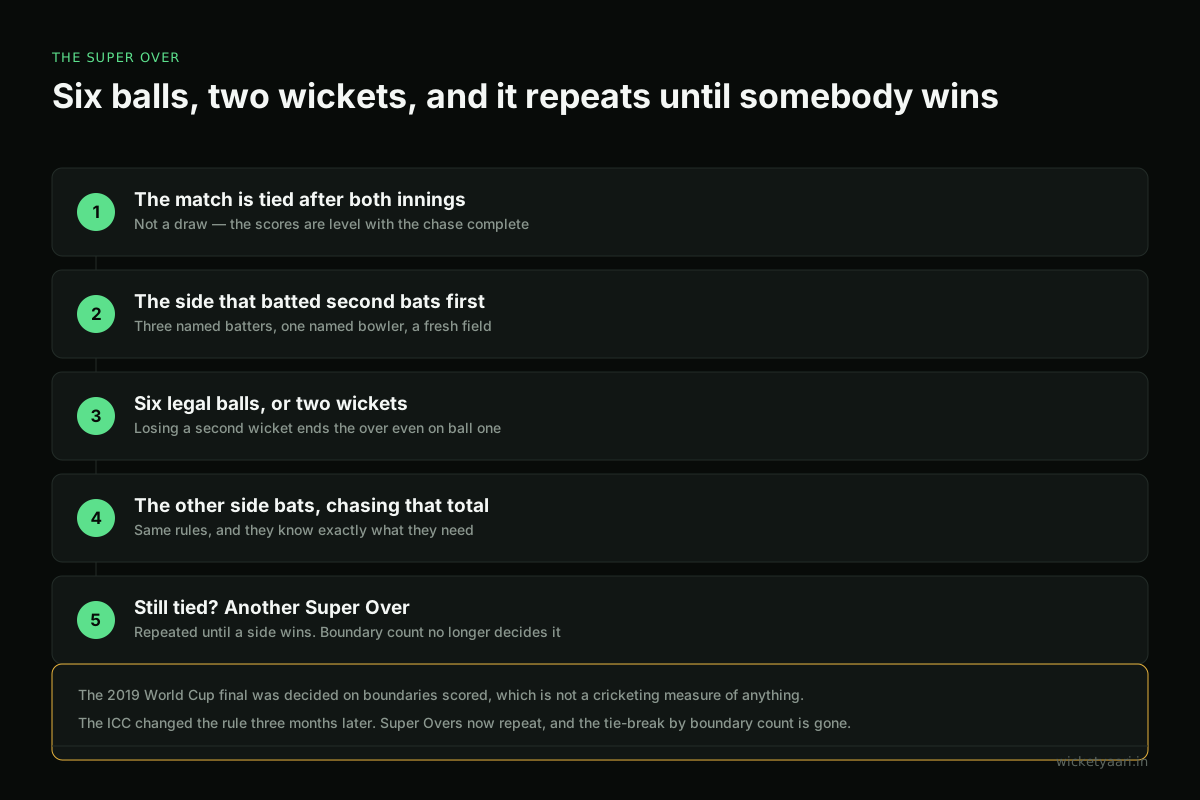
A super over is a one-over eliminator used when a limited-overs match finishes level. Six balls each, three batters, two wickets, and the side with more runs wins.
It is a neat solution to an old problem, and the exception handling is where all the drama has been.
- Six balls, two wickets, three nominated batters, one side each
- The side that batted second in the match bats first in the super over
- Losing two wickets ends the over, however many balls remain
- Ties are now resolved by repeated super overs, not by boundary countback
The rules, in order
- Each side nominates three batters and one bowler. Nobody who has been
- The side that batted second in the match bats first in the super
- Two wickets ends the innings immediately, whether one ball has been bowled or
- The same end is used for both overs, and the fielding restrictions match the
dismissed in the match is barred; nobody is required either.
over. This is deliberate: it removes the advantage of knowing the target.
five.
end of a normal innings.
Two wickets is the constraint people forget. A side that loses two in three balls has scored whatever it scored off three balls, and the chase is often trivial.
A team loses two wickets off the first three balls of its super over. What happens?
Two wickets ends the super over regardless of balls remaining. Three batters, two wickets, and the third is only there because somebody has to be at the non-striker's end.
What happens when the super over ties
This is the part that changed, and it changed because of a World Cup.
Before 2019: boundary countback. The side that had hit more boundaries in the match — not the super over — won. It is a tiebreaker with no relationship to the eliminator that had just been played.
The 2019 World Cup final: England and New Zealand tied the match, then tied the super over. England won on boundary countback, having hit more fours and sixes across the fifty overs. It is the only World Cup final decided that way, and the criticism was immediate and near-universal.
Since 2019: super overs are repeated until one side wins. There is no countback.
- 2008IntroducedThe super over replaces the bowl-out in limited-overs cricket
- 2019The finalEngland and New Zealand tie the match and the super over; boundary countback decides it
- 2019The changeThe ICC scraps countback; super overs now repeat until there is a result
The bowl-out it replaced
Before super overs, tied T20s were settled by a bowl-out: bowlers delivering at an unguarded set of stumps, football-penalty style.
It was used in a World T20 match between India and Pakistan in 2007, which India won 3-0 because Pakistan's bowlers missed all three. It was abandoned quickly, for the obvious reason that hitting undefended stumps has almost nothing to do with cricket.
- Bowlers aim at unguarded stumps
- No batting involved at all
- Resolved in about four minutes
- Abandoned by 2009
- An actual over of cricket is played
- Batting, bowling and fielding all count
- Resolved in about fifteen
- Still in use, with repeats since 2019
Where a tie is still just a tie
Bilateral limited-overs matches often have no super over at all — a tie is recorded as a tie and the points are shared. Super overs are used where a result is required: knockouts, finals, and most franchise leagues.
Test cricket has no equivalent. A tied Test is simply tied, and it has happened twice in the entire history of the format. A draw is a different thing and happens constantly.
Who bats, who bowls, and who is not allowed to
The selections are more constrained than they look, and the constraints are what make the Super Over a genuine contest rather than a slog.
The batting side nominates three batters. Not four — the moment a second wicket falls, the over is finished, so three is the maximum that can ever be required and it doubles as the wicket limit. The bowling side nominates one bowler, who must bowl all six legal deliveries.
Anyone in the eleven can be nominated, including a batter who was dismissed in the match itself and a bowler who has already bowled his full quota. What nobody can do is bat twice: a batter dismissed in the Super Over cannot return in a subsequent one, which is what makes a third or fourth Super Over progressively stranger to watch.
The side that batted second in the match bats first in the Super Over. That is not a coin toss and it is not arbitrary — it means the team that has just finished chasing, with its pads on and its eye in, has to set a target rather than chase one, which is the harder half of the exchange.
| Element | Limit | Why it is there |
|---|---|---|
| Batters | three nominated | two wickets ends the over |
| Bowlers | one, all six balls | no bowling out of a specialist by committee |
| Order | side batting second bats first | removes the advantage of finishing the chase |
| Repeats | until a result | boundary count no longer decides it |
What captains actually get wrong
Three mistakes recur## What captains actually get wrong
Two mistakes recur often enough to be predictable.
The first is picking the best bowler rather than the right one. Six balls under lights, to two batters swinging from ball one, is not a spell — it is six attempts to bowl a yorker or six attempts to bowl a slower ball. The bowler with the best average is frequently not the bowler with the best sixth ball, and sides have lost Super Overs by sending out a new-ball specialist to bowl at the death.
The second is treating ten as a par score. It is not. Sides chasing in a Super Over win far more often than they lose, because six balls with a known target and two wickets in hand is a much simpler problem than six balls with no reference point. If you bat first, the number to aim at is closer to fifteen than to ten, and getting there means accepting that being bowled out on ball four is an acceptable risk rather than a disaster.
The third is the field. Powerplay restrictions apply, so the captain has five fielders to place outside the circle and no more, and the temptation is to guard the straight boundaries. Six balls is not long enough for a batter to work the gaps: they are going to swing, and swinging under pressure produces edges and top edges square of the wicket far more often than clean straight hitting. The field that wins Super Overs is usually squarer than the one that feels right. and getting there means accepting that being bowled out on ball four is an acceptable risk rather than a disaster.
The tactical bit
Choosing the bowler is the whole decision. Six balls at the end of a match, with the field spread and two set batters coming, is the hardest over in cricket, and captains who pick their best death bowler rather than their best bowler are usually right.
Batting order matters less than people think, because two wickets ends it. Sending your two most destructive players in is standard; the third rarely faces a ball.
- Six balls, two wickets, and the side batting second in the match goes first
- Two wickets ends the innings whatever the ball count
- Boundary countback was scrapped after the 2019 final
- Super overs now repeat until somebody wins
For the ways an innings can end without a tie, see every way a batter can be out. For how rain, rather than a tie, changes a target, see Duckworth-Lewis.