The free hit rule, and why it costs far more than one run
A no-ball in white-ball cricket hands the batter a delivery on which only a run out can dismiss them, and in the last two overs it is worth several times the penalty run.
A no-ball costs a run. In white-ball cricket it also costs a delivery on which almost nothing can get the batter out, and the second part is worth several times the first.
- The delivery after a no-ball is a free hit in most white-ball competitions
- Only a run out can dismiss the batter on it
- The field may not be changed unless the strike has changed
- At the death it is worth roughly two runs on average, and often far more
What actually happens
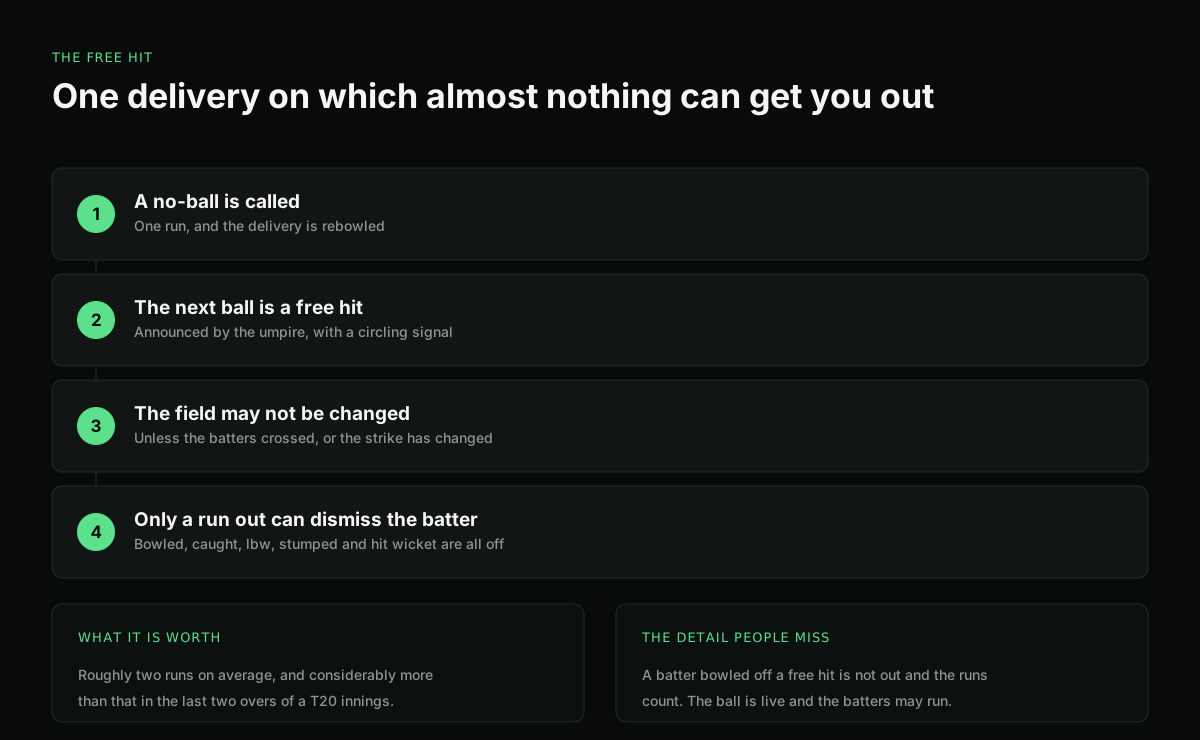
The umpire calls no-ball. One run is added, the delivery is rebowled, and the umpire signals a free hit by circling a raised arm above their head.
On that next delivery, the batter cannot be dismissed bowled, caught, leg before wicket, stumped or hit wicket. They can be run out, and they can be out for the handful of obscure methods that survive anything — obstructing the field, hitting the ball twice.
If the free-hit delivery is itself a no-ball or a wide, the free hit carries over to the next legal delivery. A bowler who oversteps twice in a row is bowling two free hits, not one.
The field cannot be moved
This is the clause sides forget and it matters more than the dismissal rule.
After a no-ball, the fielding side may not change the field for the free hit unless the strike has changed — that is, unless the batters crossed on the no-ball itself.
So a captain who has a field set for a slower ball to a right-hander, and concedes a no-ball, has to bowl the free hit to that same field. Everything they would want to do — bring a boundary rider round, close the gap the batter has been using — is unavailable.
A batter who understands this is not swinging blindly. They know exactly where the gaps are, they have already seen the field, and they have a delivery on which getting out is close to impossible. That is the actual value of a free hit, and it is a lot more than one run.
Why bowled off a free hit still counts
The detail that confuses people every season: a batter bowled off a free hit is not out, the ball remains live, and the batters may run.
So a delivery that clean bowls somebody can produce runs. If the ball rebounds away from the stumps, the batters can and do take a single or two, and those runs are credited to the batter as if the shot had been played.
It looks absurd on television. It is consistent: the delivery was illegal, the dismissal is void, and everything else about the ball proceeds as normal.
| Off a free hit | Result |
|---|---|
| Bowled | not out, ball live, runs may be taken |
| Caught | not out, and the runs completed count |
| Lbw | not out |
| Stumped | not out |
| Run out | out |
| Hit wicket | not out |
What it is worth
The penalty run is trivial. The expected value of the delivery is not.
A free hit in the middle overs is worth perhaps a run and a half above a normal delivery — the batter attacks, the field is fixed, and the risk of dismissal is gone. In the last two overs of a T20 innings it is worth considerably more, because a set batter with no downside swinging at a field that cannot be adjusted is close to the best situation available in the format.
That is why a no-ball at the death is treated as one of the worst things a bowler can do, out of all proportion to the run it concedes. A bowler who oversteps in the nineteenth over has, on average, handed over something like six or seven runs across the two deliveries.
Where it applies and where it does not
The free hit is a limited-overs invention. It does not exist in Test cricket at all, where a no-ball costs its run and its delivery and nothing more.
Within white-ball cricket, which no-balls trigger it has changed. It was originally the front-foot no-ball alone; most competitions extended it to all no-balls, so a beamer, a bouncer over the count and a fielding-position breach all bring one. Playing conditions vary by competition, and a rule that is universal in one tournament may not be in another.
The one constant is that it is never optional. The umpire signals it, and the fielding side has no say.
A bowler concedes a front-foot no-ball. On the free hit that follows, they beat the bat completely and the keeper takes the ball cleanly with the batter out of their ground. The keeper breaks the stumps. What is the decision?
A batter cannot be stumped off a free hit. Only a run out is available, and a run out requires the batter to have been attempting a run — a batter who simply overbalanced after a shot has not.
What the batter should actually do
The obvious answer is swing hard. The better answer is slightly more precise.
A free hit removes the risk of dismissal but not the risk of a bad shot. A batter who slogs across the line at a good yorker will miss it, and a missed free hit is a dot ball on a delivery that should have produced runs — which is a real cost in a format where the batter gets 120 of them.
The batters who use free hits best do three things. They look at the field before the ball, because it cannot change and they know exactly where the gaps are. They choose the boundary they want rather than swinging in general. And they play the ball rather than the situation, because a yorker on a free hit is still a yorker and squeezing it out for two is a better outcome than missing it for none.
The one shot that becomes clearly correct is the aerial one over the infield to a gap that would normally be a catching risk. That risk is gone, and a lofted drive that would be a chance in the twelfth over is a certain boundary here.
Why the rule exists
The free hit was introduced to make no-balls hurt.
Before it, a no-ball cost a run, and bowlers at the death treated that as an acceptable price for the extra half-yard of pace that came from a longer stride. The penalty was too small to change behaviour, and front-foot no-balls were routinely bowled by fast bowlers under pressure.
Adding a free hit made the penalty large enough that no bowler tolerates it, and it worked. The rate of front-foot no-balls in white-ball cricket fell after its introduction and has stayed lower. It is a rare example of a rule change that achieved exactly what it was designed to achieve, with no side effects anybody objects to.
- One run
- The delivery, rebowled
- The wicket, if there was one
- One run
- The delivery, rebowled
- The wicket, if there was one
- A free hit to a set batter, at a field that cannot move
- Only a run out can dismiss a batter on a free hit
- The field may not be changed unless the strike has changed
- Bowled off a free hit is not out and the runs still count
- It exists because the single-run penalty was too small to change anything
The short version
A free hit is not a bonus run, it is a delivery with the risk removed and the field frozen. That combination is what makes overstepping at the death so expensive and why bowlers almost never do it any more.
For the full list of ways to bowl an illegal delivery, see what counts as a no-ball, and for why the last overs are priced the way they are, death bowling and what makes it hard.