What a wicketkeeper is judged on, and what the card misses
Catches, stumpings and byes are the four numbers on the card, and three of them mislead. What a side actually watches is chances taken and whether they can stand up.
A wicketkeeper touches the ball more than anyone else on the field and appears in the scorecard four times, three of which tell you very little. It is the position where the gap between what is recorded and what matters is widest.
- The card records catches, stumpings, byes and runs scored
- Byes measure the pitch and the bowling at least as much as the keeper
- What sides watch is chances taken as a share of chances offered
- Standing up to seam is the rarest skill in the position and appears nowhere
What the scorecard records
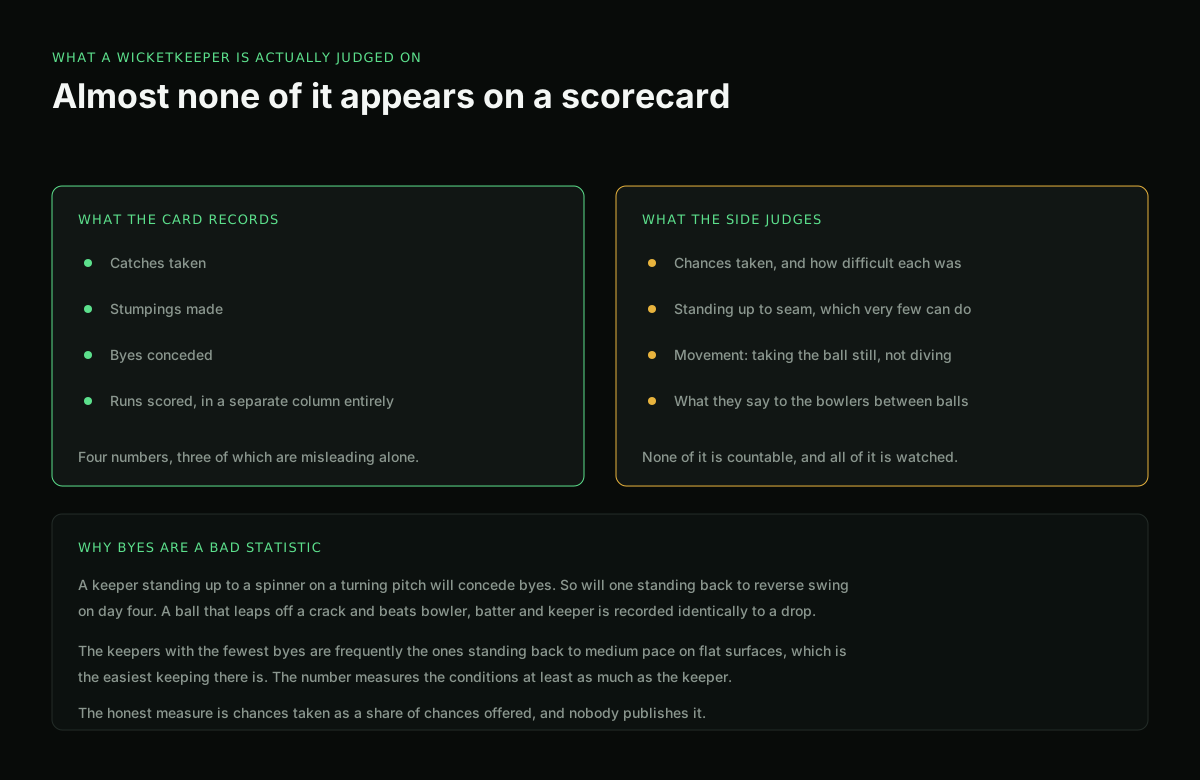
Catches are counted, and a catch off a genuine edge and a catch off a top edge that looped gently are the same line.
Stumpings are counted, and they are the one keeping statistic that is close to honest — a stumping requires the keeper to have been up to the stumps, to have taken the ball cleanly and to have broken the wicket in one movement.
Byes are counted against the fielding side and traditionally read as a reflection on the keeper, which is the most misleading number of the four.
Runs are in a completely separate column, and for the last twenty years they have been doing more selecting than the other three combined.
Why byes mislead
A keeper standing up to a spinner on a turning pitch will concede byes. So will a keeper standing back to a bowler getting reverse swing at pace on the fourth afternoon.
A ball that leaps off a crack and beats the bowler, the batter and the keeper is recorded identically to one the keeper simply dropped. The card cannot distinguish between an unplayable delivery and an error, so it counts both as byes.
The consequence is that the keepers with the lowest bye counts are frequently the ones standing back to medium pace on flat surfaces — the easiest keeping available. A low bye count is at least as much a statement about the conditions and the bowling as about the keeper.
| The number | What people read | What it actually reflects |
|---|---|---|
| Catches | how good the hands are | how many edges the bowlers found |
| Stumpings | quick hands | how often the keeper stood up |
| Byes | keeper errors | the pitch, the bowling, the standing position |
| Dismissals total | overall quality | mostly the attack in front of them |
What sides actually judge
Four things, none of them countable, all of them watched by everybody in the side.
Chances taken as a share of chances offered. This is the real measure and it requires somebody to define a chance. Analysts inside teams track it; nobody publishes it. A keeper who takes twelve of thirteen difficult chances is better than one who takes fifteen of fifteen easy ones, and the card ranks them the other way.
Whether they can stand up to seam. The rarest skill in the position. Standing up to a bowler at 80 miles an hour changes what the bowler can do — a batter cannot leave their crease, the stumping is live, and the pressure on the front foot is immediate. Very few keepers can do it, and no statistic records that they did.
Movement. The best keepers take the ball still, with soft hands, having moved early. A keeper who dives spectacularly is often one who moved late. Diving looks better on television and is worse keeping.
What they say. The keeper is the only fielder facing the batter for every ball and the only one who sees exactly what the ball did. Their read on the pitch, on whether a bowler is tiring, on which batter is uncomfortable, is a genuine tactical input, and the good ones talk constantly.
Standing up, in detail
It is worth being specific about why this matters, because it looks like a stylistic choice and is not.
A keeper standing back to a seamer gives the batter a free zone: they can leave their crease to drive, they cannot be stumped, and the bowler has to bowl a full length to threaten the stumps. Standing up removes all of that. The batter must stay in their ground, the stumping is live, and a bowler can bowl at the stumps knowing the batter cannot come down the pitch.
The cost is enormous difficulty. The ball arrives in about a third of the time, moving late, sometimes off the pitch, sometimes off the edge from a metre away. Byes go up. A missed chance is glaring.
Which is why it is rare, why sides value keepers who can do it, and why none of it shows up anywhere except in what the bowlers are able to try.
The keeper's other job
There is a part of the role that has nothing to do with the ball and it is the reason keepers so often end up captaining.
The keeper is the only player who sees every delivery from directly behind the stumps, at the same height as the batter's decision. They see the ball's movement off the pitch before anybody else, they hear the edge that the square-leg umpire cannot, and they watch a batter's feet for four hours from three metres away.
That accumulates into a genuinely different picture of the match from the one the captain at mid-off has. A keeper who tells his captain that a batter has stopped moving his feet, or that the ball has started to hold in the surface, is providing information nobody else on the field has access to.
It is also why the keeper sets the fielding side's tone. Nine fielders spread around a ground take their energy from the two people who are always in the game, and one of them is bowling.
The batting question
For most of cricket's history a keeper was picked for keeping and anything with the bat was a bonus. That reversed, and the reversal is close to complete in white-ball cricket.
The reason is arithmetic rather than fashion. A keeper who averages 35 rather than 18 adds around seventeen runs an innings. A keeper who is a little better with the gloves saves perhaps five or ten runs and takes one extra chance every few matches. On those numbers the batting wins, and selectors have followed the numbers.
The counter-argument is that the value of good keeping is concentrated: the chance that is dropped is frequently the one that costs a hundred runs, and it happens in the matches that matter. That is a real point and it is very hard to price, which is why the argument is still running.
Keeper A concedes 14 byes in an innings standing up to spin on a turning pitch. Keeper B concedes 2 standing back to medium pace on a flat one. What does the comparison tell you?
Byes measure the standing position, the pitch and the bowling as much as the keeper. Standing up on a turning pitch is far harder keeping and will produce more byes from a better performance.
- Runs, at almost any position
- Being able to stand up to seam
- Quiet, early movement
- Talking usefully to the bowlers
- A dropped catch in a match that mattered
- A sequence of byes that looks bad on a card
- Diving that looks spectacular and was late
- Nothing measurable, usually
- Three of the four recorded numbers reflect the attack more than the keeper
- Byes measure the pitch and the standing position, not competence
- Standing up to seam is the rarest skill and is recorded nowhere
- Batting decides selection now, for defensible arithmetic reasons
The short version
The wicketkeeper is the most watched and least measured player on the field. Everything that separates a good one from an ordinary one — the chance taken, the position taken up, the movement that was not needed — leaves no trace on the card that judges them.
For how to read the rest of that card, see how to read a scorecard properly, and for the extras a keeper is blamed for, extras explained.