The cricket toss, and how much it is actually worth
A captain wins a coin and makes one decision. In some conditions it is worth almost nothing; in others it is worth more than any player in the side.
The toss is one decision made before a ball is bowled: bat or bowl. Its value varies enormously — close to nothing in a flat-pitch one-day game, and close to decisive in a day-night Test or a dew-affected T20.
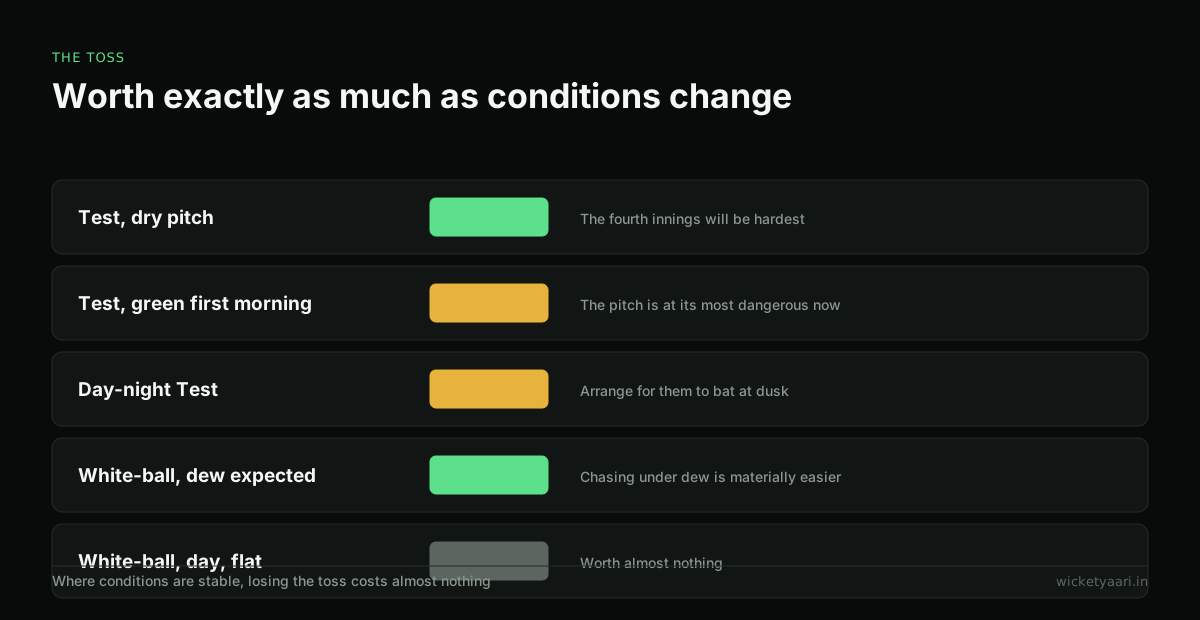
- The value of the toss depends almost entirely on how much conditions change
- In Tests it is about batting last on a deteriorating pitch
- In night matches it is about dew, and the decision is nearly automatic
- Captains bowl first far more often now than they did thirty years ago
Test cricket: the fourth innings problem
The old rule was: win the toss and bat, unless you can think of a reason not to, in which case think again and bat.
The reasoning is that a pitch deteriorates. Cracks open, the surface wears, and spin grips more each day. Batting first means batting on the best version of the pitch, and setting a target for somebody else to chase on the worst.
The exceptions are real though. A green, damp surface on the first morning in England can be more dangerous than the same pitch on day four, and captains who bowl first there are frequently right.
Why do Test captains traditionally bat first after winning the toss?
The fourth innings is played on the worst version of the pitch. Batting first means your first innings is on the best one and their last is on the worst.
Day-night Tests: the twilight session
With a pink ball under lights, the period around dusk is markedly harder to bat in. The ball moves more, sight is worse, and scoring slows.
Captains therefore try to arrange for the opposition to be batting during those sessions and their own side not to be. That is a much more specific calculation than "bat first", and it has made toss decisions in day-night Tests among the most consequential in the format.
White-ball cricket: dew
In a night match in the subcontinent, dew settles on the outfield in the second innings. The ball becomes wet, spinners cannot grip it, and bowlers cannot hold a yorker.
Chasing under dew is materially easier than defending under it. Where dew is expected, captains bowl first almost without thinking, and the toss is worth several percentage points of win probability before anybody has bowled.
Why bowling first became more common
Three reasons, in order of weight.
Chasing is easier to plan. A target is a known quantity. Batting first requires a side to guess what a par score is, and guessing low is a common way to lose.
Conditions favour bowling early in white-ball cricket. The new white ball does something for a few overs and then does not.
Data. Sides now have historical win rates for chasing at each ground under each condition, and the numbers frequently say chase.
In Tests the balance has moved less, because the fourth-innings argument has not gone away.
- The pitch will deteriorate
- No dew is expected
- You want to set a target on a fifth-day surface
- It is a Test and conditions are stable
- The surface is green and damp on morning one
- Dew is expected in the second innings
- You are playing a day-night Test and want them batting at dusk
- It is a white-ball match and the target can be planned for
The one format where it barely exists
In Twenty20 the innings is so short that the pitch does not change within a match at all. Whatever the toss is worth there is entirely about dew and about the psychology of chasing a known number, and nothing about the surface.
Which means a T20 toss in a dry afternoon is close to meaningless, and a T20 toss under lights in Chennai in October is one of the most valuable coin flips in sport. Same format, same coin, wildly different value.
What a captain is actually weighing
Four things, in roughly this order, and none of them is "do we want to bat".
What the pitch will do on day one, and on day four. A green surface that will flatten out means bowl. A dry surface that will turn means bat, because the fourth innings on it will be unplayable.
The weather forecast. Rain on days three and four changes everything: a side that bats first and loses two days to weather may not be able to force a result at all.
The state of the series. A side one down with two to play takes risks a side one up does not. The toss decision in a dead rubber and in a decider are different decisions on the same pitch.
Their own attack. Three seamers and a part-time spinner should want to bowl first. Two spinners and a seamer should want to bat and use the fourth innings.
The old advice — "nine times out of ten, bat; the tenth time, think about bowling and then bat anyway" — was written for uncovered pitches, where the surface got worse the moment it rained and there was no groundstaff response available. It has not been sound advice for fifty years and is still quoted every summer.
The proposals to abolish it
Two ideas come up whenever a series is decided by conditions rather than cricket.
Give the away side the choice. Used in the County Championship for a period: the visiting captain may choose to bowl first without a toss, and a toss happens only if they decline. It was aimed at discouraging home sides from preparing extreme surfaces, and it worked reasonably well at that specific job.
Abolish the toss and alternate. Proposed for Test championships and never adopted, because a two-match series cannot alternate fairly and a five-match one already averages out.
Neither has been adopted internationally, and the reason is that the toss is not actually the problem. Pitch preparation is. A toss on a fair surface is worth very little, and no amount of tinkering with who calls heads fixes a surface prepared to suit one attack.
The formats where it is worth almost nothing
In Twenty20, on a good surface, in daylight, with no dew, the toss is close to irrelevant. The pitch does not deteriorate in three hours, both sides bat under identical conditions, and the only real advantage is knowing the target, which the data suggests is worth a few percentage points at most.
Add dew, and it becomes the single largest factor in the match — larger than team selection. Add a day-night Test and the twilight session, and it becomes larger still.
That is the honest summary of the toss. In most conditions it is worth very little, and in a specific handful of conditions it is worth more than everything else the captains do. The skill is knowing which kind of day you are standing in, and captains get that wrong often enough to be interesting.
What it is not worth
In a fifty-over day match on a flat pitch with no dew, the toss is worth very little. The pitch barely changes, both sides face similar conditions, and the result turns on cricket rather than a coin.
Which is the honest summary: the toss matters exactly as much as the conditions change, and no more. Where conditions are stable, a captain who loses the toss has lost almost nothing.
- The toss is worth however much conditions change between innings, and no more
- Tests: bat first, unless the first morning is genuinely dangerous
- Day-night Tests: arrange for the opposition to bat at dusk
- White-ball with dew: bowl first, close to automatically
For how the pitch and ball change across a Test, see Test cricket explained.