The second new ball, and why captains do not always take it
A new ball becomes available at 80 overs and taking it straight away is frequently the wrong decision. What the captain is weighing is reverse swing against hardness.
Somewhere around the eightieth over of a Test innings, the scoreboard notes that a new ball is available and the commentary starts asking whether the captain will take it. It sounds like a formality. It is one of the more genuinely difficult decisions in the game.
- A new ball is available after 80 overs in Test cricket, and it is optional
- It is hard, shiny and swings — and it also goes to the boundary faster
- Taking it kills reverse swing, which took forty overs to develop
- The right answer depends on the batters, the bowlers and the clock
What a ball does across its life
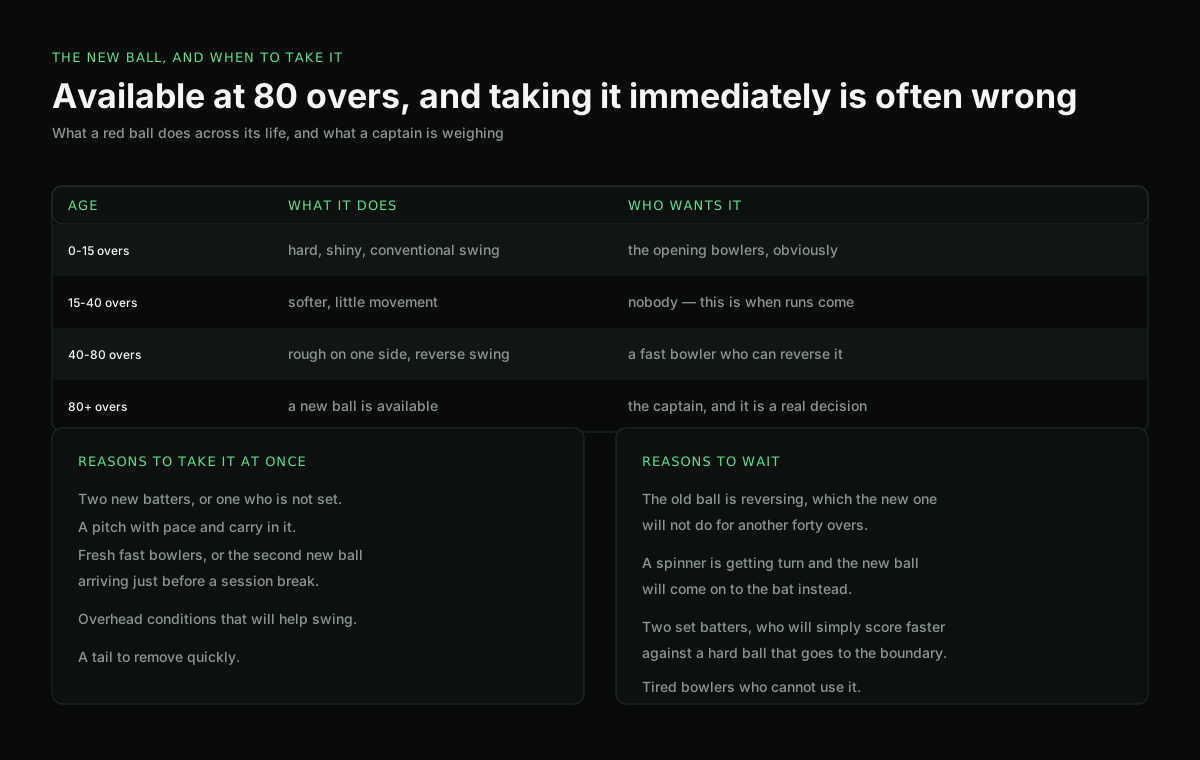
The first fifteen overs are the new ball's own: hard, shiny, seam standing proud, conventional swing available to anybody who can bowl a full length.
Then it softens. Between roughly fifteen and forty overs a red ball does very little. The lacquer has gone, the seam has flattened slightly, and it has not yet scuffed enough to reverse. This is when scores are built.
From about forty overs the ball develops asymmetry — one side polished, the other rough — and in the right conditions it starts to reverse swing. That takes real maintenance from the fielding side and it is the reward for forty overs of work.
At eighty overs, all of that is on the table and the captain gets to choose.
Why taking it immediately can be wrong
The trap is treating the new ball as a free upgrade. It is not; it is a trade.
Reverse swing goes away. Forty overs of shining one side is discarded the moment the new ball is used. If the old one is reversing and a bowler has the skill to use it, handing that in for conventional swing you may not get is a bad exchange.
A hard ball goes to the boundary. Two set batters facing a new ball score faster than they were, because the ball comes on to the bat and edges carry to the rope rather than dying in the outfield. Against an established partnership, the new ball can be a run-scoring aid.
A spinner getting turn loses grip. A hard, shiny ball skids on. A spinner bowling well into rough is frequently the reason a captain waits until the eighty-fifth or ninetieth over.
When to take it at once
Four situations where it is obvious, and captains take it in all of them.
Two new batters, or one who is not set. A hard ball against somebody who has faced ten balls is worth far more than against somebody who has faced two hundred.
Overhead conditions. Cloud cover and heavy air are worth a new ball on their own, and they do not last.
Fresh fast bowlers. A new ball is only useful to somebody who can bowl it at pace with control. Two tired bowlers and a new ball is a waste of both.
A session break approaching. Taking it with twenty minutes left in the day gives the fielding side two fresh bowlers, a hard ball and a batting side that wants to survive to stumps — which is the most favourable combination available.
| Situation | Take it | Wait |
|---|---|---|
| Two set batters, flat pitch | yes, keep reverse | |
| New batter in | yes | |
| Old ball reversing sharply | yes, until it stops | |
| Spinner turning it into the rough | yes | |
| Twenty minutes to stumps | yes | |
| Tail exposed | yes |
The tail exception
There is one situation where the calculation is simple and it is the most common reason the new ball goes straight up.
Against a tail, the fastest route through is pace and bounce with a hard ball. A number ten facing reverse swing at 85 miles an hour is in trouble; facing a new ball at the same pace with the ball bouncing at his gloves, he is in more trouble, and the fielding side wants the innings over rather than a contest.
That is why you see captains hold the new ball while two good batters are in and call for it within a ball of the eighth wicket falling.
What the batting side does about it
Batters plan for the new ball as carefully as bowlers do.
A set pair approaching over seventy-five will often slow down deliberately, taking fewer risks so that neither is dismissed just before the ball changes. If a wicket falls at over seventy-eight, the incoming batter is walking out to face a new ball in the hands of fresh bowlers, which is the worst moment in the innings to arrive.
Conversely, a side batting well will sometimes attack the last few overs of the old ball hard, on the reasoning that runs against a soft ball are cheaper than runs against a new one, and any acceleration should happen before the change.
A side is 320 for 3 after 80 overs. Two batters are well set, the pitch is flat, and one of the bowlers has been reversing the old ball. What is the most defensible decision?
Against two set batters on a flat pitch, a hard new ball comes on to the bat and scores faster. Reverse swing is the only thing currently troubling them, and taking the new ball throws it away.
What the fielding side is doing in the meantime
The forty overs before the decision are not passive. Keeping one side of the ball shiny is a full-time job and it is done by the whole side.
One or two fielders are designated shiners. The ball goes to them between deliveries, and it is polished on the same side every single time — trousers, and sweat, and nothing else since saliva was prohibited. The rough side is never touched, and a fielder who absent-mindedly polishes the wrong side is told about it loudly.
Throws come in on the bounce to the keeper deliberately, or not, depending on whether the captain wants the ball scuffed. On abrasive outfields a side chasing reverse swing will throw flat and hard into the square; a side protecting a shine will lob it.
All of that effort is what makes the eightieth over a genuine decision rather than a formality. Taking the new ball throws away work the whole side has been doing since lunch.
The white-ball version
None of this exists in limited-overs cricket, and the reason is worth stating.
A one-day innings uses two new balls, one from each end, and neither is ever replaced. There is no decision because there is no old ball. A T20 innings is twenty overs, so the ball never gets old enough for the question to arise.
That is the clearest illustration of what a Test match actually is: the only format long enough for the condition of the ball to become a strategic resource, managed over hours, spent once.
- Hardness, bounce and carry
- Conventional swing, if conditions suit
- Two fresh bowlers, usually
- A quick route through a tail
- Reverse swing, immediately
- The spinner's grip
- Faster scoring against set batters
- Nothing, against a tail
- Available at 80 overs, and optional
- Reverse swing is discarded the moment it is taken
- Set batters score faster against a hard ball, not slower
- Against a tail or a new batter, take it immediately
The short version
The second new ball is not an upgrade, it is an exchange: hardness and possible swing for reverse swing you already have. Captains who take it automatically are paying for something they may not need.
For what the ball is doing before the choice arises, see reverse swing explained, and for how the three manufacturers change the timing of all of this, what a Kookaburra ball does that a Dukes does not.