The nightwatchman, and whether it actually works
Sending a tail-ender in late in the day protects a better batter from twenty minutes of danger, and costs a wicket most of the time it is used.
Late in a day's play a wicket falls, and instead of the next batter in the order a bowler walks out with a bat. It is one of the oldest tactics in Test cricket and one of the least examined.
- A nightwatchman is a lower-order batter sent in to survive the end of a day
- The theory is that his wicket is worth less than the one he is protecting
- It works when there are only a few overs left and the ball is doing something
- It is used far more often than the arithmetic supports
The idea
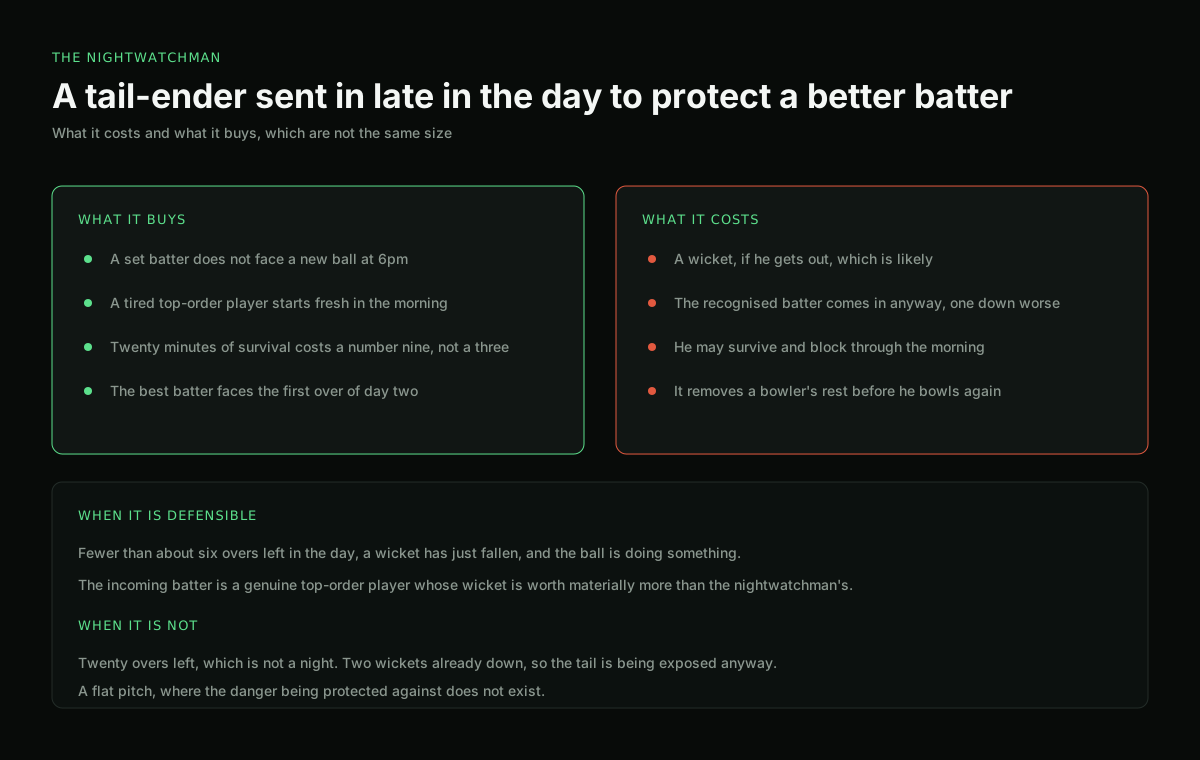
A wicket falls with twenty minutes of the day remaining. The next batter is a specialist — a number three or four — and the alternative is a bowler who bats a bit.
The argument for sending the bowler is straightforward. Those twenty minutes are the worst batting conditions of the day: fading light, a ball that may be new, bowlers with a short spell left in them and a tired opposition who can see the end. A batter arriving into that has to survive without any of the rhythm they would have in the morning.
Send the tail-ender instead, and if he is dismissed you have lost a wicket you were going to lose anyway, at the cost of nothing. If he survives, your number three starts fresh at eleven the next morning.
Why it is used more than it should be
The case above is genuinely sound in a narrow set of circumstances, and the tactic gets used well outside them.
The number of overs matters enormously. With four overs left, the nightwatchman has a small job and a decent chance. With fifteen overs left, he is being asked to bat for most of a session, which he cannot do, and the recognised batter comes in anyway — one wicket down and with the same conditions still to face.
The wicket is not free. In a Test where the batting side is trying to build a first-innings total, a wicket is a wicket. Losing the nightwatchman means the next batter arrives with one fewer to spare, and if he then goes early the side is two down for nothing.
It can succeed too well. A nightwatchman who survives the evening and is still there at noon the next day has occupied thirty overs of good batting conditions without scoring, which is a real cost against a side trying to set a total.
When it is defensible
Three conditions, and the tactic makes sense when all three hold.
Six overs or fewer left. Short enough that survival is plausible, and short enough that the cost of failure is small.
A ball or conditions that are genuinely dangerous. A new ball, a seaming pitch, or bad light. If the pitch is flat and the ball is fifty overs old, there is nothing to protect anybody from.
A significant gap in batting quality. The whole tactic is an exchange, and the exchange only works if the wicket being protected is worth substantially more than the wicket being offered.
| Situation | Send one | Do not |
|---|---|---|
| Four overs left, new ball | yes | |
| Fifteen overs left | no, that is a session | |
| Already five wickets down | no, the tail is exposed either way | |
| Flat pitch, old ball | no, there is no danger to avoid | |
| A genuine number three to protect | yes | |
| A middle order of similar ability | no exchange worth making |
What the numbers suggest
The honest position is that the evidence is mixed and the tactic is probably used somewhat too often.
Nightwatchmen are dismissed cheaply most of the time, which is expected and is priced in. The question is whether the protected batter actually performs better the next morning than they would have done in the evening, and that is difficult to measure because the counterfactual does not exist.
What is clearer is the failure case. When a nightwatchman is dismissed and the recognised batter comes in anyway, the side has lost a wicket for nothing at all — and that happens often enough that the expected value of the tactic in long sessions is negative.
The captains who use it most sparingly tend to say the same thing: the tactic is for the last two or three overs of a day, not for the last hour.
The other cost nobody counts
A nightwatchman is a bowler, and bowlers are being managed.
Sending a fast bowler out to bat for twenty minutes at the end of a day, then asking him to bat again in the morning, then asking him to bowl a long spell in the afternoon, is a workload decision as much as a batting one. Sides with a fragile attack think about this and sides with a deep one do not have to.
There is also a rhythm cost. A bowler who bats for ninety minutes on the second morning has had no rest between innings, and the fielding side he is about to bowl against is fresh.
The ones who made it look easy
The tactic's reputation rests on a handful of players who were much better at it than the theory allows for.
Every era has produced a tail-ender who could genuinely bat when required, and when one of them survives the evening and adds sixty the following morning, the tactic looks brilliant. Those innings are memorable precisely because they are the exception, and they do more to keep the habit alive than any analysis.
The trap is generalising from them. A side that has a nightwatchman capable of batting for two hours has a number nine who should probably be higher in the order anyway, and a side without one is using a tactic whose best-case outcome it cannot produce.
Where it does not exist
The tactic is Test-only, and it is worth being clear why.
Limited-overs cricket has no end of day, no fading light in the middle of an innings, and no ability to trade a wicket for time. The batting order is fixed by what each player can do with the balls remaining, and sending a bowler in to survive would be sending them in to waste deliveries — which is exactly the resource the format is short of.
That contrast is a good way of understanding what a Test wicket is worth. A tactic that trades a wicket for twenty minutes only makes sense in a format where time is the constraint and wickets are the currency.
Fifteen overs remain in the day, one wicket has fallen, and the pitch is flat with a forty-over-old ball. Should the side send a nightwatchman?
Fifteen overs is close to a session, which a tail-ender cannot bat. The conditions are not dangerous, so there is nothing to protect against, and the likely outcome is losing a wicket and sending the recognised batter in anyway.
- The tail-ender's wicket is worth less
- He survives twenty minutes
- The good batter starts fresh
- It costs nothing if it fails
- It still costs a wicket
- He lasts four balls
- The good batter comes in anyway, one down worse
- It costs a wicket, and sometimes the tail
- The exchange only works when the two wickets are genuinely unequal in value
- Six overs or fewer, and dangerous conditions, is the honest window
- The failure case — dismissed, recognised batter in anyway — is common
- It is a Test tactic because it trades a wicket for time
The short version
A nightwatchman buys twenty minutes with a wicket you were prepared to spend. In the last few overs of a difficult evening that is a reasonable trade. An hour before stumps, on a flat pitch, it is a wicket given away for a habit.
For what makes those last overs difficult in the first place, see the new ball and why captains take it when they do, and for why a wicket is worth so much in this format, the value of a wicket in each format.