The run out at the bowler's end, and why it was renamed
It has been legal since 1947 and moved out of the unfair play section in 2022. The objection has never been to the Law, only to the manners around it.
There is a dismissal in cricket that has been legal for the whole of living memory, is used perhaps once a season, and produces a week of argument every single time. It was even named after a player who did nothing wrong, which is the part that finally got fixed.
- Running out the non-striker who leaves early has been legal since 1947
- In 2022 it moved from the unfair play section into the run out Law
- Nothing about its legality changed — only where it sits in the book
- The argument has always been about etiquette, never about the Laws
What the Law actually says
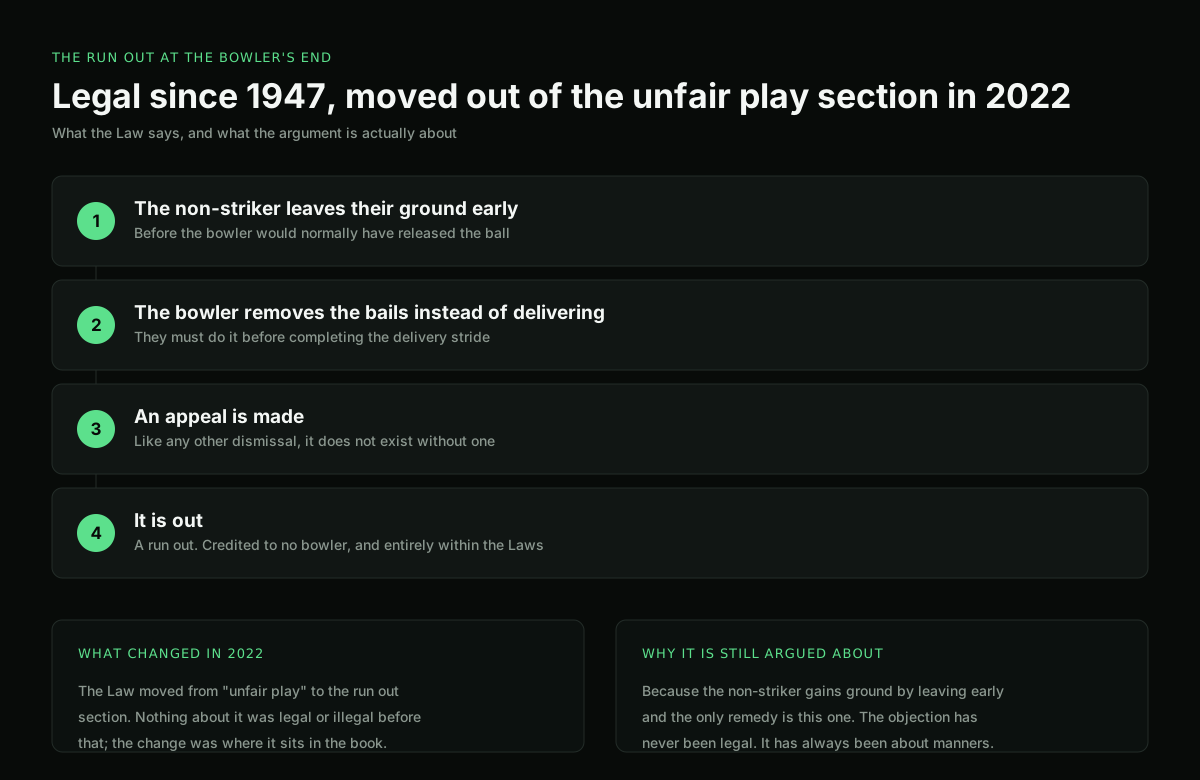
The non-striker must remain in their ground until the bowler would normally have released the ball. If they leave early, and the bowler removes the bails before completing the delivery stride rather than bowling, the non-striker may be run out on appeal.
It is a run out. It is credited to no bowler. It requires an appeal, like every other dismissal. And it is available at any point in any format.
The one condition that matters is timing: once the bowler has passed the point at which they would normally release, the opportunity is gone and the non-striker is free to leave.
Why the non-striker leaves early at all
Because it is worth something, and that is the whole reason the Law exists.
A non-striker who has already taken two or three steps down the pitch when the ball is delivered gets a significant head start on any single. In a tight run chase, that head start is the difference between a run out and a run, and over an innings it is worth several runs to the batting side.
It is also, technically, cheating. The Law says stay in your ground; leaving early is taking an advantage the Laws do not permit. The dismissal is the remedy, and it is the only remedy available — there is no penalty run, no warning system in the Laws, and no other way for the fielding side to stop it.
Where the name came from
Vinoo Mankad ran out Bill Brown at the bowler's end during India's tour of Australia in 1947. He had warned him earlier in the tour. The dismissal was legal, the Australian press named the act after him, and the name stuck for seventy-five years.
Don Bradman, who was playing in that series, wrote later that he could not understand why the dismissal was ever regarded as unsporting, since the Laws were perfectly clear and the batter was gaining an unfair advantage.
That is worth noting, because the entire tradition of treating this as disreputable rests on an incident where the most respected figure in the sport thought the bowler was in the right.
What changed in 2022
The MCC moved the clause out of Law 41, "Unfair play", and into Law 38, "Run out".
Nothing about the legality changed. The dismissal was legal before and legal after. What changed was the signal: a Law sitting under a heading called unfair play carries an implication about the person using it, and moving it removed that implication.
The response confirmed that the implication was the whole issue. The same commentators who had said for decades that it was "within the Laws but not in the spirit of the game" continued saying it, unaffected by the fact that the Laws had now explicitly declined to agree.
| Before 2022 | After 2022 |
|---|---|
| Law 41, Unfair play | Law 38, Run out |
| Legal | Legal |
| Required an appeal | Requires an appeal |
| Argued about | Argued about |
The warning that is not in the Laws
The convention many people believe in — that a bowler must warn the non-striker before attempting it — has never been part of the Laws.
Some players choose to warn. Some competitions have written a warning into their playing conditions at various times. As a matter of the Laws, there is no requirement, and a bowler who runs out a non-striker on the first ball of a match has done nothing irregular.
The reason the convention persists is that it feels proportionate. A dismissal for something that is not a shot, not a mistake in the field and not a contest between bat and ball feels like it ought to come with a chance to correct the behaviour. That is a reasonable instinct. It is not a rule.
Why it stays rare
Not because bowlers are being sporting. Because it is difficult and it costs something.
Attempting it means not bowling the ball, which is an over-rate cost and a tactical one. It requires the bowler to be watching the non-striker in their delivery stride, which is a divided attention that does not help the delivery they were about to bowl. And it can fail — if the non-striker is in their ground, the bowler has wasted a ball and looks foolish.
The realistic effect of the Law is deterrence rather than dismissal. A batting side that knows the fielding side is willing to do it stops leaving early, which is exactly what the Law is for. The dismissals that happen are the ones where a non-striker did not adjust.
A bowler in their delivery stride notices the non-striker two metres out of their ground. They complete the delivery stride, do not release the ball, and remove the bails. What is the decision?
The attempt must be made before the bowler completes the delivery stride. Once past that point the opportunity has gone and the ball is dead. No warning is required by the Laws at any stage.
What would actually solve it
Two proposals come up whenever it happens, and both are better than the current argument.
A penalty run instead of a dismissal. Five runs to the fielding side for a non-striker leaving early, no wicket. It removes the disproportion and keeps the deterrent, and it has the disadvantage that it introduces a new signal and a new umpiring judgement for a rare event.
An automatic camera check. Technology already tracks the non-striker's crease for run outs. Applying it to every delivery would make leaving early impossible to get away with and impossible to be dismissed for, since nobody would do it.
Neither has been adopted. The current position is that the Laws are clear, the dismissal is legal, the objection is cultural, and the argument will run again the next time it happens.
- It is against the spirit of the game
- The bowler must warn first
- It is a new controversy
- Only one player has done it
- It is in the run out section of the Laws
- No warning has ever been required
- It has been legal since 1947
- It happens most seasons, in every format
- Legal since 1947, and still legal after the 2022 relocation
- The non-striker leaving early is taking an advantage the Laws forbid
- No warning is required, whatever the convention suggests
- Its real function is deterrence, not dismissal
The short version
A batter out of their ground can be run out. That is the Law, at both ends, and the only thing that has ever been unusual about this version is who people decided to be annoyed at.
For the full list of ways to be dismissed, see every way a batter can be out, and for the batting-end version of the same dismissal, how to read a scorecard properly explains why a run out is credited to no bowler at all.and for another dismissal that produced more argument than cricket, timed out and the one Test it decided.