The concussion substitute, and why it is unlike any other rule
It is the only rule in cricket that lets a replacement bat and bowl, and it exists because the alternatives were a concussed player continuing or a side playing with ten.
Cricket's substitution rules were built to stop sides gaining an advantage from an injury, and for most of the sport's history a substitute could field and nothing else. The concussion substitute is the one exception, and it took a death and a protocol to get it.
- A concussion substitute may bat and bowl, unlike any other substitute
- The replacement must be like-for-like, and the match referee decides
- Before it, a concussed player either continued or their side played with ten
- It applies at every level that adopts the protocol, not only internationals
What the rule does
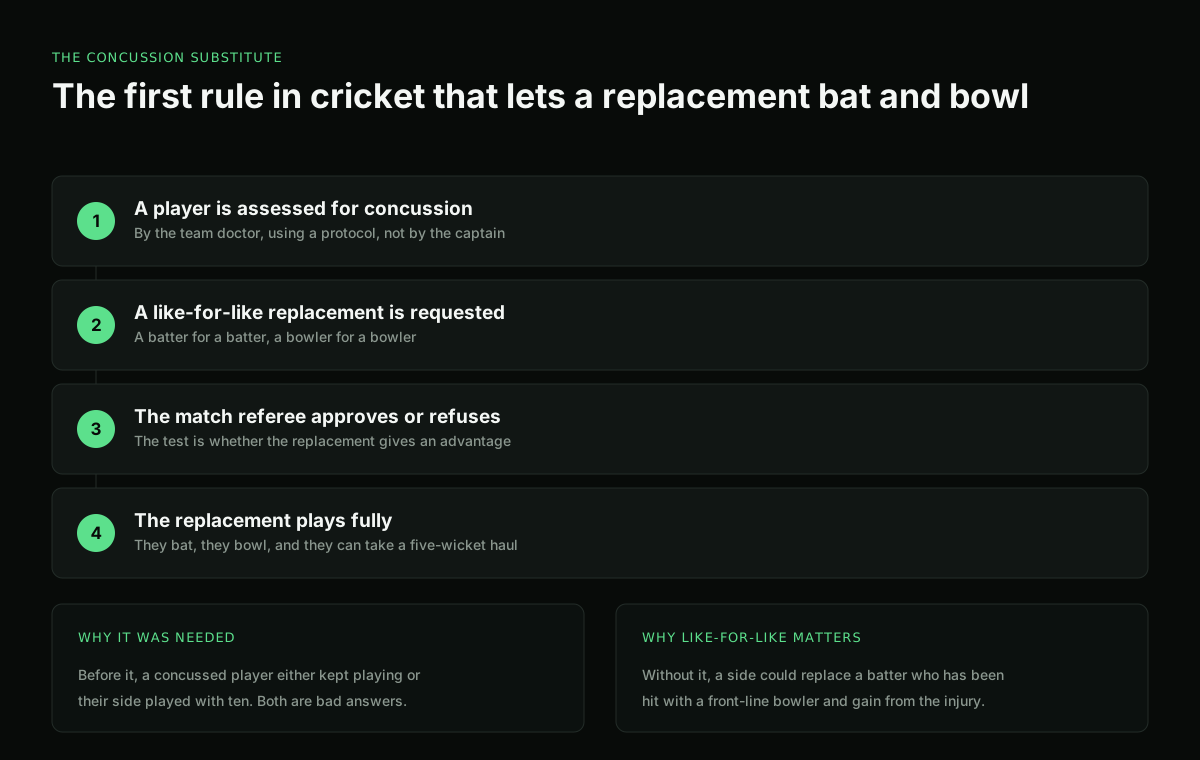
If a player suffers a concussion or a suspected concussion during a match, their side may request a replacement who takes their place fully — batting, bowling, keeping, everything.
That is unique. Every other substitute in cricket may field and nothing else. A side whose bowler breaks down mid-match plays on with ten specialists and a fielder; a side whose batter is injured has that batter retire hurt and the innings continues without them.
The concussion substitute exists because a concussion is not like other injuries: a player can feel able to continue and be genuinely unsafe, and the decision cannot be left to them.
Why the assessment is not the captain's call
The player is assessed by the team's medical staff using a concussion protocol, which is a standardised set of questions and physical checks.
That matters because concussion symptoms are frequently invisible from outside and frequently denied by the person who has them. Players want to keep playing. A protocol removes the judgement from the person least able to make it.
If the assessment indicates a concussion or a suspected one, the player is removed and cannot return to the match. There is no clearing them at tea.
Like-for-like, and who decides
The replacement must be a like-for-like player: a batter for a batter, a spinner for a spinner, a keeper for a keeper. The match referee approves or refuses the request.
The reason is obvious once you consider the alternative. Without it, a side could replace a batter who has been struck with a front-line bowler, and a serious injury would become a tactical windfall. The safety rule would create an incentive to have somebody hit.
The referee applies a single test: does the replacement give the side an advantage it would not otherwise have had? If the answer is yes, they can refuse the specific replacement or impose a restriction — for instance, allowing the substitute to play but not to bowl.
| Substitute type | May field | May bat | May bowl |
|---|---|---|---|
| Ordinary substitute | yes | no | no |
| Concussion substitute | yes | yes | yes |
| Impact player, where used | yes | yes | yes |
| Runner, where still permitted | no | no | no |
What it replaced
Before the rule, a side had two options and both were bad.
Keep playing the concussed player. Which happened routinely, was defended as toughness, and is now understood as a serious medical risk — a second impact following a concussion is far more dangerous than the first.
Play with ten. Which punished the side for an injury caused by the opposition's bowling, and created a perverse incentive for a batter to conceal symptoms so their team was not weakened.
The rule removes both. A player can be taken off without their side being disadvantaged, which removes the reason to hide it.
What counts as a suspected concussion
The protocol deliberately sets the bar low, and that is the point.
A blow to the head or neck triggers an assessment, whether or not the player says they are fine. Signs that mandate immediate removal — being unsteady, being unaware of the situation, losing consciousness even briefly — do not require any further test.
Below that, the assessment is a set of questions and balance checks that a concussed person fails in ways they cannot fake in either direction. Delayed onset is common, so a player who passes on the field is reassessed later, and a player who develops symptoms an hour afterwards is removed then.
The consequence is that some substitutions happen for players who turn out not to be concussed. That is the design working: the cost of a false positive is one substitution, and the cost of a false negative is a second impact on an injured brain.
The records question
A concussion substitute plays fully, which means they can score a hundred, take five wickets, or win a match, and the statistics count.
That has happened, and it produces an occasional argument about whether a performance by somebody who was not in the original eleven should be recorded the same way. The answer cricket has settled on is yes: they played, they performed, it counts.
The alternative — asterisks and separate categories — would be a bureaucratic nightmare for a rule that exists for medical reasons, and it would imply that somebody replacing an injured team-mate is a lesser participant.
Why cricket was slow to it
Other sports had concussion protocols years earlier, and cricket's delay had a specific cause: the sport's substitution rules were designed around a principle that made the fix difficult.
Cricket has always treated the eleven as fixed. A side that picks four bowlers and loses one is expected to live with the consequence, because the alternative is selection with a safety net. That principle is why runners were abolished, why an ordinary substitute may only field, and why "playing with ten" was accepted for so long.
Concussion did not fit. The principle assumes an injury is bad luck to be absorbed; concussion is a condition where continuing is actively dangerous and where the cost of absorbing it falls on the player rather than the team.
Resolving that required accepting a genuine exception to a rule cricket had held for a century, and the like-for-like test plus a match referee is the machinery that made the exception narrow enough to accept.
Where it applies
The rule was introduced in international cricket and has been adopted widely in first-class and domestic competitions, but not universally and not identically.
Some competitions require the substitute to be named in a wider squad. Some apply the like-for-like test more strictly than others. Recreational cricket in most countries has adopted a version, frequently a more permissive one, on the reasonable grounds that a club side has fewer replacements available and the priority is getting the injured player off the field.
The variation is worth knowing because "the concussion substitute rule" is not one rule. It is a family of them built on the same protocol.
A side's opening batter is concussed. They request a replacement who is a specialist spinner, arguing that the batter also bowled occasionally. What should the match referee do?
The test is whether the replacement gives the side an advantage. Replacing an opening batter with a front-line spinner does, so the referee can refuse the specific replacement or permit it with a restriction such as not bowling.
- The player decides whether to continue
- A substitute may field only
- Retire hurt, and return if able
- No approval needed
- A protocol decides
- A substitute plays fully
- Removed for the match, no return
- The match referee approves the replacement
- The only substitute in cricket who may bat and bowl
- Assessment is by protocol, not by the player or the captain
- Like-for-like, judged by the match referee, to stop injuries becoming windfalls
- It removed the incentive for players to conceal symptoms
The short version
Concussion is the one injury where the affected person is the worst judge of it, so cricket built a rule that takes the decision away from them and removes the cost of being honest about it. It is the only substitute in the sport who counts as a player.
For the equipment that reduced the injuries the rule exists for, see how cricket helmets went from optional to compulsory, and for the other kind of squad substitution, the value of a wicket in each format.