The googly explained, and why it is so hard to pick
A leg-spinner's delivery that turns the other way, bowled with the same arm action from the back of the hand. What it does, how to spot it, and why it changed spin bowling.
A googly is a delivery bowled by a leg-spinner that turns the opposite way to everything else they bowl. Same run-up, same arm, same apparent action, opposite result.
It was invented around 1900 and it is still, over a century later, the hardest delivery in cricket to read.
- A leg break turns away from a right-hander; a googly turns into them
- It is released from the back of the hand, with the wrist rotated further
- The arm action is deliberately identical, which is the entire point
- Picking it means watching the wrist and the seam, not the flight
What a leg-spinner normally does
A right-arm leg-spinner spins the ball with the wrist and fingers so that it turns from leg to off — away from a right-handed batter, towards the slips.
That is the stock ball. Everything else in the repertoire is a variation on how the wrist is positioned at release.
| Delivery | Wrist at release | Turns |
|---|---|---|
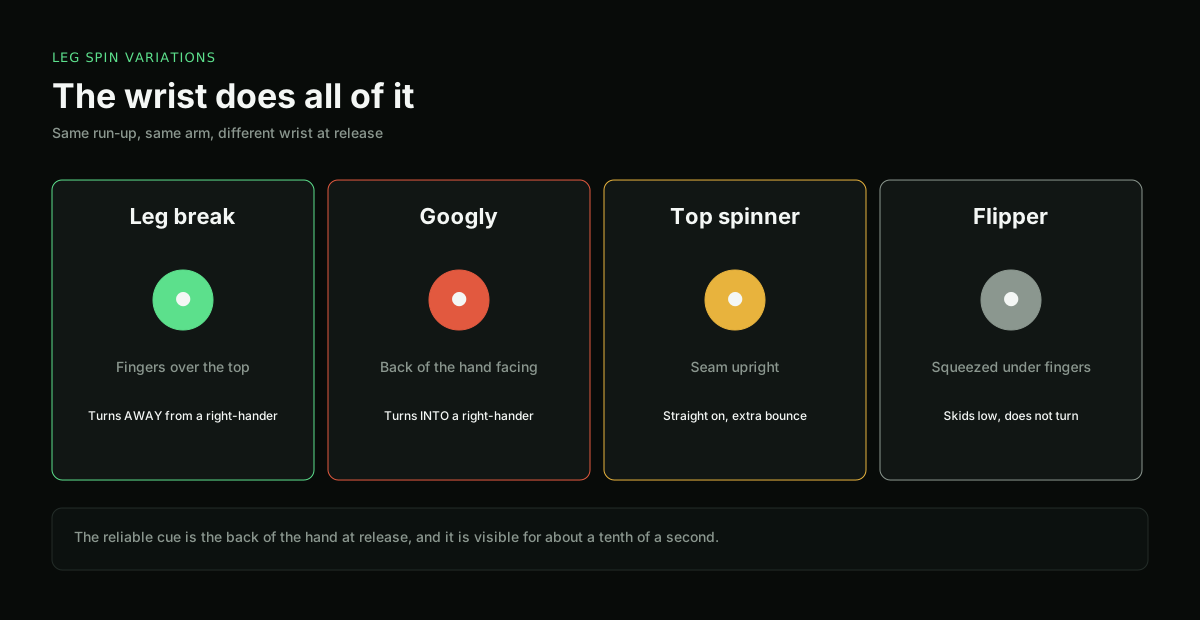
| Leg break | side-on, fingers over the top | away from a right-hander |
| Googly | rotated further, back of hand facing the batter | into a right-hander |
| Top spinner | between the two, seam upright | straight on, with extra bounce |
| Flipper | squeezed out under the fingers | skids low, does not turn |
Why it is hard to pick
The bowler is trying to make the arm and body look identical. What actually changes is the wrist, which is small, fast, and partly hidden by the arm during delivery.
Three cues, in decreasing order of reliability:
The hand at release. For a googly the back of the hand faces the batter. It is visible for perhaps a tenth of a second.
The seam in flight. The seam is angled differently and rotates the other way. Some batters genuinely see this; most claim to and do not.
Off the pitch. By which point it is too late, which is the entire idea.
Which way does a googly turn to a right-handed batter?
The googly turns the opposite way to a leg break, so into a right-hander. That is why it takes so many lbw and bowled dismissals rather than catches at slip.
What it does to a batter's dismissal
A leg break beats the bat towards the slips. A googly beats it towards the stumps.
That difference changes which dismissal is available. Leg breaks take catches at slip and gully; googlies take lbw and bowled, because the ball is coming back at the wicket.
A batter playing for turn away and getting turn in is playing down the wrong line entirely, which is why so many googly dismissals look careless and are not.
The cost of bowling it
It is slower. Rotating the wrist that far costs pace and often accuracy, which is why leg-spinners bowl three or four leg breaks for every googly.
It also cannot be hidden forever. Bowl too many and batters start looking for it, at which point the leg break becomes the surprise ball and the whole plan inverts — which is a legitimate tactic in itself.
The four deliveries, and what separates them
A leg-spinner has a small vocabulary and the whole art is in disguising which word is coming.
The leg break is the stock ball. The wrist rotates so the fingers come down the outside of the ball, and it spins from leg to off for a right-handed batter — away from them.
The googly is bowled with the back of the hand facing the batter at release. The same arm action, the same seam, and the ball spins the other way, into the right-hander.
The top-spinner is the halfway house. The wrist is between the two positions, the ball is spun over the top rather than sideways, and it does not turn much at all — it dips and then bounces higher than expected. It gets more wickets than either of the other two in some bowlers' careers, because a ball that goes straight on when the batter has played for turn is lbw or bowled.
The slider or flipper, depending on the bowler, is squeezed out of the front of the hand with back-spin. It skids on low and fast, and it is the hardest of the four to bowl well.
| Delivery | Wrist at release | What it does |
|---|---|---|
| Leg break | fingers down the side | turns away from the right-hander |
| Googly | back of the hand facing the batter | turns into the right-hander |
| Top-spinner | between the two | dips, bounces, does not turn |
| Slider or flipper | front of the hand, back-spin | skids on low and straight |
How batters actually pick it
Nobody reads the seam in flight. It is thirty metres in under half a second and the seam is not big enough.
The cue that works is the hand at the moment of release, and specifically whether the back of it is visible. A batter who picks a leg-spinner is watching the bowler's wrist through the delivery stride, not watching the ball. This is why leg-spin is harder to face on television than in person, and why batters talk about "picking him from the hand" as a binary thing: either you can see the wrist or you cannot.
Batters who cannot pick it from the hand fall back on two worse options. Picking it off the pitch means playing late, with soft hands, and accepting you will be beaten. Playing the line means treating every ball as a leg break and using the pad, which works until the googly is straight enough to be lbw.
The cost of being able to bowl one
The googly is not free. Bowling it requires a wrist position that most bowlers cannot achieve without losing something else, and what they lose is usually accuracy or revolutions on the stock ball.
Every leg-spinner faces the same trade-off: a bowler with a great googly and an average leg break is playing a card trick, and a bowler with a great leg break and no googly is a specialist who will be worked out over a long series. The very best of them have both and can bowl either to a length, which is why there are so few of them and why sides put up with the wides and the four-balls to have one.
The off-spinner's version
An off-spinner's equivalent is the doosra, which turns away from a right-hander instead of into them. It is harder to bowl legally, because the arm straightening tolerance is easy to exceed when trying to impart that spin with fingers rather than wrist.
Several careers have ended over bowling actions built around it, which is a difference from the googly worth knowing: the googly has never been legally controversial, because the wrist is doing the work rather than the elbow.
- Bowled by a leg-spinner
- Turns into a right-hander
- Wrist rotation does the work
- Never legally controversial
- Bowled by an off-spinner
- Turns away from a right-hander
- Finger and elbow position do
- Several actions reported over it
- Same action, opposite turn, released from the back of the hand
- Turns into a right-hander, so it takes lbws and bowleds rather than catches
- The reliable cue is the hand at release, and it lasts a tenth of a second
- Bowling too many turns the leg break into the surprise ball
For how spin fits differently into each format, see Test, ODI and T20.