The first Test match, 1877, and why nobody called it that
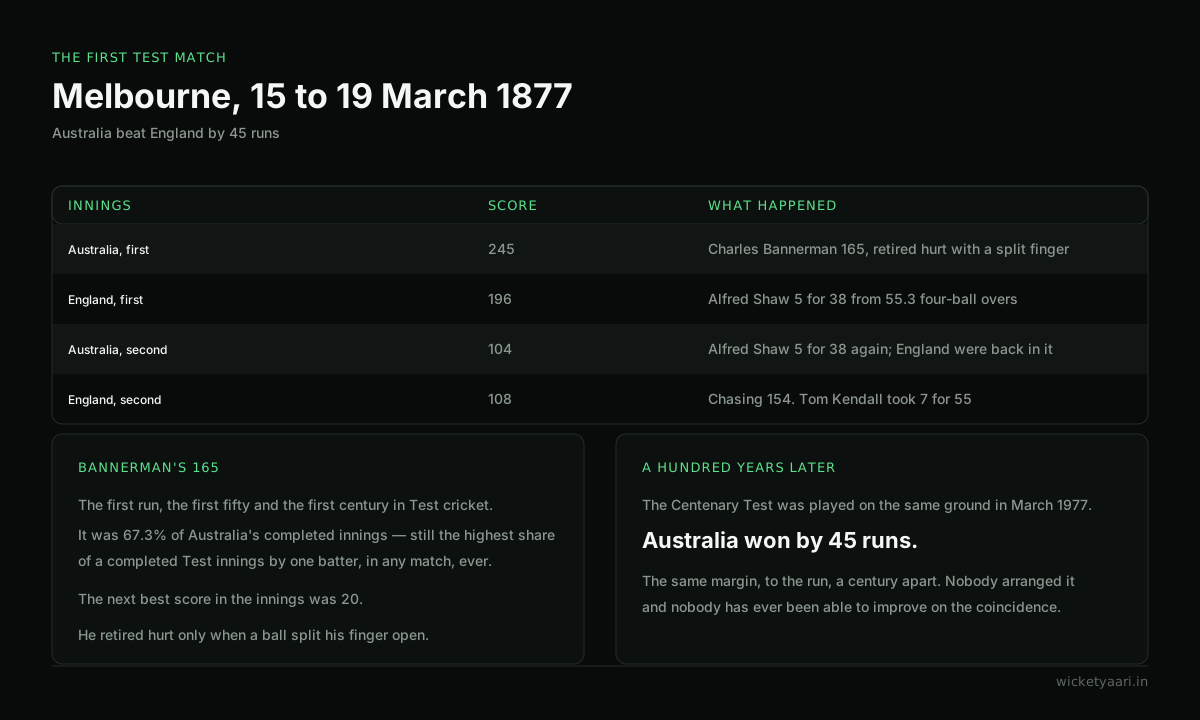
Australia beat England by 45 runs at the MCG in a game neither side considered historic. The label came later, and so did almost everything else.
The first Test match was played at the Melbourne Cricket Ground in March 1877. Australia won by 45 runs. Nobody present called it a Test match, because the term did not yet mean anything.
- Played at the MCG in March 1877; Australia won by 45 runs
- The "Test" label was applied retrospectively, years later
- Neither side was a national team in any modern sense
- The format it used — two innings, no time limit — is why Test cricket looks as it does
What it actually was
An England touring side, assembled privately and travelling for money, played a Combined Australian XI. Tours like it had been happening since 1861. This one happened to be against a side strong enough to make the result meaningful.
There was no governing body on either side, no selection committee in the modern sense, and no sense that a series was beginning. The players were paid professionals and part-time amateurs, and several of England's best were not on the tour at all.
Charles Bannerman
Australia's opener made 165 before retiring hurt, out of a first-innings total of 245. That is 67 percent of the innings, which remains the highest share of a completed Test innings by one batter.
He faced an England attack on a pitch nobody had prepared for a five-day game, and the innings is the reason Australia won. It is also, in a sense, the first Test record ever set.
Charles Bannerman scored 165 of Australia's 245 in the first innings. What share of the total is that?
67.34 percent, which remains the highest proportion of a completed Test innings scored by one batter, nearly a hundred and fifty years later.
Why the format mattered more than the match
The game used the shape English first-class cricket already had: two innings per side, no limit on overs, played across several days until a result or the time ran out.
That shape was not designed for international cricket. It was simply what existed. But applying it between countries created the idea that cricket was something nations did to each other, and every structure since has descended from that: the Ashes, the World Cup, the World Test Championship.
- 1861First English tour of AustraliaPrivate, commercial, and not remotely international
- 1877The MCGAustralia beat England by 45 runs
- 1882The OvalAustralia win in England; the Ashes is invented by a newspaper
- 1889South AfricaThe third Test-playing nation joins
- 1928West IndiesThen New Zealand and India within five years
When it became "the first Test"
The term "Test match" appeared in the 1880s to describe matches considered a true test of strength between sides. Which historical matches counted was settled retrospectively, largely by cricket writers and statisticians, and the 1877 game was placed at the head of the list.
The consequence is that Test number one was designated as such by people who were not there, decades afterwards. It is one of the few sports whose founding event was chosen by historians rather than announced by anybody.
- A private tour fixture for money
- A Combined Australian XI
- An England side missing its best players
- A format borrowed from county cricket
- Test match number one
- The Australian national team
- England
- The template for all international cricket
What the cricket itself was like
Almost every detail of the 1877 match would look wrong to a modern eye, and the differences are more interesting than the similarities.
Overs were four balls long, so Alfred Shaw's 55.3 overs were 223 deliveries, not 333. There was no boundary rope and few boundaries: a ball hit into the crowd was run, which is why the fours in the scorecard are fewer than the hitting suggests. Pitches were not covered, they were not prepared to anything like a modern standard, and the same strip was used for the whole match with no protection from rain overnight.
There were no declarations, no limit on the number of days, and no toss ritual worth reporting. The wicketkeeper stood up to nearly everything because the bowling was slower than modern quick bowling and the gloves offered almost no protection.
| 1877 | Now |
|---|---|
| Four-ball overs | Six-ball overs |
| No boundary rope | Roped boundary, four and six |
| Uncovered pitch | Covered overnight and in rain |
| Timeless, in effect | Five days, and a draw is a result |
| No lbw for a ball pitching outside off | Lbw available outside off with no shot |
There was also no neutral umpiring, no third umpire, no scoreboard as we would recognise one, and no agreed set of playing conditions between the two sides beyond what was settled in conversation before the match. Everything that makes a Test match a Test match was assembled afterwards, retrospectively, by people deciding that this particular game had counted.
The tour that produced it
The match was not organised as a landmark. It was the end of a long, commercially driven tour by an English professional side under James Lillywhite, playing mostly against odds — fifteen or eighteen local players against eleven Englishmen — because that was the only way to make the fixtures competitive enough to sell tickets.
The Melbourne game was different because it was eleven against eleven. That is the entire reason it later counted as a Test, and at the time it was a scheduling decision rather than a statement. Several of England's best players were not there at all: the side was professional, W. G. Grace was an amateur and did not tour, and two of the party had missed the boat in the most literal sense.
Australia's XI was assembled from the colonies with no national board to select it. There was no Australia, in the constitutional sense, until 1901 — the side that beat England represented a group of separate colonies that were not yet one country.
The players nobody remembers
England's captain was James Lillywhite, whose family ran a sports outfitting business and who organised the tour commercially. Australia's was Dave Gregory, one of a family that supplied several early Australian cricketers.
Neither was appointed by a board, because neither country had one. Gregory was chosen by the players; Lillywhite chose himself, having put the tour together. The idea that a national captain is selected by an institution came decades later, and in England's case not fully until the twentieth century.
The rematch nobody planned
England won the second match of the tour, two weeks later on the same ground, by four wickets. That game is Test number two, designated by the same historians, and it means the first Test series in history finished one-all.
There was no trophy, no presentation and no reporting that treated it as a series at all. The idea of a series with a name and a prize arrived with the Ashes five years afterwards.
The bit that has not changed
Two innings each, no over limit, a result that can be a draw, and a contest whose shape is set by a ball and a pitch that both degrade.
Everything else about 1877 is unrecognisable — the pay, the travel, the equipment, the absence of any authority. The format itself has barely moved in a hundred and fifty years, which is either remarkable or stubborn depending on your view.
- March 1877, MCG, Australia by 45 runs, and nobody called it a Test
- Bannerman's 165 is still the largest share of a Test innings by one batter
- The format was borrowed from county cricket, not designed for internationals
- Test number one was designated retrospectively by writers, not announced
For what happened five years later, see how the Ashes got its name. For the wider arc, see the history of cricket in ten moments.