The history of cricket in ten moments that actually changed it
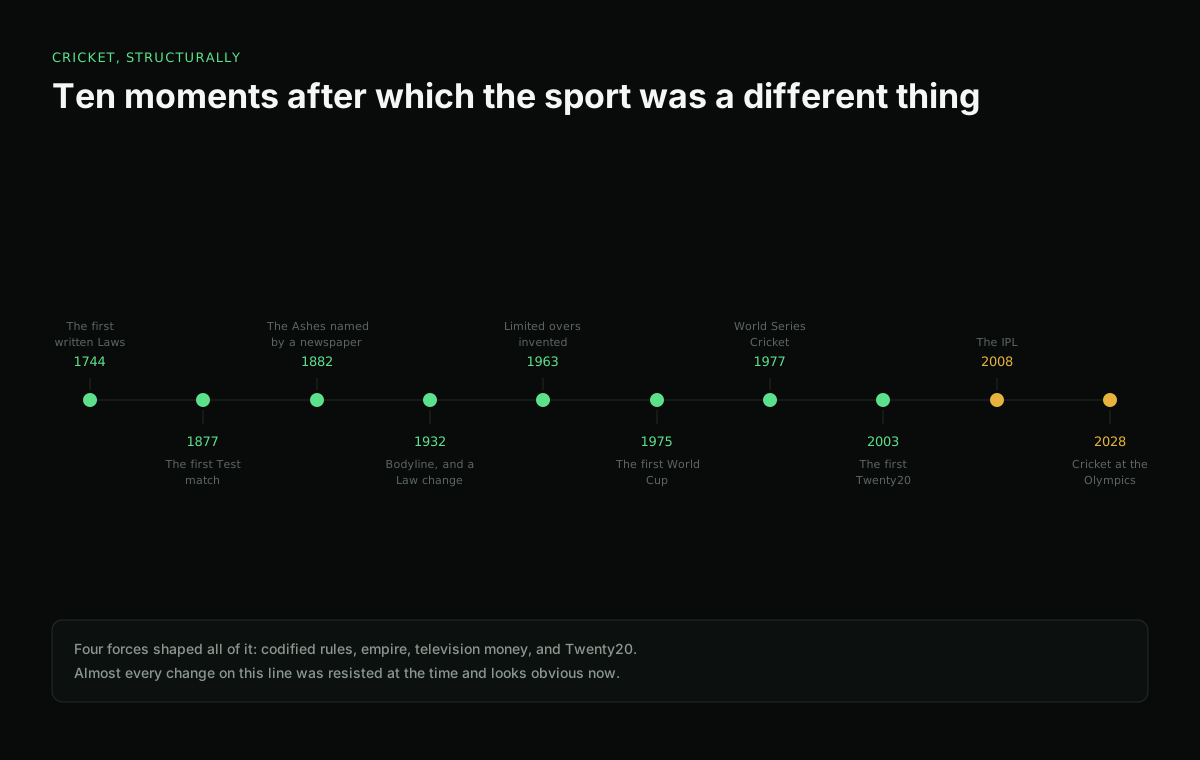
Not a list of famous matches. Ten points where the sport itself became something different, from the first Test to the T20 money that rewrote the calendar.
Cricket has been played for about four hundred years and rewritten about ten times. Most histories of the game are a parade of great players. This is the other list: the moments after which the sport was structurally not the same thing it had been the day before.
- Cricket's shape has been set by four forces: codified rules, empire, television money, and Twenty20
- The 1877 Test, the 1975 World Cup and the 2008 IPL are the three that moved everything else
- Almost every change was resisted at the time and looks obvious now
The ten
- 1744The first written LawsA London club writes the game down. Before this, disputes were settled by whoever shouted loudest
- 1877The first Test matchAustralia beat England at the MCG by 45 runs. Nobody called it a Test until years later
- 1882The AshesA mock obituary in a newspaper invents the most durable rivalry in sport out of a single defeat
- 1932BodylineEngland bowl at the body to stop Bradman. It works, nearly ends a diplomatic relationship, and gets the Laws changed
- 1963Limited oversEnglish county cricket invents the one-day game to sell tickets. It sells tickets
- 1975The first World CupSixty overs a side, at Lord's, won by West Indies. The one-day game stops being a novelty
- 1977World Series CricketKerry Packer signs the best players privately. Two years of chaos, then coloured clothing, floodlights and players who get paid
- 2000Central contracts spreadBoards start employing players directly. The amateur era finally, formally ends
- 2003The first T20Another English county competition invented to sell tickets. This one works better than anyone intended
- 2008The IPLFranchise cricket with television money at a scale the sport had never seen. Every calendar since has been built around it
Why 1877 matters more than it looks
The first Test was not planned as the first anything. It was a touring side playing a local eleven, and the "Test" label was applied retrospectively.
What made it structural was the format: two innings each, no time limit, played over multiple days. That shape had already existed in England, but staging it between two countries created the idea that cricket was a thing nations did to each other. Every international structure since — the Ashes, the World Cup, the World Test Championship — descends from that decision.
Bodyline is the only time the Laws changed because of a diplomatic incident
Douglas Jardine's plan for the 1932-33 Ashes was to bowl fast, short and at the body, with a ring of close catchers on the leg side. It was legal. It was also so obviously dangerous and so obviously aimed at one man that the Australian board cabled the MCC accusing England of unsportsmanlike conduct, and the British government got involved.
England won the series 4-1. Bradman averaged 56, which for him was a collapse. Within two years the Laws restricted the number of fielders behind square on the leg side, which is a rule that exists today entirely because of one series.
Bodyline was designed to contain one batter. Whose Test average was it trying to reduce?
Bradman was averaging 99.94 across his career. Bodyline cut him to 56.57 for the series, which was the only tactic that ever worked on him.
Packer changed more than any player ever did
In 1977 an Australian television executive who had been refused broadcast rights signed fifty of the world's best players to a private circuit.
The establishment called it a circus. It lasted two years, and by the time it was folded back into official cricket it had introduced coloured clothing, white balls, floodlit matches, drop-in pitches, helmets as standard, multiple camera angles, stump microphones, and the idea that a professional cricketer should be paid like a professional.
Nearly everything that looks normal about televised cricket today was invented during a dispute about broadcasting rights.
The two competitions invented to sell tickets
Limited-overs cricket in 1963 and Twenty20 in 2003 were both created by English county administrators for the same unglamorous reason: county grounds were empty and the game needed a product people would come to after work.
Both were treated as gimmicks. Both took over.
- Filling county grounds on a Saturday
- 65 overs a side, in whites, with a red ball
- A knockout to finish the season
- The World Cup, from 1975
- 50 overs, coloured kit, white ball, floodlights
- The format that funded cricket for thirty years
The IPL is the money, and the money sets the calendar
The 2008 Indian Premier League was not the first franchise league, but it was the first at a scale that made national boards negotiate around it.
The consequence people miss is not the salaries. It is the calendar. There is now a window every year that most cricketing nations schedule around, which means bilateral series get shortened, Test tours get compressed into two-match series, and players make choices about which format to prioritise that did not exist in 2007.
The one that has not finished happening
Cricket returns to the Olympic programme at Los Angeles in 2028, for the first time since 1900. Whether that turns out to be a footnote or the eleventh moment on this list depends on things that have not happened yet: whether the USA develops a domestic base, whether Associates get funded, and whether the schedule can absorb another tournament.
Ask again in 2029.
What the ten have in common
Read the list again and a pattern appears that is uncomfortable for anybody who prefers their sporting history to be about sport.
Almost none of these moments were caused by cricket. The first Test was the end of a commercial tour. Bodyline was a diplomatic incident. World Series Cricket was a television rights dispute. The 1983 World Cup mattered because of the television audience it created, not the trophy. The IPL is a broadcast property that happens to be played by cricketers.
The exceptions are Bradman's average and the 1976 West Indies side, and even those changed the game mostly by changing what administrators thought was possible.
That is not cynicism. It is how every sport works: the rules change when the money or the audience changes, and the players are the ones who have to make the new arrangement look inevitable afterwards.
The moments that nearly made the list
Ten is an arbitrary number and four things were cut late.
The 1877-1900 over-length changes, which quietly standardised the shape of an innings and are invisible now precisely because they were settled.
Neutral umpires, from 1994. The single change that most improved the perceived fairness of Test cricket, adopted with almost no argument, and now partially reversed for logistical reasons without much argument either.
The rebel tours of South Africa in the 1980s, which tested exactly the same question World Series Cricket did — can a board stop a player taking money — and answered it in a context where the answer mattered far more.
The 2019 World Cup final, which is the most extraordinary single day of one-day cricket ever played and produced a rule change within three months. It is not on the list because it changed a tiebreaker, not the sport.
Where you can test any of this
Most of the players and matches in this piece are in our dataset, and turn up in the daily puzzles. Here is one from the era Packer changed:
West Indian, batted at three, never wore a helmet. Six guesses on the real board would show you this row.
Viv Richards — Never wore a helmet and never lost a Test series as captain. Full record
- The Laws (1744) made cricket one game rather than many local ones
- 1877 made it international; 1882 gave it a rivalry to sell
- Bodyline is the only Law change caused by a diplomatic cable
- Packer, not any board, invented modern television cricket
- Both one-day and T20 were invented by counties trying to sell tickets
- Since 2008 the calendar has been arranged around franchise money
If you want the numbers behind any of it, the player list has every cricketer we hold, and today's six puzzles are where they end up.