The three teams that won a Test after following on
In roughly 2,600 Test matches it has happened three times, and two of them involved the same opposition. What the three have in common is not what people assume.
Being made to follow on means batting again immediately, still hundreds behind. Three sides in the history of Test cricket have gone on to win from there.
- Three occurrences in roughly 2,600 Test matches
- England did it twice, in 1894 and 1981; India in 2001
- Australia were the opposition on all three occasions
- Every one of them was decided by a bowler, not by the batter who made the runs
The three
| Year | Winner | Opponent | Deficit | Won by |
|---|---|---|---|---|
| 1894 | England | Australia | 261 | 10 runs |
| 1981 | England | Australia | 227 | 18 runs |
| 2001 | India | Australia | 274 | 171 runs |
Australia on the wrong side of all three is the detail that gets the laugh, and it is mostly a function of how often Australia have been good enough to enforce it.
1894, Sydney
England followed on 261 behind and won by 10 runs. Australia needed 177 in the fourth innings, got to 113 for 2 overnight, and then it rained.
Bobby Peel took six on a drying pitch the following morning. The story goes that he had been drinking, was doused with cold water by his captain, looked at the wicket and said England could not lose. He was right, by ten runs.
1981, Headingley
The famous one. England followed on 227 behind, were 135 for 7 in the second innings, and were being offered at 500 to 1 by bookmakers at the ground.
Ian Botham made 149 not out. That is the part everybody remembers. Australia then needed 130 and were bowled out for 111, with Bob Willis taking eight for 43 in a spell that is the actual reason England won.
England won at Headingley in 1981 after following on. Who took eight wickets in the fourth innings?
Willis took 8 for 43. Botham's 149 not out made the target possible; Willis's spell is what actually won the match, and it is consistently the less remembered half.
2001, Eden Gardens
India followed on 274 behind against an Australian side that had won sixteen consecutive Tests.
VVS Laxman made 281 and Rahul Dravid 180, batting through most of two days. Australia, set 384, were bowled out for 212 with Harbhajan Singh taking six, having already taken seven and a hat-trick in the first innings.
The full card is here.
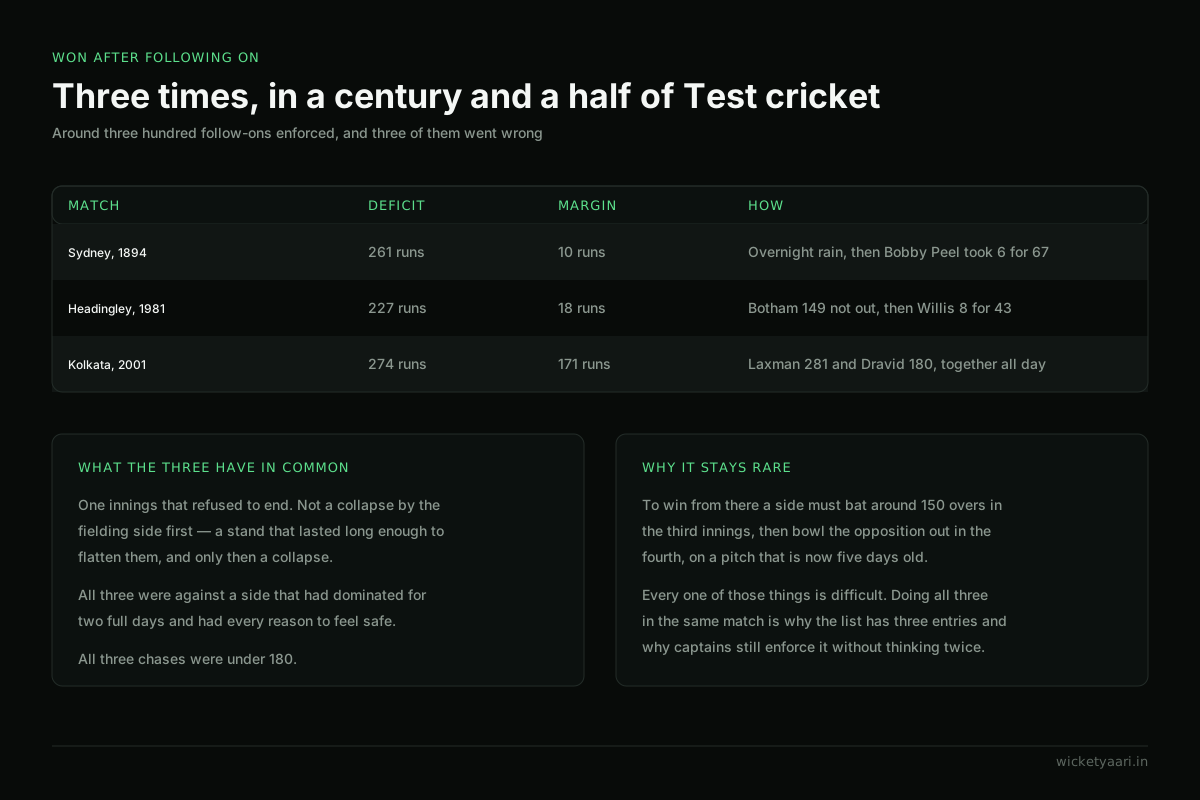
What the three have in common
Not the batting. Everybody remembers Botham and Laxman, and in both cases the match was won by the bowling that followed.
Three things recur:
A pitch that changed. Rain in 1894, deterioration in 1981 and 2001.
A tired attack. The side that enforced had already bowled a full innings and then bowled another eighty to a hundred and thirty overs.
A small-ish target. 177, 130 and 384. The first two are the kind of total a side chases without thinking, which is exactly the problem — nobody plays a fourth innings properly when they expect it to be easy.
- Botham's 149 not out
- Laxman's 281
- The follow-on being a mistake
- A miracle
- Willis, 8 for 43
- Harbhajan, 13 in the match
- A three-man attack bowling 130 overs in Kolkata heat
- A pitch on day five and a target treated as a formality
The near misses
Two sides have followed on, made the opposition bat again, and still lost — which is the outcome captains are actually afraid of and which has happened more often than an outright reversal.
The more common near miss is the draw. A side following on and batting out four sessions to save a match happens several times a decade and is barely reported, because a draw generates no headline. Those matches are the real cost of enforcing: not defeat, but a win converted into nothing.
Why it happened three times and not thirty
Enforcing the follow-on puts a side 200 or more behind with two innings to play, and the arithmetic of getting out of that is brutal.
To win from there you must bat long enough in the third innings to erase the deficit and set a target, which means batting for something close to a day and a half against a side that has just bowled you out cheaply. Then you must take ten wickets on the fifth day, with tired bowlers, against a side that only needs to survive or to chase a modest total.
Each of those is roughly a one-in-ten proposition on its own. Multiplied, you get a number close to one in a hundred, and around three hundred follow-ons have been enforced. Three wins is not a surprise. It is very nearly exactly what you would expect.
What the follow-on rule actually says
The margin depends on the scheduled length of the match, not on its format, and it is easy to get wrong in a shortened game.
| Match length | Lead required |
|---|---|
| Five days or more | 200 runs |
| Three or four days | 150 runs |
| Two days | 100 runs |
| One day, first-class rules | 75 runs |
Two details catch people out. The margin is based on the scheduled length, so a five-day Test that loses two days to rain still requires 200. And the follow-on is always the fielding captain's option, never an obligation — nothing compels a side with a 400-run lead to enforce it, and in modern cricket most do not.
Why captains stopped enforcing it
The three famous defeats get the credit and they are not the real reason. The real reasons are workload and the fourth innings.
A modern fast bowler's workload is managed to the over. Bowling a side out, then bowling them out again immediately, in the same conditions, without a break, is around 150 overs of fast bowling across three days — and the same attack is expected in the next Test ten days later. Boards and coaches now price that higher than the extra day it saves.
The second reason is the pitch. Enforcing the follow-on hands the fourth innings to the opposition, and the fourth innings is the one played on the worst surface. A captain who bats again takes the good batting conditions for himself, sets a target on a deteriorating pitch, and gives his bowlers a rest. It is slower, it is safer, and it is almost always correct.
All three of the wins also share a detail that is easy to miss: the side batting last was chasing under 180. None of them was set a target that required a good batting performance. They were set targets that required only nerve, and in each case the nerve went before the runs did.
The near misses nobody lists
Three wins is the headline. The number of sides that followed on and made the match genuinely difficult is much larger, and it is the more useful statistic.
Sides following on have set fourth-innings targets over 300 more than a dozen times, have taken matches into the final session repeatedly, and have saved a significant number of Tests as draws — which, for a side 250 behind on first innings, is a result indistinguishable from a win.
That is the honest reading. Following on almost never loses you a Test. It loses you the certainty, costs your bowlers three days, and hands the fourth innings away, and modern captains have decided that trade is not worth the day it saves.
Does it prove the follow-on is dangerous
No. Three times in 2,600 matches is a failure rate of roughly one in nine hundred, and captains have been avoiding the tactic partly because of a risk that barely exists.
The better arguments against enforcing are bowler workload and fourth-innings pitches, both of which are covered in what the follow-on is. Headingley and Eden Gardens are the reason for the caution, and they are not a good reason.
- Three times in the history of Test cricket, all three against Australia
- Every one was won by a bowling spell, not by the famous innings
- Deteriorating pitches, exhausted attacks and underestimated targets each time
- One in nine hundred is not a risk worth abandoning a tactic over