Malcolm Marshall by the numbers, and the best of the four
376 Test wickets at 20.94, which is the lowest average of any bowler with 300 or more, taken by the shortest and fastest of the great West Indian quicks.
Malcolm Marshall took 376 Test wickets at 20.94. That average is the lowest of any bowler with 300 or more wickets in the history of Test cricket, and he took them in the most competitive fast bowling attack ever assembled.
- 376 Test wickets at 20.94, from 81 Tests
- The lowest bowling average of anybody with 300 or more Test wickets
- He was around 180 centimetres tall, which is short for a fast bowler
- He had to compete for a place with Holding, Garner, Croft, Roberts and Ambrose
The record
| Format | Matches | Wickets | Average | Strike rate |
|---|---|---|---|---|
| Tests | 81 | 376 | 20.94 | 46.8 |
| ODIs | 136 | 157 | 26.96 | 43.6 |
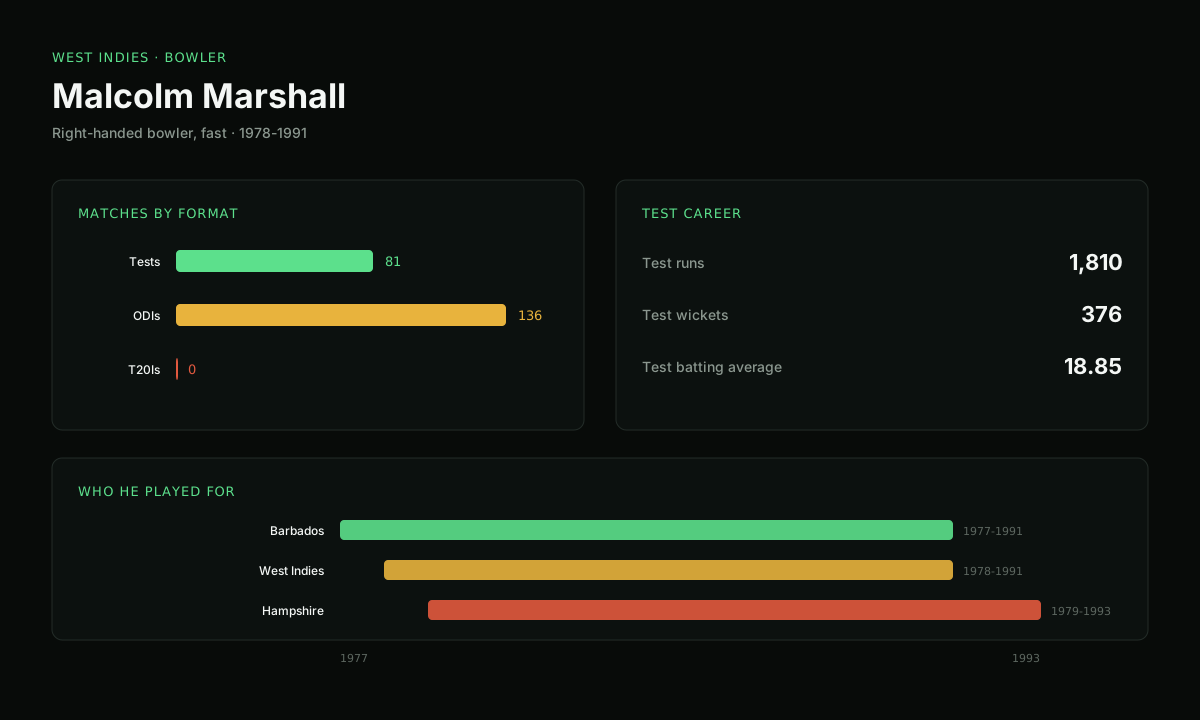
The full record is on his player page.
The average
20.94 is the number. Nobody with 300 or more Test wickets has averaged less.
For comparison: McGrath 21.64, Steyn 22.95, Ambrose 20.99, Hadlee 22.29, Lillee 23.92. The margin over the next-best is small and the company is the best fast bowling of the last fifty years.
The strike rate of 46.8 balls per wicket is also excellent — behind Steyn's 42.3 and ahead of everyone else with a comparable career.
Both numbers were produced in a side where four other bowlers of similar standard were also taking wickets, which means he was not accumulating cheap ones at the other end while somebody else did the work.
The height
He was about 180 centimetres, which is short for a fast bowler and was considered a disqualification when he started.
Fast bowling orthodoxy says height produces bounce and bounce produces wickets. He generated pace from a very fast arm and an explosive, skidding action instead, and what he produced was a ball that arrived faster than expected and lower than expected.
That is arguably harder to play than steep bounce. A batter can leave a ball climbing over the stumps; a ball skidding on at the same speed hits the pad or the base of off stump.
He also swung it, both ways, at pace, which very few fast bowlers of any height have managed.
The competition
The context that makes the record remarkable is who else was available.
He debuted in 1978 into a side that already had Roberts, Holding, Garner and Croft. For his first few years he was fifth choice and played sporadically. By the mid-1980s he was the leader of the attack, and by the end of his career he was competing with Ambrose, Walsh, Bishop and Patterson.
At no point in a fifteen-year career was his place safe by default. Every one of his 81 Tests came at the expense of somebody who would have been a strike bowler for any other country.
Headingley, 1984
The innings that gets cited is the one where he broke his left thumb in two places fielding on the first morning, went to hospital, and came back.
He batted one-handed at number eleven to help Larry Gomes reach a century, then bowled 26 overs with the thumb in a cast and took 7 for 53. West Indies won by eight wickets and the series 5-0.
The 7 for 53 is a very good analysis. The circumstances make it the most-told story about him, and it is characteristic rather than exceptional: everybody who played with him describes somebody who did not stop.
The bowling brain
He was, by consensus among the players who faced him, the most intelligent of the great West Indian bowlers.
Where the attack's general method was pace and short bowling from four directions, he set batters up: bowling wide of off for an over to establish a line, then bringing one back; using the bouncer as a set-up rather than as the delivery; changing his angle on the crease.
His record against left-handers is unusually good, and it is the clearest evidence for the planning: he bowled round the wicket to them at a time when almost nobody did.
Country and role narrow it to about five. The wickets and average columns finish it.
Malcolm Marshall — Bowled with a broken thumb at Headingley and took seven wickets one-handed. Full record
What the totals do not show
376 wickets from 81 Tests is 4.6 a match, and the total is small compared with the modern bowlers he is measured against.
The reason is fixtures. West Indies played fewer Tests in the 1980s than modern sides play now, and Marshall lost matches to the rotation within his own attack. A bowler of his standard in a modern schedule, as the clear leader of an attack, would have played 130 Tests and taken 600 wickets.
The rate and the average are what survive that comparison, and they are the two numbers he leads on.
The comparison within the attack
The four or five great West Indian fast bowlers of that period are routinely ranked and the ranking depends entirely on which number is used.
| Bowler | Tests | Wickets | Average | Strike rate |
|---|---|---|---|---|
| Malcolm Marshall | 81 | 376 | 20.94 | 46.8 |
| Curtly Ambrose | 98 | 405 | 20.99 | 54.5 |
| Michael Holding | 60 | 249 | 23.68 | 50.9 |
| Joel Garner | 58 | 259 | 20.97 | 50.8 |
| Courtney Walsh | 132 | 519 | 24.44 | 57.8 |
Marshall, Ambrose and Garner are separated by five hundredths of a run in average. Marshall's strike rate is the best of the group by a clear margin, which is the tiebreaker most people use.
Walsh has the most wickets and played the most matches, mostly after the great period had ended, which is the pattern longevity always produces.
The county years
He played for Hampshire for fourteen seasons and took over 800 first-class wickets for them, which matters for a reason beyond the numbers.
English county cricket in the 1980s was where the West Indian fast bowlers spent their summers, and it is where a generation of English batters learned what genuine pace was. Several of them have said that facing Marshall in a county match was harder than anything they encountered in Test cricket, because he was bowling at them for four days rather than in bursts.
The end
He died of colon cancer in 1999, at 41, four years after retiring from first-class cricket.
He had become a coach — of West Indies and of Hampshire — and the accounts from the players he worked with are consistent: somebody who could explain what he had done, which is rarer among great fast bowlers than it should be.
- Height, for bounce
- A settled place in the side
- Raw pace as the whole method
- Volume, for a wicket total
- A skidding trajectory that arrived early
- Competition with four other great bowlers
- Swing both ways, at pace, and a plan
- The best average of anybody with 300
Where he sits in our dataset
Difficulty tier 1 on the player list. West Indies, bowler, 1978 to 1991 puts him among his own attack, and the wickets column separates them.
- 376 wickets at 20.94, the best average of anybody with 300 or more
- Short for a fast bowler, and faster than almost all of them
- 7 for 53 at Headingley with a thumb broken in two places
- He was fifth choice in his own attack for his first three years
The short version
The lowest bowling average of anybody with 300 Test wickets, produced in the most competitive attack the sport has assembled, by a bowler who was the wrong shape for the job. Most of the people who faced that attack name him as the best of it.
For the side he bowled in, see the rise of the West Indies, and for the field setting that produced the laws he bowled under, Bodyline and the law it changed.