Kumar Sangakkara by the numbers, and the average nobody mentions
12,400 Test runs at 57.40, which is the highest average of any batter with 10,000 runs except one, achieved while keeping wicket for half of it.
Kumar Sangakkara averaged 57.40 in Test cricket, which is the highest of any batter with 10,000 runs. He also spent roughly half that career keeping wicket, which cost him about twenty runs an innings while he was doing it.
- 12,400 Test runs at 57.40, from 134 Tests
- The highest average of any batter with 10,000 Test runs
- He kept wicket for roughly half his Test career, and averaged less while doing it
- 14,234 one-day runs, second only to Tendulkar
The record
| Format | Matches | Runs | Average | Span |
|---|---|---|---|---|
| Tests | 134 | 12,400 | 57.40 | 2000-2015 |
| ODIs | 404 | 14,234 | 41.98 | 2000-2015 |
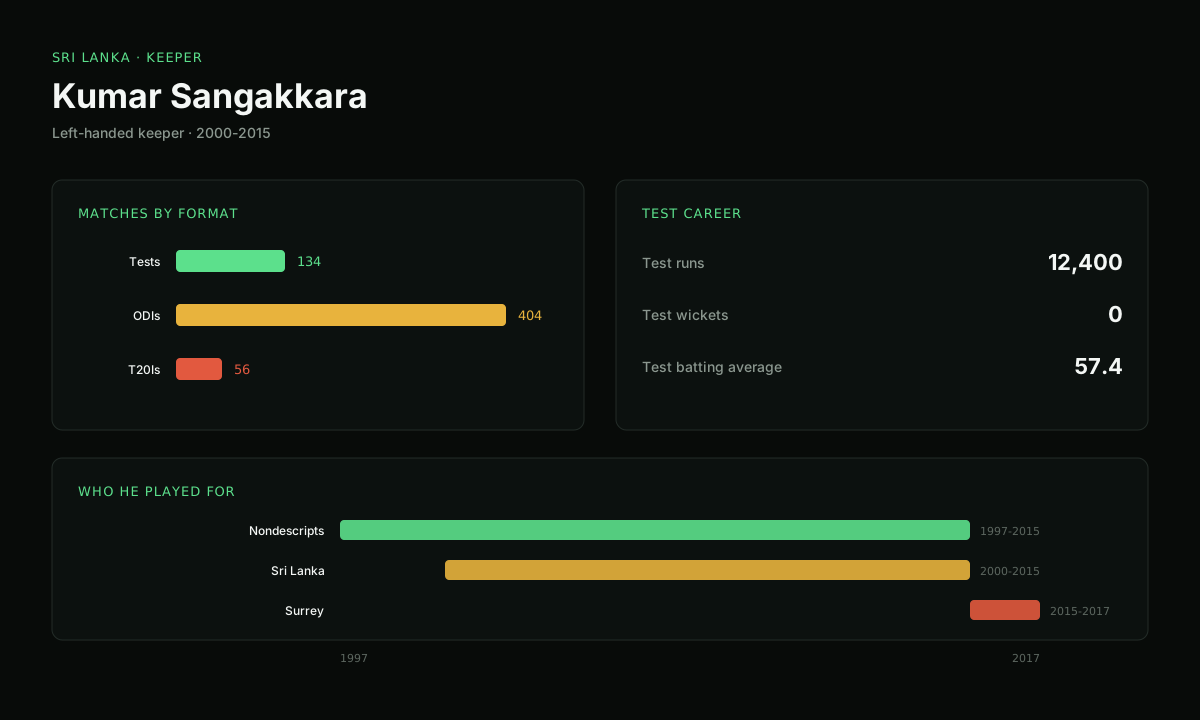
The full record is on his player page.
The average
57.40 is the highest of anybody with 10,000 Test runs. The next is Jacques Kallis at 55.37, and after that the gap opens up. Bradman is above both and played 52 Tests rather than 134.
The batters usually named ahead of him — Tendulkar, Ponting, Lara, Dravid — all averaged between 51 and 54. Sangakkara averaged five to six runs an innings more than all of them, across 134 Tests, and is mentioned in the conversation far less.
The most likely explanation is who he played for. Sri Lanka played fewer high-profile series, had less broadcast reach, and won fewer of the matches everybody watched. A batter's reputation is partly a function of how many people saw the innings.
The keeping split
He kept wicket in the first half of his Test career and stopped in 2006 to concentrate on batting.
The split in his figures is stark. As a wicketkeeper-batter, he averaged around 40. As a specialist batter, he averaged around 66.
That is one of the clearest pieces of evidence available on what keeping costs a batter, and the effect is far larger than most people assume. Six hours behind the stumps in subcontinental heat, concentrating on every ball, before batting for six more, is a physical and mental load that shows up directly in the output.
It also means the career figure of 57.40 understates what he was as a batter, and the specialist-period figure of 66 overstates it, because a batter's best years and the years they stop keeping tend to coincide.
The 2014 World T20, and the finals
Sri Lanka reached four global finals between 2007 and 2011 and lost all of them, then won the World T20 in 2014.
Sangakkara made 52 not out in that final and retired from T20 internationals immediately afterwards, alongside Mahela Jayawardene, who did the same. Two players of that standard leaving a format together on the day they finally won something is unusual and was clearly arranged.
The four lost finals are the more revealing part of the record. He captained in one of them, batted well in most of them, and the side he was in was consistently good enough to reach a final and not quite good enough to win one.
The one-day record
14,234 runs at 41.98, from 404 matches, which is the second-highest aggregate in the history of the format behind Tendulkar.
He kept wicket for most of that career, which is the reverse of the Test decision and was made for squad-balance reasons: a keeper who averages 42 in one-day cricket lets a side play an extra bowler.
He also scored four consecutive centuries in the 2015 World Cup, which nobody else has done in any World Cup.
The partnership with Jayawardene
They put on 624 for the third wicket against South Africa in 2006, which is the highest partnership for any wicket in Test cricket.
Jayawardene made 374 and Sangakkara 287. The stand lasted more than two days of playing time and it is the sort of record that requires a flat pitch, a tiring attack, and two batters neither of whom makes a mistake for around 150 overs.
The two of them batted together across fifteen years and are the most productive partnership in the history of Test cricket by aggregate runs.
The role column and the ODI number narrow it to a very small group.
Kumar Sangakkara — Four one-day hundreds in a row at the 2015 World Cup, at thirty-seven. Full record
Batting at three
He batted at three for most of his Test career, which is the position that gets the worst of every situation and which almost nobody wants.
Sri Lanka's openers through that period were inconsistent, so a large proportion of his innings began inside the first ten overs with the ball still hard. That is the same structural disadvantage Rahul Dravid had, and it makes an average of 57.40 in that position substantially more impressive than the same number at four or five.
The batting itself
A left-hander with an orthodox, compact method and an unusually still head, who scored heavily square of the wicket on both sides.
The two features that stand out are the conversion rate and the size of the scores. He made 38 Test centuries and eleven of them were doubles, which is a very high proportion — batters who reach a hundred usually get out somewhere in the next fifty runs, and he did not.
The other is that he scored quickly for an accumulator. A career strike rate around 54 in Test cricket, at an average of 57, is the combination that lets a side declare, and Sri Lanka's better results in that period came from innings built at that rate rather than from anything faster.
What he did off the field
He gave the MCC Spirit of Cricket Lecture at Lord's in 2011, the first active player to do so, and it is generally regarded as the best of the series.
The lecture was about Sri Lanka rather than about him: the civil war, the 1996 World Cup win, the attack on the team bus in Lahore in 2009 which he was on, and the governance of Sri Lankan cricket, which he criticised directly while still playing under it.
He later became President of the MCC, the first non-British person to hold the position.
- An average of 57.40
- 12,400 Test runs
- Four lost global finals
- 14,234 one-day runs
- Roughly 40 while keeping and 66 when not
- Fewer high-profile series than his contemporaries
- A side consistently good enough to reach them
- Second only to Tendulkar, and rarely mentioned
The Lahore attack
In March 2009 the Sri Lankan team bus was attacked by gunmen on the way to the Gaddafi Stadium in Lahore. Six players were injured; six Pakistani police officers and two civilians were killed.
Sangakkara was on the bus. He described it afterwards in the MCC lecture, plainly, and the account is the most direct thing any active cricketer has said about it.
The consequence for the sport was that no international team played in Pakistan for almost a decade, and Pakistan played its home cricket in the United Arab Emirates. That is a career's worth of home advantage removed from a country, and it is the largest single thing that happened to cricket in that period.
Where he sits in our dataset
Difficulty tier 1 on the player list. Sri Lanka, keeper, 2000 to 2015 is a narrow field, and the ODI column at 404 finishes it against everybody except one team-mate.
- 57.40 in Tests, the best average of any batter with 10,000 runs
- Around 40 while keeping and around 66 afterwards, which is what keeping costs
- 14,234 one-day runs, second in history
- The 624-run partnership with Jayawardene, the highest for any wicket
The short version
He has the best batting average of any modern batter with a large career, achieved partly while doing a second job that cost him twenty runs an innings, and he is named fifth or sixth in most arguments about the era. The record does not support that ranking.
For what keeping actually costs, see what a wicketkeeper is judged on, and for the list he belongs near the top of, most Test runs of all time.