Kapil Dev by the numbers, and the country he changed
434 Test wickets and 5,248 runs from a fast bowler India was not supposed to be able to produce, plus 175 not out that won a World Cup.
India did not produce fast bowlers. That was the settled understanding for fifty years of Test cricket, backed by the evidence, and Kapil Dev spent a career demonstrating it was a habit rather than a law.
- 434 Test wickets at 29.64, and 5,248 Test runs at 31.05
- He was the first bowler to take 400 Test wickets
- 175 not out against Zimbabwe in the 1983 World Cup, from 138 for 5
- He captained India to the 1983 World Cup, which nobody expected
The record
| Format | Matches | Wickets | Runs | Average |
|---|---|---|---|---|
| Tests | 131 | 434 | 5,248 | 31.05 with the bat |
| ODIs | 225 | 253 | 3,783 | 23.79 with the bat |
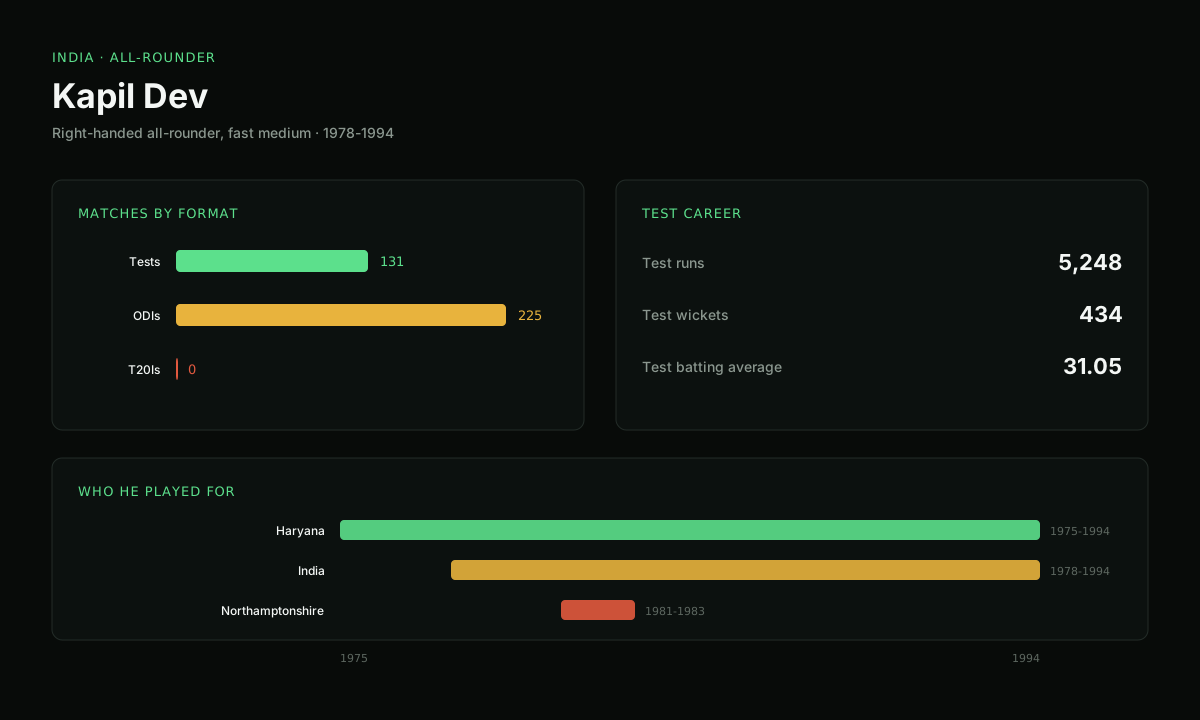
The full record is on his player page.
The bowler India was not supposed to have
Before him, India's Test attack was spin. The seamers existed to take the shine off the ball and hand it to the spinners, and the accepted explanation was that Indian conditions and Indian physiques did not produce fast bowling.
Kapil Dev bowled genuine fast-medium — outswing at pace, off a smooth run-up, with an action that put remarkably little strain on him. He played 131 Tests and missed one of them through injury, which for a fast bowler across sixteen years is close to unheard of.
The 434 wickets made him the leading Test wicket-taker in the world when he retired.
What the average does not say
29.64 is a good Test bowling average and it is not an outstanding one, and the reason is the surfaces.
He bowled a large share of his overs on Indian pitches of the 1980s, prepared to last five days and to favour spin, with an outfield that took the shine off a ball inside twenty overs and no support at the other end. A fast bowler operating in those conditions, with nobody else to build pressure from, is doing something different from one bowling in Perth with three other seamers.
His overseas record is better than his home record, which is the opposite of the usual pattern for a subcontinental bowler and is the strongest evidence for that reading.
The 175 not out
Tunbridge Wells, 18 June 1983. India were 17 for 5 against Zimbabwe in a World Cup group match they had to win.
He made 175 not out from 138 balls, with 16 fours and 6 sixes, and India reached 266 and won. It was the highest score in one-day international cricket at the time.
There is no television footage. The BBC were on strike, the match was not broadcast, and one of the most significant innings in the history of Indian cricket exists only in the scorecard and in the accounts of the few thousand people who were there.
1983
India were 66-1 outsiders to win the 1983 World Cup. They had won one match in the two previous tournaments combined.
They beat West Indies in the group stage, beat England in the semi-final, and then bowled West Indies out for 140 in the final at Lord's after being dismissed for 183 themselves. West Indies had won the previous two World Cups and had not lost a one-day international of consequence in years.
The catch Kapil Dev took to dismiss Viv Richards — running back from midwicket, over his shoulder — is the moment usually identified as the turning point.
What followed is the more important part. Indian television audiences, Indian sponsorship, and eventually the financial centre of world cricket moving to India all trace to that afternoon.
The one-day bowler
253 one-day wickets at an economy rate around 3.7, in an era when that was the opening bowler's job description and the death overs were bowled by whoever was left.
He bowled the first ten and the last five for India for a decade, which is two different skills and a workload nobody would ask of a bowler now. It is also why the 1983 World Cup is a bowling story as much as a batting one: India defended 183 in the final because their attack, led by him, bowled straight for fifty overs on a pitch that offered a little.
The batting
5,248 Test runs at 31.05, with eight centuries, batting mostly at six or seven.
He was an attacking lower-middle-order player rather than an accumulator, and the most famous illustration is the four consecutive sixes he hit off Eddie Hemmings at Lord's in 1990 to save the follow-on, needing 24 runs with one wicket left.
That is a decision as much as an innings. Nobody else would have attempted it, and the alternative was following on.
The role narrows it, and the wickets column separates him from every other Indian all-rounder.
Kapil Dev — Captained India to the 1983 World Cup. First to 400 Test wickets. Full record
The record he retired with
He passed Richard Hadlee's 431 Test wickets in February 1994, at Ahmedabad, to become the leading wicket-taker in Test history, and retired shortly afterwards on 434.
The record stood until Courtney Walsh passed it in 2000. It is worth stating what it represented at the time: a fast bowler from a country that had never had one, taking more Test wickets than anybody in the history of the game, having played more or less continuously for sixteen years.
The final years were harder than the earlier ones. His pace had gone, the wickets came more slowly, and there was public discussion about whether he was being selected for the record rather than for the side. That is a conversation that attaches itself to almost every player who chases a milestone, and it is the price of playing long enough to hold one.
The all-rounder question
He was, for a period in the 1980s, one of four all-rounders regularly compared: himself, Ian Botham, Imran Khan and Richard Hadlee.
On the batting average against bowling average test he clears it narrowly — 31.05 with the bat, 29.64 with the ball — which puts him in the genuine category by the strictest measure. Imran and Botham have similar profiles from different directions; Hadlee was the better bowler and the lesser batter.
The comparison is unresolvable and the more useful observation is what each meant to his side. Kapil Dev was the only fast bowler his country had, for sixteen years, while also being one of its more dangerous batters.
- A spin attack with seamers to shine the ball
- A side that had won one World Cup match ever
- Test cricket as the only real format
- Fast bowling as a physical impossibility
- A country could produce a genuine fast bowler
- A side that could win the tournament
- One-day cricket as the commercial future
- 131 Tests, one missed through injury
The captaincy afterwards
He captained India in 34 Tests and 74 one-day internationals across two spells, and the 1983 World Cup is the part anybody remembers.
The Test record under him is modest — India of that period were difficult to beat at home and rarely won away, which was true before and after him — and the second spell in 1987 was short and unhappy. The captaincy is not the argument for him.
What the 1983 tournament established is that he could get a side to believe something implausible for six weeks, which is a specific and rare skill and does not necessarily transfer to a five-day match in Chennai.
Where he sits in our dataset
Difficulty tier 1 on the player list. India, all-rounder, 1978 to 1994 is a unique combination, and the wickets column ends any doubt.
- 434 Test wickets, the world record when he retired, from a country with no fast bowling tradition
- 131 Tests and one missed through injury, across sixteen years
- 175 not out at 17 for 5, of which no footage exists
- The 1983 World Cup, and everything about Indian cricket's finances that followed it
The short version
He was the fast bowler India was not supposed to be able to produce, for sixteen years without breaking down, and he captained the side that changed where the money in world cricket comes from. Either would be a career.
For the tournament that changed everything, see the first cricket World Cup 1975, and for the definitions his record sits inside, what counts as an all-rounder.