Ian Botham by the numbers, and the summer that made him
383 Test wickets and 5,200 runs, and a career that is remembered almost entirely for six weeks in 1981 when he won a series nobody thought England could win.
Ian Botham took 383 Test wickets and scored 5,200 Test runs, which is a genuine all-rounder's career. He is remembered for about six weeks of it, and the six weeks are worth the attention.
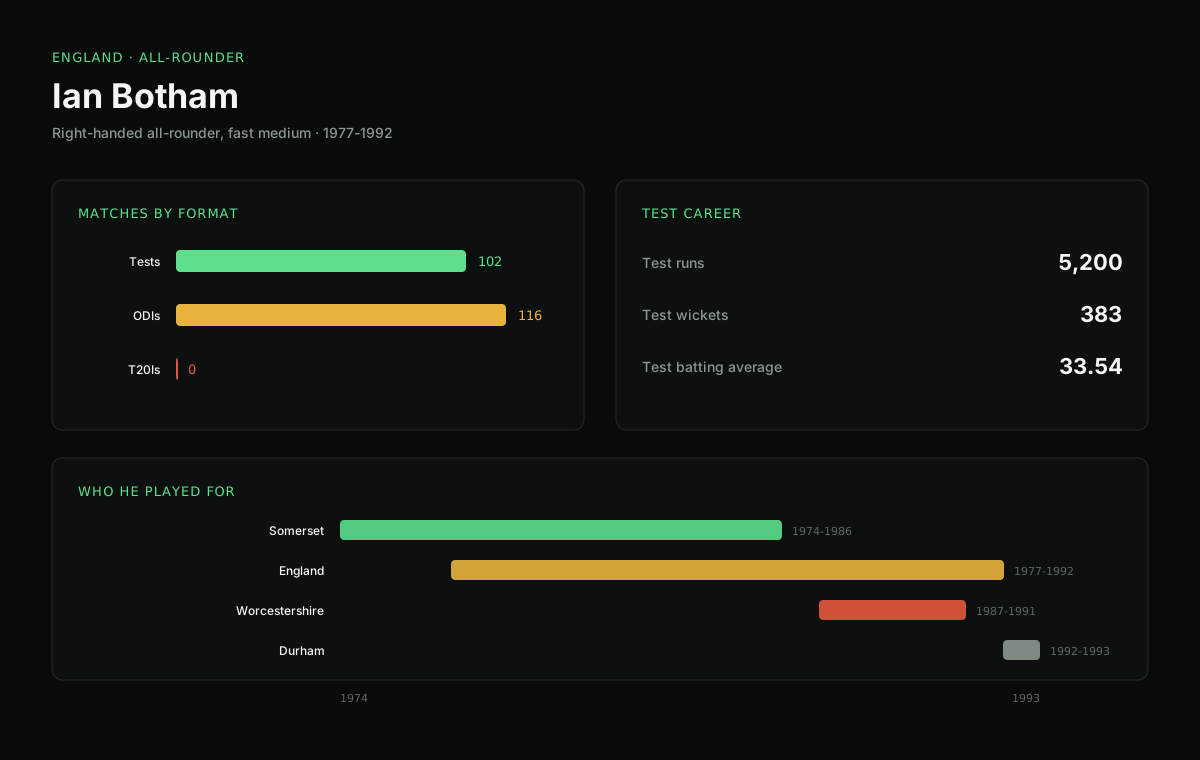
- 383 Test wickets at 28.40, and 5,200 runs at 33.54
- 14 Test centuries, including 149 not out at Headingley in 1981
- The fastest to the double of 1,000 runs and 100 wickets in Test history
- His figures declined sharply after 1982 and the reputation did not
The record
| Format | Matches | Wickets | Runs | Batting average |
|---|---|---|---|---|
| Tests | 102 | 383 | 5,200 | 33.54 |
| ODIs | 116 | 145 | 2,113 | 23.21 |
The full record is on his player page.
1981
England were 1-0 down in the Ashes after two Tests. Botham had resigned the captaincy after the second, having scored a pair at Lord's.
At Headingley, England followed on 227 behind and were 135 for 7 in the second innings, still 92 behind. The bookmakers offered 500-1 against an England win, and two Australian players placed a bet.
He made 149 not out. England set 130. Bob Willis took 8 for 43 and Australia were bowled out for 111.
At Edgbaston he took 5 for 1 in 28 balls to win a match Australia needed 151 to take. At Old Trafford he made 118 from 102 balls, including six sixes, in an innings regularly named the best of his career.
England won the series 3-1. It is the only Ashes series in history to be widely named after a single player.
What the figures actually show
The career divides at about 1982 and the two halves are very different.
In his first 25 Tests he took 139 wickets and scored 1,336 runs, with a bowling average around 18 and a batting average around 40. That is not an all-rounder's record, it is two front-line records at once, and nobody in the history of the sport has produced a comparable start.
After a back injury and the accumulated workload, the bowling average rose into the thirties and the batting fell into the low thirties. He played another seventy-odd Tests at that level.
The career figures — 28.40 with the ball, 33.54 with the bat — are the average of an extraordinary five years and a decade of being useful.
The fastest double
He reached 1,000 Test runs and 100 Test wickets in 21 matches, which is the fastest anybody has done it.
That statistic captures the early career better than any other. He was doing both jobs at a level that would have justified selection for either, simultaneously, from his first Test.
The batting
5,200 runs at 33.54, with 14 centuries, and a strike rate around 60 in an era when the good Test batters were scoring at 45.
The method was uncomplicated: he hit the ball very hard, mostly straight and through the off side, and he attacked spin bowling in particular with a directness that almost nobody else of the period attempted.
The 149 not out at Headingley is the innings everybody names and the 118 at Old Trafford three weeks later is the better one. It came from 102 balls against Lillee and Alderman with a second new ball, included six sixes off genuine fast bowling without a helmet, and it is the innings his contemporaries mention when asked.
A batting average of 33 is not a top-order record. A batting average of 33 at a scoring rate of 60, from number six, in the early 1980s, is a different thing and it is what made the all-rounder's slot worth having.
The bowling
Fast-medium outswing, with a high action and an unusual ability to make the ball move away late.
His method depended substantially on English conditions and on the Dukes ball, and his record overseas is markedly worse than at home — a bowling average in the twenties in England and well into the thirties elsewhere.
The other characteristic was that he bought wickets. He was not economical, he bowled bad balls, and he took wickets with them: batters who had been given a half-volley and a long hop in the same over frequently played a loose shot at the third delivery. It is a legitimate method and it produces a higher average than a containing bowler's.
Country and role narrow it hard, and the wickets column separates him from the other English all-rounders.
Ian Botham — Headingley 1981: 149 not out after following on, then Bob Willis did the rest. Full record
The captaincy
Twelve Tests, no wins, eight draws and four defeats, ending with the pair at Lord's in 1981.
It is one of the more straightforward cases of a player being damaged by the job. His batting average as captain was in the teens, his bowling average was over 30, and he resigned before he was removed.
He then produced the best six weeks of his career in the three Tests immediately afterwards, playing under Mike Brearley, which is the most cited piece of evidence in English cricket for the proposition that some players should not captain.
The catching
120 Test catches, almost all at second slip, which is the third-highest total by a non-wicketkeeper of his era.
Slip catching is the part of an all-rounder's day nobody counts, and for somebody bowling twenty overs and batting at six it is a third job. He was genuinely good at it — quick hands, a wide reach, and a willingness to stand closer than most.
It is also the reason the workload eventually caught up with him. Bowling fast, batting in the top six, and fielding at slip for six hours a day, for five years, before sports science existed, produced the back injury that changed the second half of the career.
The one-day record
145 wickets and 2,113 runs from 116 matches, plus a World Cup final in 1979 which England lost to West Indies.
The one-day figures are ordinary by his own standards and the format was in its infancy for most of his career. What he did contribute was a template: an all-rounder who bowled ten overs and batted in the top six was, in 1980, an unusual luxury and is now the position every side builds around.
Why the reputation outran the figures
Three reasons, and all three are legitimate.
He won matches on his own. A career record averages performances; what people remember is the innings and the spells that changed results, and he produced more of them than his figures suggest.
Television. 1981 was watched by an enormous audience on terrestrial television in Britain, at a point when a sporting event could still hold a nation's attention simultaneously. The reputation was made in front of everybody at once.
He was interesting. A large character in a sport that mostly does not produce them, with a public life that ran alongside the cricket and generated as much coverage.
- 383 wickets at 28.40
- 5,200 runs at 33.54
- A good all-rounder
- Declining from 1982
- 139 wickets at around 18
- A batting average around 40
- Two front-line careers at once
- The fastest double in Test history
Where he sits in our dataset
Difficulty tier 1 on the player list. England, all-rounder, 1977 to 1992 has one answer, and the runs and wickets columns close it immediately.
- 383 wickets and 5,200 runs, with most of the value in the first 25 Tests
- The fastest to 1,000 runs and 100 wickets in Test history
- 149 not out and 5 for 1 in consecutive Tests in 1981
- Twelve Tests as captain, no wins, and the best cricket of his life immediately afterwards
The short version
The first five years are the argument for him and the last ten are why the career figures do not look like it. In between there were six weeks in 1981 that are still the most famous thing an English cricketer has done.
For the series it belongs to, see how the Ashes got its name, and for the comparison he sits inside, what counts as an all-rounder.