Glenn McGrath by the numbers, and the length he never left
563 Test wickets at 21.64, taken almost entirely by bowling the same ball on the same spot for fifteen years, at a pace nobody would call fast.
Glenn McGrath took 563 Test wickets without bowling especially fast, without swinging the ball much, and without a variation anybody feared. He did it by hitting the same length, on the same line, more often than anybody else has managed.
- 563 Test wickets at 21.64, the best average among bowlers with 500 or more
- He bowled around 130 to 135 kilometres an hour, which is fast-medium
- The method was a fourth-stump line and a length that hit the top of off
- 949 international wickets across all formats
The record
| Format | Matches | Wickets | Average | Span |
|---|---|---|---|---|
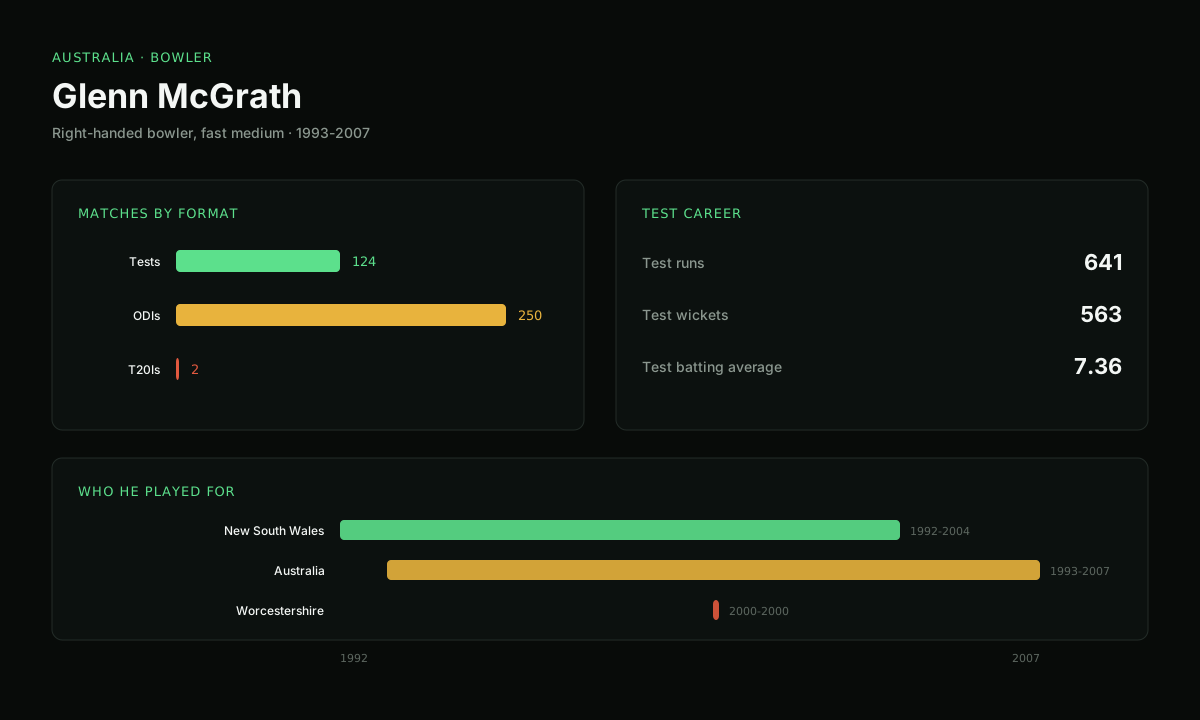
| Tests | 124 | 563 | 21.64 | 1993-2007 |
| ODIs | 250 | 381 | 22.02 | 1993-2007 |
The full record is on his player page.
The average is the number
563 wickets is a lot and several bowlers have taken more. An average of 21.64 across that many is what nobody else has.
Among bowlers with 500 or more Test wickets, he is the only one under 22. The difference between taking a wicket every 22 runs and every 28 sounds small and is enormous over a career: it is the difference between a bowler who wins matches and one who is expensive enough that a captain has to manage him.
The economy rate underneath it — under 2.5 an over in Tests — is the mechanism. He did not merely take wickets; he took them while conceding almost nothing, which meant a captain could attack at the other end knowing one end was sealed.
The method
There is no complicated answer and that is the point.
He bowled a fourth-stump line — just outside off — on a length that would hit the top of off stump, at around 130 to 135 kilometres an hour, with a seam upright and a small amount of movement either way off the pitch.
The batter's problem is that the ball is close enough to off stump that leaving it is uncomfortable and full enough that it must be played, but not full enough to drive. Over the course of a spell that produces edges, and there were three slips and a gully waiting.
The variations were minimal: a bouncer, and a slower one very occasionally. He did not need more, because the stock ball was good enough to bowl thirty overs a day with, and repeating it was harder for the batter than any variation would have been.
Bounce, which was the actual weapon
The thing that made the length work was his height and the bounce he extracted from it.
At close to two metres tall with a high, straight action, he got a ball pitching on a good length to arrive at the batter's ribs or gloves rather than at their pads. That is what turns an ordinary length into a wicket-taking one: the batter is committed to a forward defensive and the ball is climbing at the splice.
It also explains why he was equally effective in Australia, England, South Africa and the subcontinent. Bounce is less dependent on the pitch than swing or seam, and a bowler whose method is length and bounce travels better than one whose method is lateral movement.
The plan he announced
He named his target batter before every series, publicly, and then usually dismissed them.
It sounds like bravado and it was a method. The nominated batter was almost always the opposition's best, the plan was specific — a length and a line chosen for their particular technique — and announcing it did not make it easier to counter.
Mike Atherton he dismissed nineteen times in Tests, which is the most any bowler has dismissed any batter. Brian Lara was another regular target and another regular dismissal.
What made repetition possible
Bowling the same ball for thirty overs a day is easy to describe and almost nobody manages it. Three things made it available to him.
A repeatable action. Simple, upright, minimal effort, and low-stress on the body. He was rarely injured for a fast bowler and he could bowl long spells without his length dropping, which is what most bowlers lose first when they tire.
A very slow heart rate for what he was doing. He was not straining for pace, which meant the eighth over of a spell looked like the first.
No interest in variety. Bowlers get bored, try something, and give away a boundary. He did not, and he said so repeatedly: the plan was to bowl the same ball until the batter made a mistake, and the discipline to keep doing it after eight maidens is rarer than the skill to bowl it once.
Against the best batters
The record against the outstanding players of his era is the strongest part of his case.
He dismissed Brian Lara fifteen times in Tests, Sachin Tendulkar six, and Mike Atherton nineteen. Those are not accidents of volume; they are the product of specific plans executed over years.
The plan against Lara was around off stump with the bounce forcing him to play square rather than through the line. The plan against Atherton was fuller and straighter. Neither is complicated and both required somebody able to bowl exactly where they intended, ball after ball, in a Test match.
The one-day record
381 wickets at 22.02, with an economy rate close to 3.9 in an era when that was outstanding.
He bowled the first ten overs and the death, which is two different jobs, and in 2007 he took 26 wickets in a single World Cup — a record — at the age of 37, in the tournament immediately after the death of his wife Jane.
Australia won that tournament without losing a match, which was the third of three consecutive World Cups he played in and won.
The batting average column is the fastest route in. Very few Test cricketers averaged under eight.
Glenn McGrath — Relentless line and length, and the most Test wickets by a fast bowler at the time he stopped. Full record
The batting, which was a running joke he participated in
641 Test runs at 7.36, with a highest score of 61 against New Zealand in 2004 that he described afterwards with visible disbelief.
His batting was genuinely poor and he made a great deal of comedic capital from it. He also held up an end more often than the average suggests, and his partnership with Jason Gillespie and later with Brett Lee produced a surprising number of useful last-wicket stands.
The 61 is one of the more enjoyable innings in Test cricket for reasons entirely unrelated to quality.
- Genuine pace
- Big swing
- Feared variations
- Spells of hostility
- 130 to 135 kilometres an hour
- A small amount of movement off the seam
- A bouncer, occasionally
- Thirty overs a day on the same spot
Where he sits in our dataset
Difficulty tier 1 on the player list, and one of the quickest puzzles in the dataset for an unusual reason: the batting average. A Test cricketer averaging 7.36 with the bat narrows the field to a handful of people immediately.
- 563 Test wickets at 21.64, the best average among the 500-club
- Fast-medium pace, a fourth-stump line, and bounce from a high action
- Nineteen dismissals of Mike Atherton, the most of any bowler-batter pairing
- Three World Cups, and 26 wickets in the 2007 tournament at 37
The short version
The most economical way to describe him is that he bowled one ball for fifteen years and it was a very good ball. The average is the record; the discipline required to produce it every day is the achievement.
For what the numbers mean, see bowling economy rate explained, and for the bowler at the other end for most of it, Shane Warne by the numbers.