Death bowling, and why it is the hardest job in cricket
The last four overs cost roughly three runs more per over than the middle, and the bowler is asked to do it with five fielders out and a set batter swinging.
Every T20 side has a bowler whose economy looks worse than his team-mates' and who is the first name on the sheet anyway. Understanding why is understanding what the last four overs actually are.
- Death overs cost around three runs an over more than the middle overs
- Five fielders are out, so the gaps are in the ring rather than the outfield
- The yorker has a margin of error of about a foot in either direction
- A raw economy column cannot tell a death bowler from a powerplay bowler
What the numbers look like
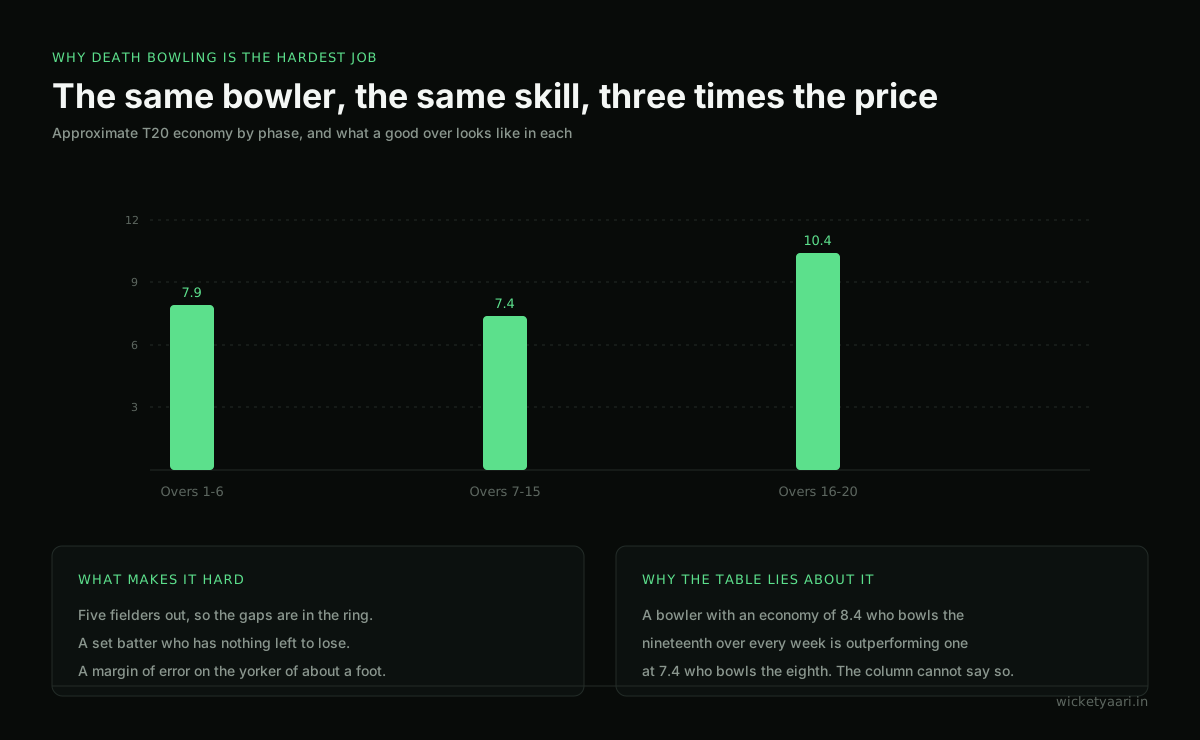
A T20 innings has three phases and they are priced completely differently. Overs one to six go for roughly eight an over with two fielders out. Overs seven to fifteen go for around seven and a half with five out and spinners on. Overs sixteen to twenty go for ten and a half or more.
Which means a bowler with a career economy of 8.4 who bowls two death overs every match is doing a materially better job than a bowler at 7.4 who bowls the eighth and the twelfth. The table shows the second bowler as superior and the captain knows otherwise.
Why the death is expensive
Four reasons, and they compound rather than add.
The batter has nothing to protect. With four overs left, a set batter is not managing risk any more. The cost of getting out has collapsed, because the innings is going to end regardless. Every ball is being attacked.
The field is already at its limit. Five fielders outside the circle is the maximum. The captain cannot buy any more protection, so from over sixteen onwards the field is fixed and the bowler is on their own.
The gaps have moved inside. With five out, the ring has four fielders in it and enormous holes between them. Shots that would be stopped in the middle overs run away, and a mishit that clears the infield is two rather than nothing.
The margin on the best delivery is tiny. The yorker is the death bowler's answer, and the difference between a yorker and a full toss is about a foot. One foot too short is a low full toss that goes for four. Two feet too short is a half-volley and it goes for six.
The four deliveries, and what each costs when it goes wrong
| Delivery | When it works | When it fails |
|---|---|---|
| Yorker | unhittable, one or a dot | full toss above the waist, or a half-volley |
| Wide yorker | forces a reach, edges to third man | a wide, and another ball |
| Slower ball | mistimed to the ring | short and slow, which is a free hit |
| Bouncer | a top edge, and one of two allowed | above the shoulder count, or a hook for six |
The pattern is that every death delivery has a failure mode that is worse than a normal bad ball. This is why the phase produces such wild variance: the same bowler can concede four in an over and twenty-two in the next, off deliveries that were trying to be identical.
Why the plan changed
For a long time, death bowling meant yorkers, and the best exponents could land them at will. Then two things happened.
Batters learned to hit them. A yorker that used to be a dot ball became a scoop over the keeper, a ramp to third man, or a flat-batted drive. Once a batter is premeditating a shot to the yorker, the yorker is no longer a safe delivery.
And the equipment changed. Bats with more depth and larger edges mean mishits carry the ring, which removed the death bowler's second-best outcome — the mistimed shot that used to be a single and is now four.
The response was variation. Modern death bowling is a sequence rather than a delivery: wide yorker, slower bouncer, yorker at the stumps, hard length, each one chosen against what the batter has just shown. The best bowlers in the phase are the ones with three deliveries they can land under pressure, not the ones with the single best delivery.
What the captain is doing
The captain's job at the death is not bowler selection so much as sequencing.
Who bowls the twentieth is decided by who bowls the eighteenth. The last over is normally kept for the best executor, which means the sixteenth and eighteenth have to be covered by somebody else, and that somebody is where matches leak.
Left-arm over to a right-hander changes the angle enough to be worth an over on its own, particularly to a batter who has been facing right-arm all innings.
The field is set for the shot the bowler is trying to induce, and it is usually squarer than instinct suggests. Batters swinging in the last over produce top edges to square leg and slices to third man far more often than clean straight hitting.
A wicket resets the phase. A new batter at the death is worth roughly two overs of containment, because they have to look at the bowler before they can attack, and there is no time for that.
In the nineteenth over, a bowler's slower ball lands short and is pulled for six. What was the more likely mistake?
The slower ball is a legitimate death delivery. What makes it dangerous is length: slow and short is the easiest ball in cricket to hit, and the margin for error is a couple of feet.
The one advantage the bowler has
For all of it, the bowler retains a single edge, and the good ones lean on it heavily: the batter has to guess too.
A batter premeditating a scoop has committed to a length before the ball is bowled. If the delivery is a wide yorker instead, the shot is unplayable and the ball goes through to the keeper. That is why the sequencing matters more than the individual delivery — a bowler who has just bowled two yorkers has set up a slower ball that a batter is now leaning into.
The best death overs on record are almost never six perfect yorkers. They are four different deliveries in an order the batter could not follow.
Why sides pay so much for it
Death bowling is the scarcest skill in the T20 market and the auction prices reflect it.
The reason is that it cannot be substituted. A side short of a powerplay bowler can bowl a spinner up front. A side short of a middle-overs option can use a part-timer. A side with nobody who can bowl the twentieth over has no workaround at all, and it will lose matches it should have won by four to eight runs repeatedly across a season.
That is also why death bowlers are protected. Sides will bowl their specialist only at the death rather than using an over earlier, will rest them from tournaments, and will pick them despite batting that contributes nothing. The skill is worth building an eleven around.
- 7.4 is better than 8.4
- Wickets are what matter
- Consistency is a virtue
- Bowl your best bowler most
- 8.4 at the death beats 7.4 in the middle
- Dot balls are what matter here
- Variance is the price of the phase
- Bowl your best bowler last
- The death costs roughly three runs an over more than the middle
- Five fielders out is the ceiling, so the captain runs out of help
- Every death delivery has a worse-than-usual failure mode
- The skill cannot be substituted, which is why it is priced the way it is
The short version
The last four overs are a different sport played by the same people. The batter has stopped protecting their wicket, the field cannot be improved, and the best delivery available has a margin of about a foot.
For the phase that decides more matches than this one, see powerplays explained format by format, and for what the economy column is actually measuring, bowling economy rate explained.