Slower balls explained: cutters, knuckle balls and the carrom ball
Four ways to take pace off a delivery without changing the arm speed, plus the one on the list that is not a slower ball at all and never was.
The commentary box uses "variation" to mean about six different things. Four of them are ways of bowling slower with the same action, one is a spinner's delivery that got filed in the wrong drawer, and telling them apart is easier than it sounds.
- A slower ball works because the arm speed does not change
- Cutters take pace off with the fingers; the back-of-hand ball uses the wrist
- The knuckle ball removes revolutions rather than adding them
- The carrom ball is a spinner's delivery and is not slow at all
Why any of it works
A batter facing a fast bowler cannot wait and watch. The ball takes about half a second to arrive, and the shot has to be started before the ball is halfway down the pitch. The batter is therefore playing a prediction, formed from the bowler's arm speed, wrist and release.
A slower ball attacks the prediction rather than the batter. Ten or fifteen kilometres an hour is enough to have the shot arrive early, and everything about the delivery is designed to look identical until the ball is already out of the hand.
That is the whole principle. Any variation that requires a visibly different action is not a variation, it is a signal.
The cutters
The off-cutter and leg-cutter are the oldest and most reliable of the group.
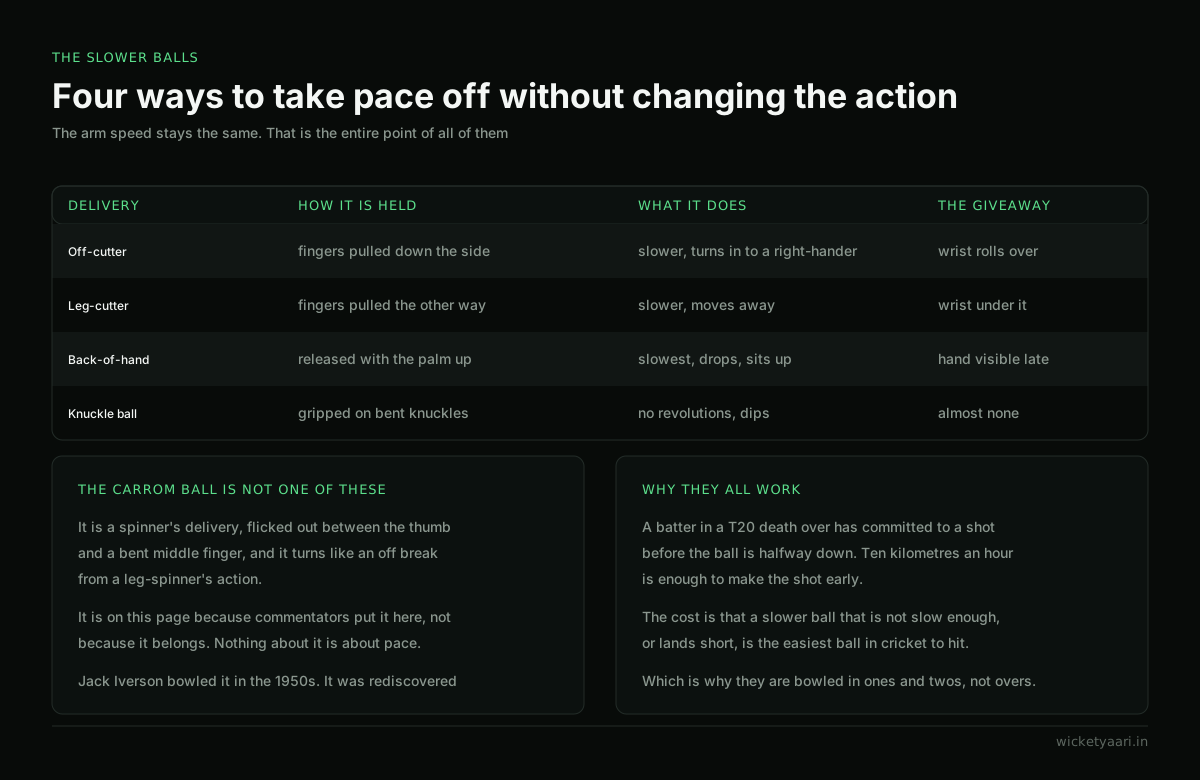
The bowler holds the ball roughly as normal and, at the point of release, pulls the fingers down one side of it. That drag does two things: it removes some of the energy that would have gone into pace, and it puts sideways rotation on the ball so it deviates off the pitch.
An off-cutter has the fingers coming down the outside of the ball and it moves in to a right-handed batter, like an off break bowled at 125. A leg-cutter comes down the other side and moves away.
The giveaway is the wrist. A bowler releasing an off-cutter rolls the wrist over the ball, and a batter who watches wrists rather than arms can sometimes see it. The reason cutters survive anyway is that they are reliable: a badly executed cutter is usually just a slightly slow delivery, not a disaster.
The back-of-hand slower ball
The most dramatic of the four and the most dangerous to bowl.
The bowler turns the hand over so the palm faces the sky at release, effectively bowling a leg break with a fast bowler's action. The ball comes out with back spin, loses a great deal of pace, dips, and sits up off the pitch.
It is the slowest of the slower balls and it beats a batter completely when it works. When it does not, the hand rotation is visible early and the ball is a slow, short, sitting delivery that goes into the crowd.
The bowlers who use it well tend to have long fingers and a strong wrist, and they bowl it once or twice an innings rather than as a stock option.
The knuckle ball
Borrowed from baseball and the newest of the group in cricket.
The ball is held on the bent knuckles or fingertips rather than the pads of the fingers. At release the fingers straighten and push the ball out with almost no rotation at all, which is the opposite of every other delivery in cricket.
A ball with no revolutions behaves oddly in flight. It does not swing predictably, it dips late, and it arrives around fifteen kilometres an hour slower than the bowler's normal pace with nothing in the action to indicate any of it.
The knuckle ball has almost no giveaway, which is why it spread so fast. Its weakness is control: the grip is unnatural and the delivery is difficult to repeat, so bowlers who rely on it produce more genuine long hops than those who use cutters.
| Delivery | Pace lost | Difficulty | How visible |
|---|---|---|---|
| Off-cutter or leg-cutter | 10 to 15 km/h | low | wrist rolls, sometimes visible |
| Back-of-hand | 20 to 25 km/h | high | hand turns over, visible late |
| Knuckle ball | 15 to 20 km/h | high | almost nothing |
| Split-finger | 10 to 15 km/h | moderate | grip visible in the run-up |
The carrom ball, which does not belong here
The carrom ball is not a slower ball, is not bowled by fast bowlers, and has nothing to do with pace.
It is a spinner's delivery, flicked out from between the thumb and a bent middle finger — the same motion as flicking a carrom striker, which is where the name comes from. The ball spins like an off break out of a leg-spinner's or finger-spinner's action, which makes it a disguise delivery rather than a pace variation.
Jack Iverson bowled a version of it for Australia around 1950 and John Gleeson after him. It disappeared for decades and was rediscovered in T20 cricket, where a spinner who can turn the ball both ways from an identical action is worth a great deal.
It appears on every list of "variations" because commentators use that word for anything unusual, not because it shares a mechanism with the deliveries above it.
A fast bowler delivers a ball at 120 km/h that dips late and does not swing, with no visible change in the action. Which is it most likely to be?
The knuckle ball removes revolutions, which produces late dip and unpredictable movement with essentially no giveaway in the action. A carrom ball is a spinner's delivery entirely.
What the batter is looking for
Batters do not pick slower balls out of the air. They pick them from three cues before release and one after it.
The hand in the run-up. A grip changed early is visible, which is why bowlers set the grip late and hide the ball behind the front arm.
The wrist at the top of the action. The single most reliable cue, and the reason the knuckle ball is so effective: there is nothing to see.
The seam in flight. A cutter is spinning and a knuckle ball is not, and a very good player will occasionally read that in the first third of the flight.
The sound off the pitch. Genuinely used. A slower ball lands with a duller noise, and batters who have faced a bowler often enough will tell you they hear it before they see it.
When they are bowled, and when they are not
Slower balls are a death-overs tool and a middle-overs surprise, and they are close to useless with a new ball.
The reason is that a slower ball is only effective against a batter who is committed to attacking. A batter defending, or playing themselves in, has time to adjust and will simply push it into the gap. It is why you almost never see a slower ball in the first over of an innings and why they appear in clusters after the fifteenth.
They are also rationed deliberately. A bowler who bowls three in an over has told the batter what is coming, and the fourth will be waited for. Two an over is common. Four is a bowler who has run out of ideas.
- Same run-up, same arm speed
- Grip hidden in the hand
- Bowled once or twice an over
- Lands on a good length
- A visibly shorter run-up
- Grip visible before delivery
- Bowled three times in four balls
- Lands short because it was difficult
- Every slower ball hides the change until the ball has left the hand
- Cutters use the fingers, the back-of-hand ball uses the wrist, the knuckle ball removes spin
- The carrom ball is a spinner's delivery filed under the wrong heading
- Rationing them is what makes them work
The short version
Four ways to take pace off, one imposter, and a single principle underneath all of it: the batter is playing a prediction and the delivery is designed to break it after the prediction has been made.
For the spinner's version of the same idea, see the googly explained without jargon, and for where these deliveries actually get bowled, death bowling and what makes it hard.