Steve Waugh by the numbers, and the sixteen consecutive wins
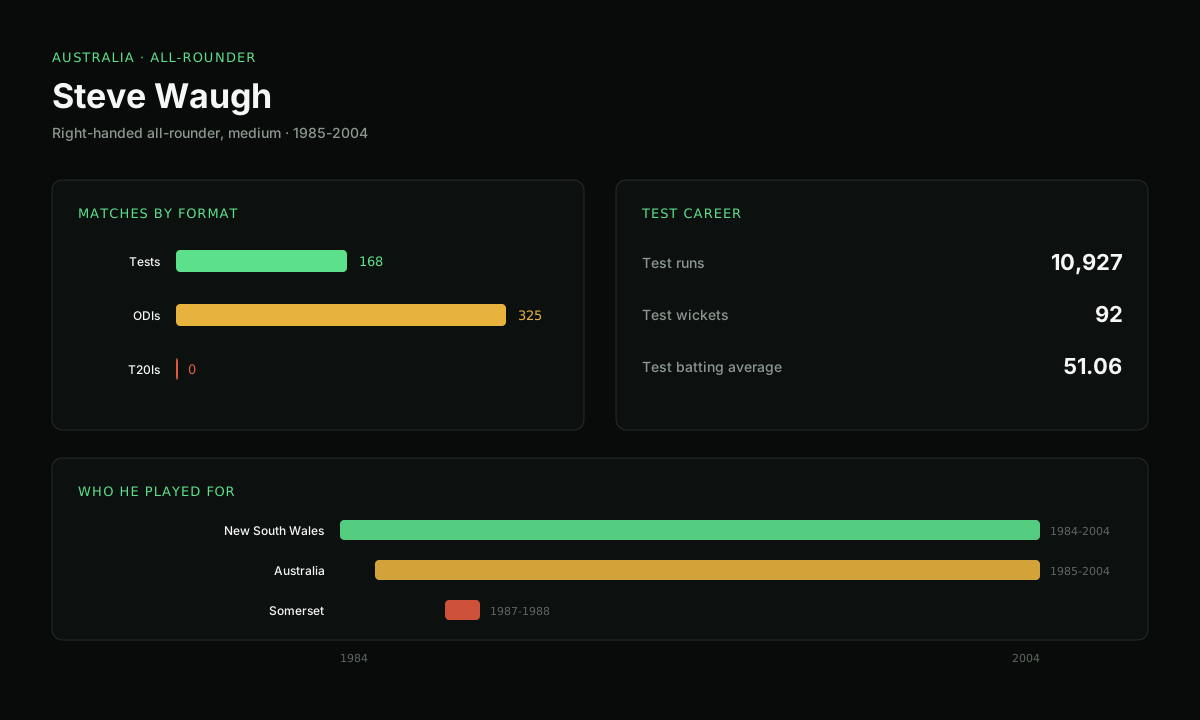
10,927 Test runs at 51.06, and a captaincy record of forty-one wins from fifty-seven Tests including sixteen in a row, which nobody has approached.
Steve Waugh captained Australia to sixteen consecutive Test wins, which is still the record and is not close to being approached. He also scored 10,927 Test runs, which in almost any other career would be the headline.
- 10,927 Test runs at 51.06, from 168 Tests
- Captained Australia in 57 Tests, winning 41
- Sixteen consecutive Test wins in 1999 and 2000, still the record
- He stopped playing the hook shot for a decade and averaged more afterwards
The record
| Format | Matches | Runs | Average | Wickets |
|---|---|---|---|---|
| Tests | 168 | 10,927 | 51.06 | 92 |
| ODIs | 325 | 7,569 | 32.90 | 195 |
The full record is on his player page.
He started as an all-rounder
The first years of his career are almost forgotten and they explain the rest of it.
He was picked at twenty as a batting all-rounder who bowled medium pace, and for several years he was a bowler who batted rather than the other way round. He took 92 Test wickets in total, most of them early, and a back injury eventually ended the bowling.
It also meant he spent five years in the Australian side without establishing himself as a batter, and was dropped. He came back in 1993 and averaged over fifty for the next decade.
The hook
In the mid-1990s, having been hit repeatedly by short bowling, he simply stopped playing the hook and the pull.
That is a much larger decision than it sounds. Removing two scoring shots against fast bowling means accepting hours of short deliveries with no way to score off them, which is physically unpleasant and looks passive from the boundary.
What it bought was the removal of his most likely dismissal. Bowlers who had a plan against him no longer had one that worked, and his average rose substantially in the years afterwards.
It is one of the clearest examples in modern cricket of a batter making a technically costly change for a strategically correct reason, and sticking to it for a decade.
The sixteen
Australia won sixteen consecutive Tests between October 1999 and February 2001, in Australia, New Zealand, India and against every side they played.
The streak ended at Eden Gardens in March 2001, when India won after following on — the match covered in Eden Gardens 2001.
Sixteen is a long way clear of anything else. The next-best streaks in the sport's history are in single figures or low double figures, and the closest anybody has come since is nine.
The side was McGrath, Warne, Gillespie, Lee, Gilchrist, Hayden, Langer, Ponting and the Waugh brothers, which is the strongest eleven any country has fielded. What the captaincy added was an instruction to win rather than to not lose.
What the captaincy actually was
Two things, and both were deliberate.
Attacking declarations. Australia declared earlier and set more chaseable targets than any side of the era, on the reasoning that a target the opposition attempts produces wickets and a target they block produces a draw. It cost them occasionally and it produced results at a rate nobody has matched.
Scoring rate as a tactic. Australia batted at close to four an over in Test cricket at a time when three and a half was fast, which bought them the time to bowl sides out twice. That is the same insight from the other end.
Both are now standard. Neither was in 1999.
The rearguards
The batting was built for difficult situations and the record shows it: an unusually high proportion of his hundreds came in the fourth innings, or with the side in trouble, or against the best attacks.
The century off the last ball of the day at the Oval in 2001, batting on a torn calf muscle, is the innings most often named. He was 37, had been ruled out of the series weeks earlier, and got to 100 by taking a single off the final delivery of the day.
The reputation for mental hardness came out of innings like that rather than from anything he said about it.
Country and role narrow it, and the Tests column collides with a team-mate — the runs column separates them.
Steve Waugh — Won fifteen straight Tests as captain and never lost a series. Full record
The twin
He and Mark Waugh played 108 Tests together, which is the most by any pair of brothers, and they were completely different batters.
Mark was elegant, scored quickly, and made batting look easy in a way that led people to underrate him. Steve was awkward, scored slowly, and made batting look like work. The averages are close and Steve played sixty more Tests.
The pair are also the reason for one of the more uncomfortable stories of the era: both were fined by the Australian board in the 1990s for accepting money from a bookmaker for pitch and weather information, an incident that was concealed for four years and became public in 1998.
- Slow and unattractive
- No hook, no pull
- Grinding
- Defensive
- Removing every dismissal a bowler had planned for
- No dismissal to the short ball for a decade
- An average above fifty in the fourth innings
- Built for the situations the side needed most
The 200 at Kingston
There is one innings that people who followed the period tend to name before the Oval hundred, and it came before the captaincy.
Kingston, 1995. Australia were playing West Indies in the Caribbean, in a series that would decide whether the West Indian unbeaten run — fifteen years and twenty-nine series — continued. Waugh made 200, batting through a barrage of short bowling from Ambrose and Walsh, and Australia won the match and the series.
That is the series that ended the longest period of dominance in the sport's history, and the innings that decided it was played by a batter who had spent the previous two years learning to not hook.
The one-day career
7,569 runs at 32.90 and 195 wickets, from 325 matches, and a World Cup in 1999 as captain.
The 1999 tournament included the group match against South Africa in which he scored 120 not out having been dropped on 56, and the semi-final that finished as a tie with Australia advancing on net run rate. Australia won the final by eight wickets.
The one-day record is the weaker part of his career by average and it contains a World Cup won from a position where they had to win every remaining match to qualify, which is the sort of thing the averages do not have a column for.
Where he sits in our dataset
Difficulty tier 1 on the player list, and one of the more interesting collisions in the whole set: he and Ricky Ponting both played exactly 168 Tests for Australia, both batted in the top order, and both retired within a few years of each other.
The runs column separates them, and it is the kind of thing that makes the last guess on the Cricketer board genuinely difficult.
- 10,927 Test runs at 51.06, having started as a bowling all-rounder
- Sixteen consecutive Test wins as captain, a record by a distance
- He abandoned the hook and the pull for a decade and averaged more without them
- Attacking declarations and fast scoring, both now standard, both unusual in 1999
The short version
He removed his own most likely dismissal, waited a decade, and captained the strongest side in history with instructions to force results rather than protect them. The sixteen wins are the record and the decision about the hook is the more interesting thing.
For the match that ended the streak, see Eden Gardens 2001, and for the side he handed over, Ricky Ponting by the numbers.