How a cricket pitch is prepared, and what green really means
Grass, moisture and rolling are the three variables a groundsman controls, and green on television tells you almost nothing about which of them is present.
Every match begins with two captains looking at twenty-two yards of grass and guessing. What they are actually reading is three variables, and only one of them is visible from the boundary.
- Grass, moisture and rolling are the three things a groundsman controls
- Green looks dangerous and means nothing without moisture underneath
- A pitch is at its flattest on day two and its worst on day five
- The toss is a decision about which day you want to bat on
What a pitch actually is
A cricket pitch is a strip of soil, usually heavy in clay, that has been rolled until it behaves like a solid surface rather than a soft one. The grass on top is not decoration: its roots bind the soil together and stop the surface breaking up under a fast bowler's follow-through.
The clay content is what determines how a pitch ages. High-clay soils bind hard and crack as they dry, which produces the classic subcontinental surface: good to bat on early, taking spin from day three, unpredictable by day five. Lower-clay soils with more sand hold together longer and stay truer, which is why some grounds produce five days of even-paced cricket.
Preparation takes about a fortnight and consists of watering, rolling, mowing and deciding when to stop doing all three.
The three levers
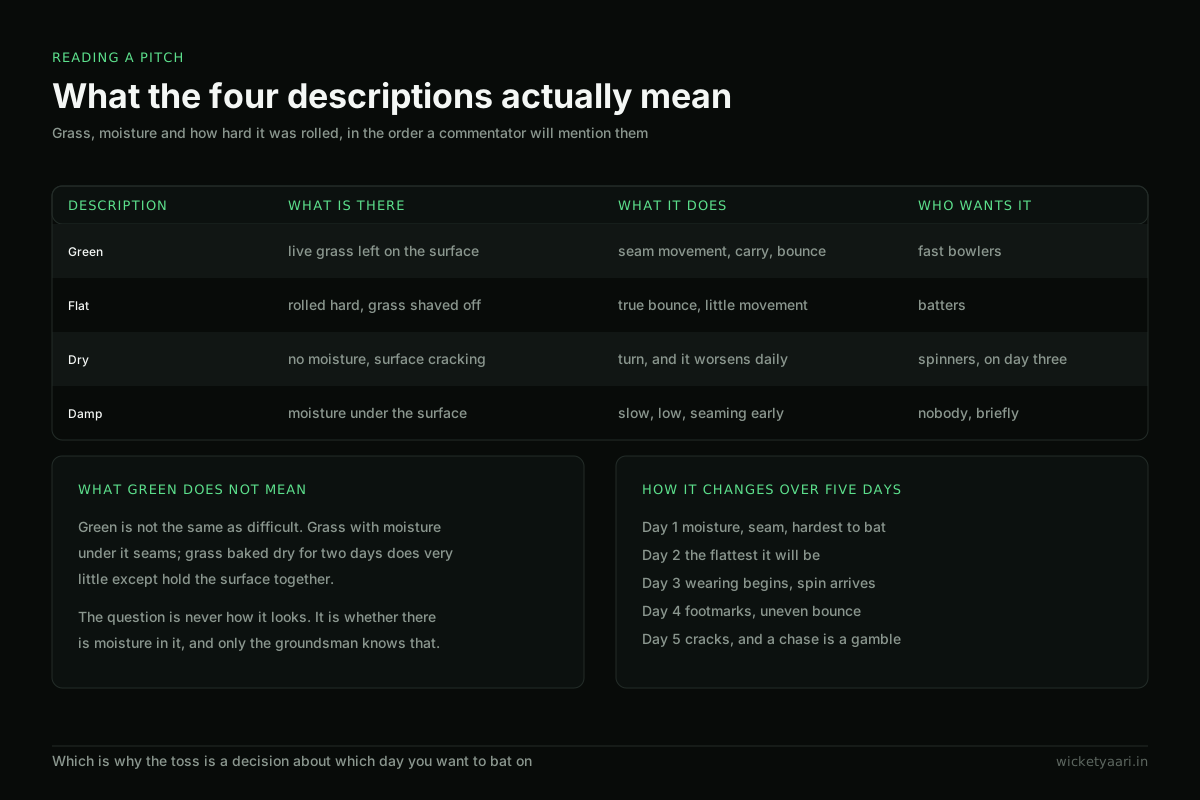
Grass. Left long, it holds moisture, grips the seam and produces sideways movement. Shaved down, it produces a hard true surface. The groundsman decides the length in the two days before the match and it is the only one of the three you can see.
Moisture. The most important and the least visible. Water under the surface makes a pitch slow and low early, then seam sharply as it dries. A pitch watered the night before plays completely differently from the same pitch watered three days before.
Rolling. A heavy roller compacts the surface, which makes it harder, faster and truer, and it also seals the moisture underneath rather than letting it evaporate. Rolling a damp pitch is how a groundsman produces a flat one; rolling a dry one is how cracks are made worse.
The captain of the batting side gets to choose the roller before an innings, which is one of the few pieces of groundskeeping the players control, and it is used tactically more often than people realise.
What green does not mean
Green is a colour. It is not a forecast.
A pitch with live grass and moisture underneath will seam viciously for two sessions and is genuinely difficult. A pitch with the same amount of grass, baked in the sun for two days with no water, will do almost nothing except look threatening on television — the grass is dead, the surface is hard, and the ball comes on to the bat.
This is why captains walk out to the middle, press a key into the surface and crouch down to look sideways along it. They are not checking the colour. They are checking whether it gives, and whether the grass is alive.
The corollary is that a bare brown pitch is not automatically a batting pitch. A dry surface with no grass to bind it will break up early, and by day three the footmarks will be craters.
How it changes over a five-day match
The lifecycle is consistent enough to plan around.
| Day | Condition | What it favours |
|---|---|---|
| One | moisture still present, grass alive | seam bowling, especially in the morning |
| Two | dried out, rolled flat, grass dying | batting, and this is the flattest it gets |
| Three | surface wearing, first cracks | spin begins, reverse swing becomes possible |
| Four | footmarks established, uneven bounce | spin, and any bowler who can hit the rough |
| Five | cracks open, surface breaking | whoever is bowling, and chasing is a gamble |
The consequence is that batting first on a good pitch is normally correct: you get days one and two, and you hand days four and five to the opposition. Batting first on a pitch that is damp and green means surviving two sessions to reach that advantage, which is the gamble at every toss.
Why home pitches got more extreme
Pitch preparation is legal, unregulated in most respects, and the single largest lever a home board has over a result.
A side with two world-class spinners will ask for a dry surface. A side with four fast bowlers will ask for grass and moisture. Neither request is against any rule, and the requests have grown less subtle over the last fifteen years as home advantage in Test cricket has increased rather than declined.
The ICC does rate pitches, and can sanction a venue for producing one that is dangerous or unfit. That system polices safety and extremes, not partiality: a pitch that turns square from the first session is a legitimate pitch, and a visiting side that cannot play spin has no complaint that the Laws recognise.
The pitches nobody chooses
Two conditions arrive without anybody asking for them, and both are miserable.
A damp pitch under cloud is the worst batting surface in cricket. The ball seams and the moisture takes the pace out of it, so the batter gets sideways movement at a speed slow enough to leave them in two minds. It is the one combination that makes very good players look incompetent, and it is why sides that lose the toss on such a morning frequently lose the match by lunch.
A used pitch — one that has already hosted a match earlier in a tournament — starts on day three of its life. Turn is available immediately, the bounce is uneven from the first session, and the toss becomes close to decisive. Domestic competitions and busy tournament schedules produce these routinely, and captains plan for them by picking an extra spinner rather than by hoping.
Reading a pitch as a viewer
Four cues that are visible from a sofa.
The colour at the ends versus the middle. The bowlers' footmarks appear first and tell you where the rough will be by day four. If they are already scuffed on day one, the surface is soft.
How the ball comes back to the keeper. Carrying through at chest height means pace and bounce. Bouncing twice means the pitch is slow and low, whatever it looks like.
Whether the fielders are up or back on day one. A captain with slips and a gully has looked at the pitch closely and expects it to do something.
How hard the batters are having to work for singles. On a slow surface the ball dies in the outfield and the ones and twos dry up long before the boundaries do.
A pitch looks distinctly green on the morning of day one, but the groundsman has not watered it for three days in hot sun. What is the most likely behaviour?
Grass without moisture does not seam. Dry grass on a hard rolled surface binds the pitch and produces true bounce, which is a batting pitch that looks like a bowling one.
- Green means seam
- Brown means spin
- Flat means high scores
- Cracks mean danger
- Moisture under the surface means seam
- A broken surface means spin
- Rolling and low clay content mean high scores
- Cracks mean uneven bounce on days four and five
- Grass, moisture and rolling; only the first is visible
- Green with no moisture is a batting pitch that looks like a bowling one
- Day two is the flattest, day five the worst
- Pitch preparation is legal, unregulated and the largest lever a home side has
The short version
A groundsman controls grass, water and compaction, and the captains are trying to guess which combination they are looking at. Green is the least informative of the three because it is the only one you can see.
For what the captains do with that guess, see the toss and how much it is actually worth, and for how the surface changes what bowlers can do, reverse swing explained.