Brian Lara by the numbers, and the innings nobody has matched
11,953 Test runs, a 400 not out that still stands, and a 153 not out in a chase that is regularly named the best innings ever played.
Brian Lara holds the highest individual score in Test cricket and the highest in first-class cricket, and neither is the innings people who watched him mention first.
- 11,953 Test runs at 52.88, from 131 Tests
- 400 not out against England in 2004, still the Test record
- 501 not out for Warwickshire in 1994, still the first-class record
- 153 not out at Bridgetown in 1999, chasing 308 with the tail
The record
| Format | Matches | Runs | Average | Span |
|---|---|---|---|---|
| Tests | 131 | 11,953 | 52.88 | 1990-2006 |
| ODIs | 299 | 10,405 | 40.48 | 1990-2007 |
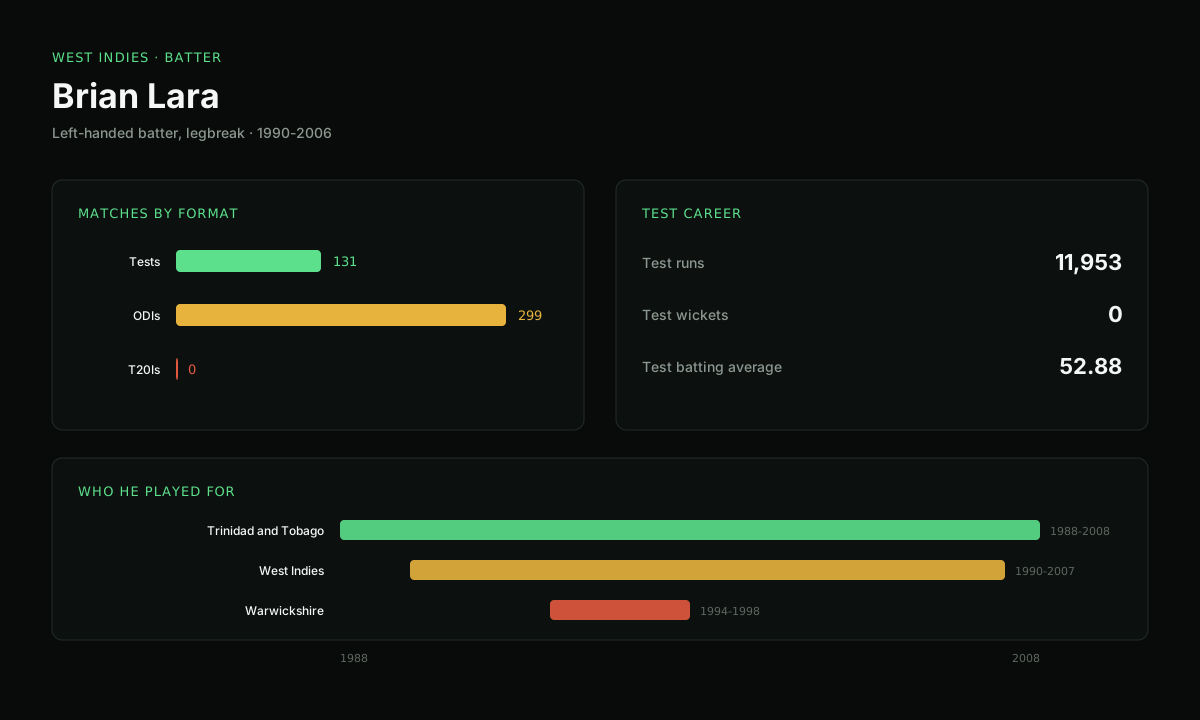
The full record is on his player page.
The 375, and then the 400
He made 375 against England in Antigua in April 1994, passing Garfield Sobers's 365 not out which had stood since 1958.
Ten years later, in the same country, against the same opposition, after Matthew Hayden had taken the record with 380, he made 400 not out. That is the only time anybody has reclaimed the record after losing it, and it is still the highest individual Test score.
The 400 came in a match West Indies were losing a series in, on a flat pitch, against an attack with nothing left. It is an endurance record more than a difficulty one, and Lara said as much.
Seven weeks after the 375, in June 1994, he made 501 not out for Warwickshire against Durham. That remains the highest first-class score and is unlikely to be approached, because almost nobody plays enough first-class cricket in a format where an innings can last that long.
The innings that matters more
Bridgetown, March 1999. Australia set West Indies 308 to win. West Indies were 105 for 5.
Lara made 153 not out and West Indies won by one wicket, with Courtney Walsh — a number eleven who averaged 7 — surviving five deliveries at the end. The attack was McGrath, Gillespie, MacGill and Warne.
It is regularly named the best Test innings ever played, and the reason is the combination: a chase, a collapse, the best attack in the world, and a batter who had to score the runs and protect the tail simultaneously. The 400 is the record. This is the innings.
What the average does not show
52.88 across 131 Tests is very good and not extraordinary among his contemporaries. Kallis averaged 55, Tendulkar 53.78, Ponting 51.85.
The context is the side. West Indies declined steeply during Lara's career: he debuted at the very end of the great period and spent most of it in a team that was losing. A batter who scores 11,953 runs in a side being beaten is playing under conditions that a batter in a strong side does not face — fewer flat-pitch opportunities, more innings starting badly, and more matches where a hundred does not change the result.
He also captained through the worst of it, in three separate spells, which is a job that has damaged more careers than it has helped.
There is a third element that gets less attention: he scored very fast for a batter making enormous scores. The 375 came at better than a run every two balls and the 400 not out at a similar rate, which is why both were possible inside a Test match rather than requiring a timeless one.
The style, which was genuinely unusual
Lara's technique broke two conventions and worked anyway.
A very high backlift. The bat came up towards second slip, higher than the coaching manual has ever recommended, which gave him enormous power and a longer distance to bring it back down.
Playing very late. He hit the ball later than almost anybody, close to his body and under his eyes, which is what let the high backlift work: the bat had time to arrive because the shot started later.
The combination produced a batter who could score square on both sides off the back foot with a full swing, and who was extremely difficult to bowl a good line to, because the length that was safe against most batters was hittable against him.
Country and role narrow it fast. The runs column and the span are what separate him from two team-mates.
Brian Lara — 400 not out against England, the highest individual Test score there has ever been. Full record
The captaincy
Three spells, none of them happy, and it is the part of the record that is hardest to read.
He captained a side in structural decline, with a board he was in open dispute with more than once, and with a player group that was not always united. The results were poor and it is not obvious that anybody else would have done better.
What is clear is that the captaincy coincided with the least productive periods of his batting, which is an unusually direct illustration of a cost that is normally argued about in the abstract.
- 400 not out, the Test record
- 501 not out, the first-class record
- 11,953 Test runs
- Three captaincy spells
- 153 not out at Bridgetown
- Playing very late, with a very high backlift
- Scoring them in a side that was losing
- None of which helped the batting
The 1994 summer
Two records in seven weeks is worth stating on its own, because nothing comparable has happened before or since.
In April he made 375 in Antigua, taking the Test record from a mark that had stood for 36 years. In June, playing county cricket for Warwickshire, he made 501 not out against Durham over two days, passing Hanif Mohammad's 499 from 1959.
He was 24. Both records were more than three decades old when he took them, and one of them is still his three decades later.
The 501 also came in the middle of a county season in which he scored seven centuries in eight innings, which is the kind of run that gets described as a purple patch and was closer to a structural break in how much a batter could score.
Against Australia, specifically
The best of Lara came against the best side of his era, which is an unusual pattern and the reason his reputation among players is higher than the raw figures suggest.
The Bridgetown 153 was against Australia. So was the 213 in the previous Test at Kingston, in a series West Indies had begun by being bowled out for 51. So was a great deal of his best work through the late nineties, at a point when Australia were beating everybody else comfortably.
Batters who score against weak attacks accumulate. Batters who score against the best one available are doing something different, and it is what separates his record from several with better averages.
Where he sits in our dataset
Difficulty tier 1 on the player list, and one of the more satisfying puzzle answers because the columns converge quickly: West Indies, batter, 1990 to 2006 leaves very few options, and the runs total closes it.
He is also one of the few players whose aliases genuinely need to include a nickname, because a large share of people who know exactly who he is do not immediately produce the spelling.
- 11,953 Test runs at 52.88 in a side that declined around him
- Holds the highest score in both Test and first-class cricket
- The 153 not out at Bridgetown is the innings his contemporaries name
- A very high backlift and very late contact, which should not have worked
The short version
The records are the two biggest scores in the sport's history and they are not the argument for him. The argument is a chase at Bridgetown against the best attack in the world, with five wickets down and a number eleven to protect.
For the list he sits at the top of, see highest individual scores in Test cricket, and for the era he arrived at the end of, the rise of the West Indies.