

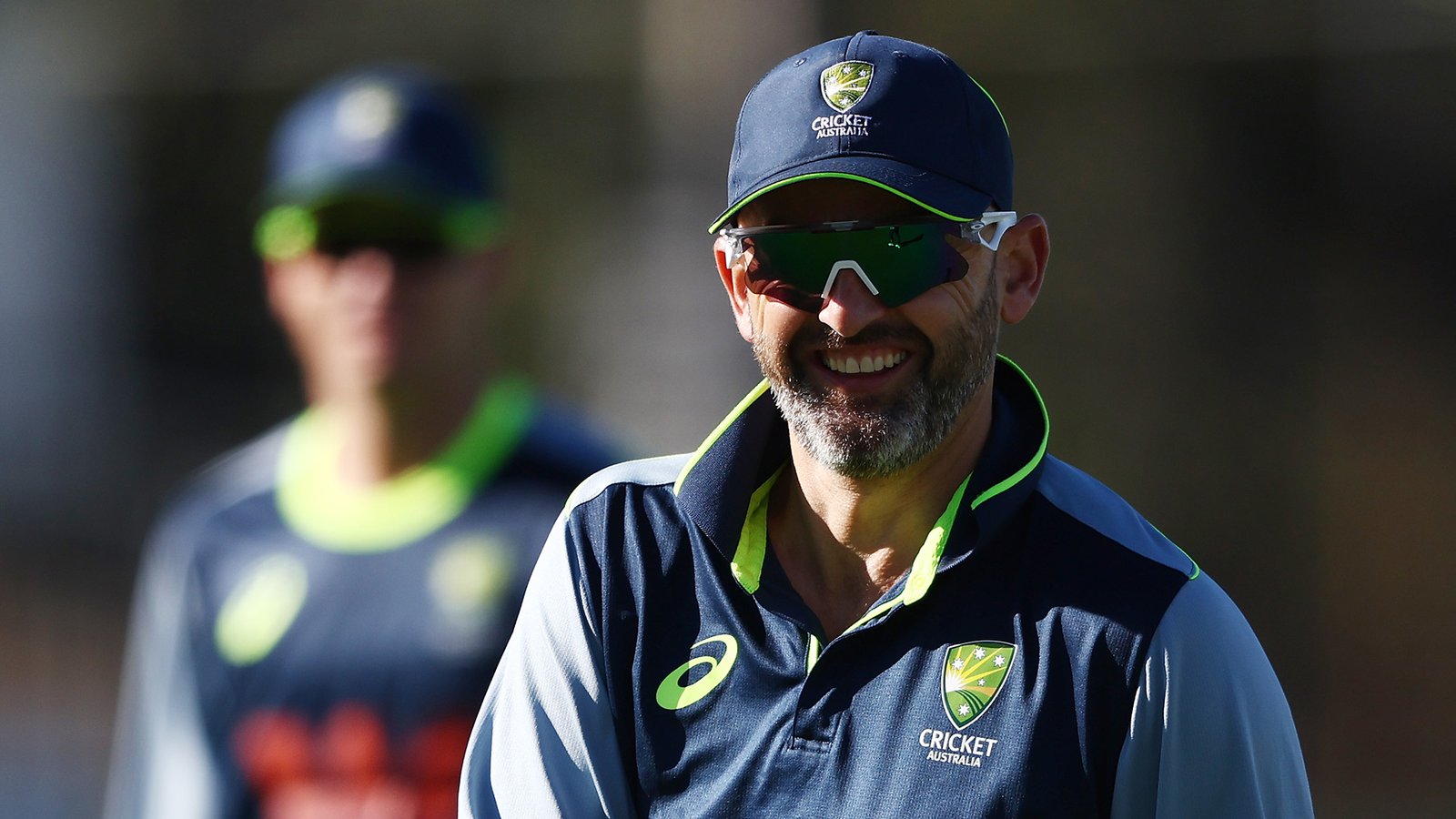
With a single delivery, Nathan Lyon casually pulled off what England would have given anything for last summer.
Travis Head, seeking to recapture his destructive Ashes form during an intra-squad match simulation in Brisbane last week, had battered five boundaries against the new ball.
On to bowl came Lyon, Australia’s oldest player fresh off his rehabilitation from a second serious soft-tissue injury in three years. Head advanced down the Allan Border Field pitch to the off-spinner’s first offering, swung and missed, and wicketkeeper Alex Carey did the rest.
“I faced one ball,” Head said when asked for his view on whether Lyon had the Kookaburra fizzing like he had before he tore his hamstring in December. “It was a pretty good one.”
As yardsticks come, Head is up there. England did not manage to dismiss him before he faced 20 balls in 10 Ashes innings, nor did many of the series’ leading run-scorer’s exits typically involve any great degree of bowling deception.
The scorebook record of ‘Head (27) stumped Carey, bowled Lyon’ was therefore a tentative sign that Lyon might be back to his best ahead of his return in the northern Tests against Bangladesh.
Another came in Darwin’s practice nets on Monday when Steve Smith recoiled with alarm as Lyon got another delivery to jump viciously off a length towards the batting titan’s neck.
“One for the over,” Smith exclaimed as he underarmed the ball back to Lyon, inspecting a surface admittedly made spicy due to unseasonably high dry-season humidity.
“He’s back putting immense ‘revs’ on the ball,” sometime-off-spinner Beau Webster said of Lyon. “The shape he gets, the angle he creates – even facing him last week in Brisbane quite a bit on a bit of a tacky spinner (of a pitch), he’s such a difficult customer.
“He’s still the best in the country for a reason … he is the greatest ever to do it. I hope he plays for another 12 months – and beyond if his body’s up to it.”
Any whispers that Lyon had lost potency having been dropped for Australia’s last two pink-ball Tests, and playing something of a spectator role during recent red-ball games on overtly seam-friendly wickets, have been roundly dismissed.
In the third Test against England, before he ripped his left hamstring diving in the outfield, Lyon had taken two wickets in his first over and had added three more including a spectacular dipping off-break that clean bowled Ben Stokes.
“Adelaide was probably the best he’d bowled for some period of time – and he won’t mind me saying that,” Andrew McDonald told cricket.com.au. “It was just disappointing to see him go down that moment.”
McDonald more than anyone in the Australian playing and coaching set-up he oversees can relate to what Lyon has gone through in the almost eight months since he limped off Adelaide Oval.
Hardly a year removed from a career-best 2010-11 Sheffield Shield season in which he averaged 76 and struck three tons, the Victorian allrounder elected for the same hamstring reattachment surgery Lyon underwent in December.
For McDonald, it was to fix a chronic nerve complaint, as opposed to Lyon’s acute blow. But the operation and rehabilitation were effectively the same.
A successful recovery would have put McDonald – who, at 31, was seven years younger than when Lyon had his operation – firmly back in the mix to add to his four Tests. Instead, he bowled just 10 more overs in professional cricket and played only four more first-class matches, the last aged 33.
“There are no guarantees when you do get surgery and how you’re going to come back,” said McDonald. “It takes an incredible amount of work and it’s a lonely place, rehab.”
The master coach has watched on, firstly in Brisbane and then in the Top End’s sweltering heat, as Lyon has trained strongly to show the benefits of his diligent recovery. It has involved considerable strengthening of the right leg he also severely damaged when he ripped his calf muscle on the same side at Lord’s in 2023.
McDonald admits Australia will have to think carefully about how much time Lyon spends fielding on the boundary, where both his recent injuries have been suffered. With up to 21 Tests to be played over the next 12 months, staying injury-free is likely to be a greater concern than a sudden loss of ability.
“It probably can be said for a lot of other quality spin bowlers over the journey that it’s probably not the skill that leaves them,” said McDonald.
“It’s probably the body that is compromised in some way that then diminishes the skill.
“His skill is as good as ever and the body’s allowing him to do that.
“His body, if I’m honest, is as prepared as it ever has been. Sometimes that’s the benefit of having a long-term injury, is that you can get yourself back to the physical state removed from a performance environment.
“The SSSM (sports science and medical) team … have done a power of work. But ultimately, it’s the player that has to have the appetite to get back to that level.
“There’s no guarantees when you get that age when you have such a significant injury.
“It’s one thing getting back, and then the next thing is obviously backing up from Test match to Test match, and how we manage him in the program, to allow him to go out there and perform.
“We’re confident that he will.”
NRMA Insurance Bangladesh Test series
First Test: August 13-17, Marrara Stadium, Darwin, 10am (local)
Second Test: August 22-26, Great Barrier Reef Arena, Mackay, 10am (local)
Australia squad: Pat Cummins (c), Scott Boland, Alex Carey, Cameron Green, Josh Hazlewood, Travis Head, Josh Inglis, Marnus Labuschagne, Nathan Lyon, Steve Smith, Mitchell Starc, Jake Weatherald, Beau Webster
Bangladesh squad (first Test): Najmul Hossain Shanto (c), Mehidy Hasan Miraz (vc), Soumya Sarkar, Shadman Islam, Tanzid Hasan Tamim, Mominul Haque, Mushfiqur Rahim, Litton Das, Amite Hasan, Jaker Ali, Taijul Islam, Taskin Ahmed, Hasan Mahmud, Syed Khaled Ahmed, Ebadot Hossain Chowdhury, Musfik Hasan
