

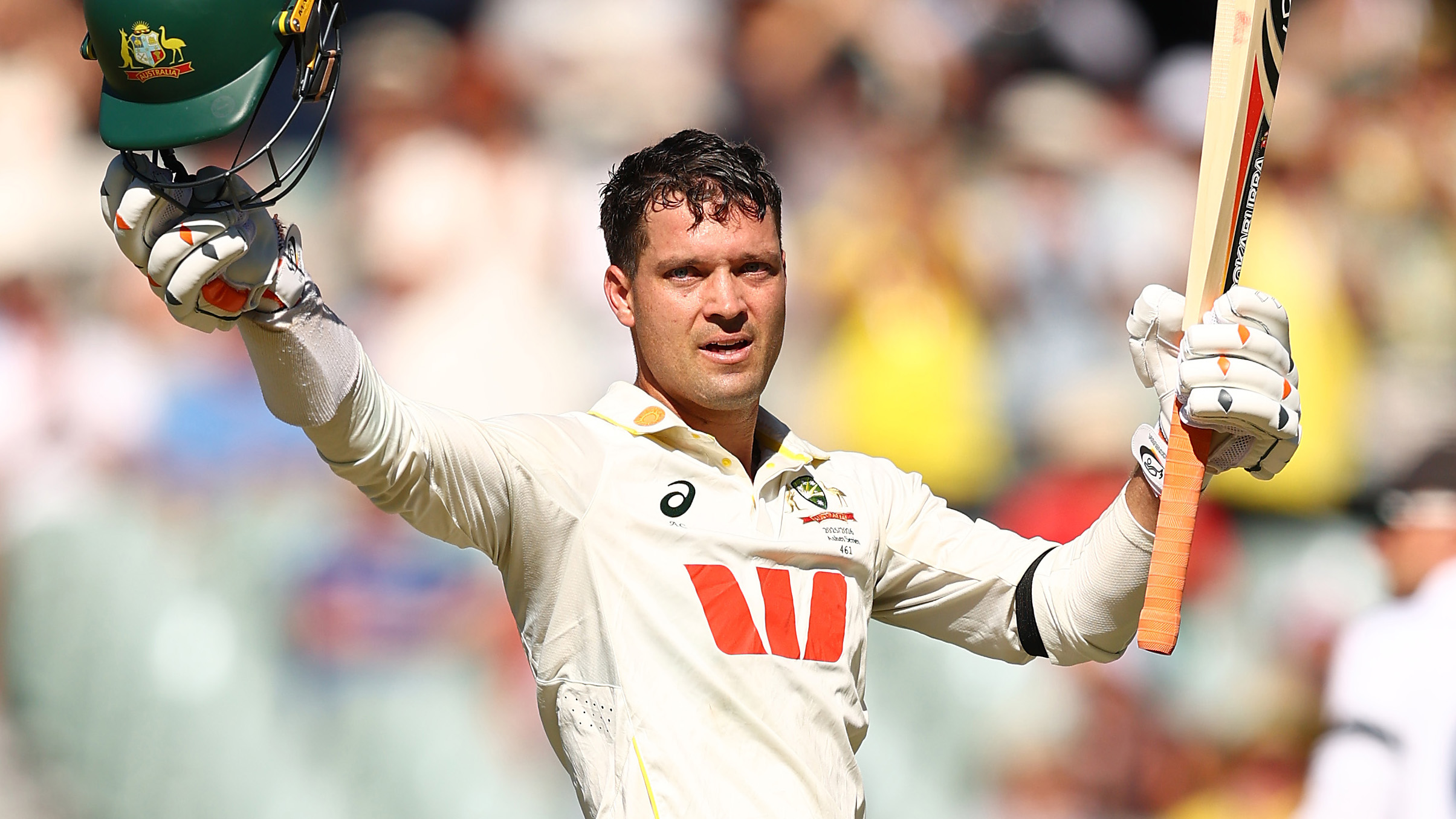
Australia have never given a Test keeper an extended run in the top five, but Alex Carey is willing and shown he might well be able
Alex Carey has put his hand up for a history-defying promotion to Australia’s vacant No.5 spot, dismissing concerns it is too demanding a role for a Test wicketkeeper.
Selectors are this week expected to name their squad for the upcoming Top End series against Bangladesh that kick-starts an intense run of 20 Tests in 12 months, with the long-term replacement for Usman Khawaja at five the only opening in the XI.
No Australian gloveman has ever been given an extended run batting higher than No.6 – even Adam Gilchrist was sent back down to No.7 after hitting centuries from numbers three and five.
It is less of a taboo elsewhere; Andy Flower and Kumar Sangakkara are among the keepers to shine in the top order, while Rishabh Pant currently combines standing behind the stumps and batting five for India to be one of Test cricket’s most feared ball-strikers.
Carey’s supreme recent returns with the bat – he is averaging a little shy of 50 from his past 18 innings and thrived when pushed up to No.6 during last summer’s Ashes – make him a strong candidate to fill the old role of born-again opener Travis Head.
Cameron Green, Josh Inglis and Matt Rensaw are others who will be considered for next month’s Tests in Darwin and Mackay. Either way, Carey should not drop back below six if Beau Webster holds his place.
While Carey is the ultimate team man and insisted he is happy to bat anywhere, the 34-year-old indicated a willingness to fill the berth.
“I bat five for South Australia (but) to be honest, if I’m playing, wherever they put me, I’m really grateful for that opportunity,” Carey told cricket.com.au.
“I enjoyed my time at number six through the Ashes. There’s some really classy top-order batters around the country and in our squad as well.
“If I was asked to bat higher, I’d love to do that.
“But there are great options that are playing some really good cricket as well. I also love coming in six and seven after the top order do all the hard work.”
Under coach Andrew McDonald and captain Pat Cummins, the Australians have pushed back against traditional norms regarding the structure of batting line-ups.
McDonald last summer wondered openly whether Carey could bat as high as five and in the same breath revealed his view that Gilchrist, arguably cricket’s greatest ever keeper-bat, should have come in higher than the No.7 spot he occupied for most of his Test career.
Cummins meanwhile has labelled batting orders “over-rated”. It is not a universally shared view, but Carey said: “That’s probably the beauty of the way that ‘Ronnie’ (McDonald) and Patty and all the selectors sort of think about the game.
“It can be different from one game to the next. It can be different from one innings to the next as well. It’s a group of players that are open to lots of different situations.”
Indeed Carey benefited from that outlook when he became the first Australian keeper after Gilchrist to score a century from the top five when he struck a career-high 156 from No.5 against Sri Lanka in Galle last year.
Carey often bats at five in Australia’s ODI side (albeit in a format in which Inglis is the designated keeper) and his 103 from that spot in March’s Sheffield Shield final against Victoria underlined his credentials there.
Since 2020-21, only Renshaw has averaged more than Carey at five in the Shield (minimum six innings). The Queenslander has since returned to open the batting in red-ball cricket at domestic level.
Green, however, does have his own case to bat there. Despite middling returns during a home summer during which he finished batting at seven, the allrounder is comfortably the best performed Shield No.4 over that same period, averaging 61.03 from 34 innings there for Western Australia.
One thing holding previous Australian sides back from pushing capable batting wicketkeepers like Gilchrist or successors like Brad Haddin and Matthew Wade up beyond six or seven has been the view that their primary role in the field requires additional subsequent recovery time.
Carey dismissed that notion.
“I’ve never really thought about it like that,” he said. “Whenever you get the chance to bat, you switch on and focus. The same with wicketkeeping.
“When you’re batting at seven, you want to be batting with the tail and be the last man out – and then you go straight out to keeping. So do you get your rest earlier or do you get it later? It doesn’t really matter.
“My game is to contribute with the bat and behind the stumps, the physical side of it doesn’t really come into my mind.”
NRMA Insurance Bangladesh Test series
First Test: August 13-17, Marrara Stadium Darwin, 10am (local)
Second Test: August 22-26, Great Barrier Reef Arena, Mackay, 10am (local)
