

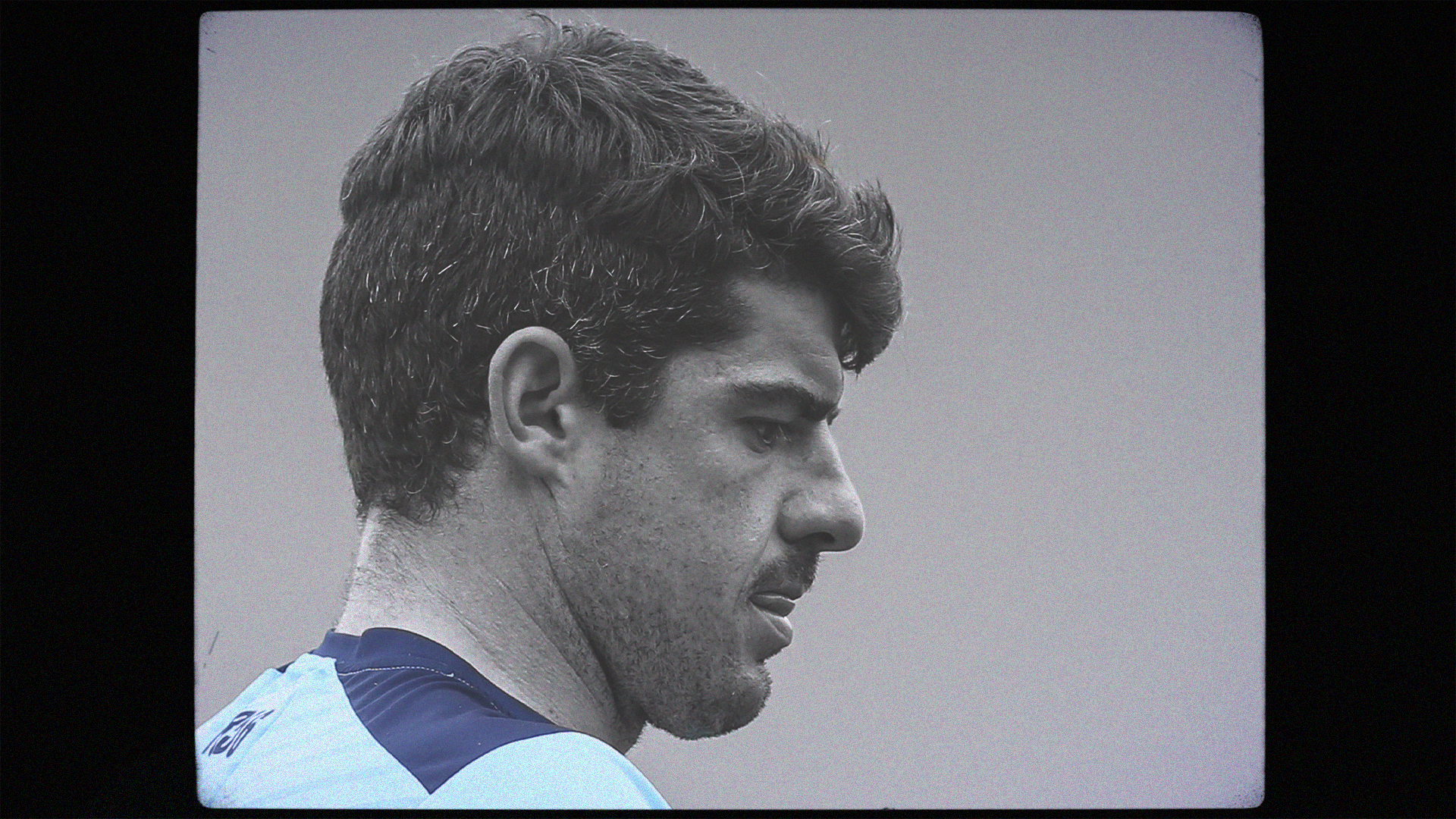
Last Thursday morning, as he walked his dogs Clancy and Moreton along Bronte Beach, Moises Henriques realised the moment he had feared for 22 years was upon him.
Unwanted by the Sydney Sixers, unwilling to go anywhere else, the domestic career he had known since he first signed with Cricket New South Wales (CNSW) as a 17-year-old had ceased to be.
By then, Henriques had known his fate for a couple of months. Initially, he hadn’t been ready to walk away. In the lead up to the 2025-26 KFC Big Bash League, he sought assurances from Sixers bosses that he wouldn’t need to look elsewhere when he came off contract at season’s end. A verbal assurance was given, only to be rescinded months later, after Greg Shipperd was fired and James Hopes was (briefly) hired to replace him as Sixers head coach.
In the months between, Henriques underwent the ninth surgery of his career – this time for a prolapsed disc in his back. It had done nothing to dim his renewed spark for the game. If anything, he was excited by the prospect of regaining the physical movement that was notably lacking through a challenging summer.
And so his first reaction to the Sixers’ position was one of frustration and disappointment. When his partner Sophie gently prodded him about it, Henriques found himself slipping into the old habits he has worked hard to overcome.
“I didn’t want to talk about it,” he says. “I think that’s my initial reaction to most things: I don’t want to talk about it, and I’m just going to work out a way to deal with it.
“Then if I can’t, that’s when shit hits the fan.”
While he disagreed with the Sixers’ decision, on one level he could understand the club’s reluctance to re-sign a 39-year-old coming off a lean campaign. But he felt let down by what he perceived to be a breakdown in communication.
For a brief period, he wrestled with what to do next. Offers had already come his way from other BBL teams.
“But when you get to my age, the ‘why’ of why you’re playing is really big,” he says. “And the why for me was the players that I played with, and the fans at the SCG, and I love playing at that place.
“At 39, for the sake of another year or two, I decided it might not be fair on another team that would want my services. I wouldn’t be able to go there with the same level of commitment I’d given the Sixers.
“In the end, it just felt like it was an easy decision to make.”
Last Wednesday, CNSW set about planning Henriques’ retirement announcement for 10am the next day. The press release came with the whole box and dice: player statement, interview opportunities, quotes from CNSW Chair John Knox as well as from Sixers general manager Rachael Haynes, and even a link to a seven-minute piece to camera from Henriques on the organisation’s YouTube channel.
When it landed in inboxes, Henriques was walking the dogs on a windy and overcast winter morning. As he made his way along the beach, he began revisiting the many talking points of the only adult life he has known – while beginning to ponder his next one.
“When you first start playing cricket,” he says, “it gets rammed down your throat: you need to know what you want to do when you finish playing.”
Driven by a creeping concern that an answer to that question might forever elude him, he had spent the first decade of his career diligently setting himself up financially, so he wouldn’t in fact have to do anything.
But then something else occurred to him.
“I thought: If I’m not working, or not doing anything, I’m going to be miserable,” he says.
For the next decade, he changed tack. He studied for his MBA, gained his level three coaching accreditation, and added various other arrows to his quiver, so best to arm himself for the great unknown.
“It’s basically what caused me the most anxiety out of anything in my whole cricketing career,” he says. “What was my life going to be like after cricket?”
For Henriques, who has battled mental health issues publicly and privately for the past decade or more, it is quite the statement to make.
The fear is deep rooted. It winds all the way back to a little island in the North Atlantic called Madeira.
* * *
It took a young Moises Henriques only a year or two to decide he was never going to follow in the professional footballing footsteps of his father Alvaro.
It wasn’t that the requisite genetics didn’t roll through the family bloodline; in the years after the Henriques family settled in southern Sydney, Moises – the eldest of three brothers – showed himself to be quite adept at whatever sport he turned his hand to.
The problem was Alvaro’s closeness to the game. Father-son relationships are often complex, and sometimes, the addition of a ball sport can act like tinder.
“He definitely pushed me more (than in cricket), and that’s probably why I gave up soccer,” Henriques tells cricket.com.au. “And because he had such an expertise in it, I was like, ‘Oh god, I can’t win at this game’. So I gave it up pretty early, much to his dismay.”
Alvaro forged a football career in Portugal’s second division against the odds. One of 13 children, his youth in Madeira was spent living below the breadline – a common situation for many Madeirans, whose impoverished economic situation was somewhat masked to the wider world by the island’s stunning natural beauty.
As William Finnegan’s seminal surfing odyssey Barbarian Days details so poignantly, the place has changed significantly in the decades since – perhaps for both better and worse – due primarily to mass tourism.
From a young age, Alvaro’s parents expected him to devote all his spare time to working in order to help feed the family. So much so that he kept his burgeoning football career a secret from his father, who was shocked when he went on to make his professional debut. Years later, when he and his then wife Anabela moved with Moises to Australia, it was for opportunity – for the three of them (siblings Nicholas and Robert were yet to be born).
By then Alvaro was in his mid-30s and the dream of achieving footballing fame and fortune had made way for reality. In Peakhurst, a small suburb in the St George area of Sydney, they made their home. Alvaro took a job in a warehouse, working for a sheet metal and air conditioning company.
Memories of Madeira faded quickly for young Moises (the family left when he was two) but when he came to school age, its impact was more lasting, as a Portuguese-speaking household made the transition difficult. An observer by nature in unfamiliar environments, the language barrier only increased that.
“I was a bit of a loner when I first started school,” he says. “I didn’t fit in – not many people with the name Moises, and a kid who doesn’t speak English … I got teased, and bullied.”
Things changed when sport entered the kids’ social dynamic. Out beyond the white line, Henriques found translations were rarely required. He found respite, and enjoyment, and a sense of purpose. And he found a simple truth: people tend to respond positively to someone being good at something.
“And I latched onto that,” he says. “I learnt that, for me, being good at sport allowed me to go from a kid who was bullied and didn’t fit in, to (someone who was) really respected and revered in the classroom in a really short amount of time.”
* * *
Ten days before he was player of the match in the inaugural KFC BBL final – way back in January 2012 – Henriques was suffering a mental crisis that would take him years to overcome.
Perth Scorchers’ run chase against the Sixers looked all but lost: at 4-136, they needed 41 runs from 18 balls – a scenario rarely achieved at that point of the Twenty20 evolution.
Henriques took the ball for the 18th over and, in attempting a yorker to Luke Ronchi, accidentally sent down a beamer that the batter pulled away for four. From the subsequent free hit – another high full toss – Ronchi crashed six more over midwicket. When Henriques finally landed one on the pitch, it was too short, and the batter helped himself to six more.
All told, 18 runs had been scored from one legal delivery, bringing the equation down to 23 from 17. The Sixers held on to win the match by a single run – Mitchell Starc and Brett Lee bowled them to victory – but Henriques was shattered.
“It was a really embarrassing moment, and I was really ashamed of my mis-execution,” he told the Scoreboard podcast this year. “The game was ours to win, and then in the space of three balls, it was theirs to win – all because of three mistakes I’d made.
“I didn’t want to do that again after that. From that moment on, I never said it to anyone, but in my head I was … hoping I wasn’t called upon in those moments, because I was like, ‘I don’t want to stuff it up for the team again’.
“It really manifested. One negative thought turns into five, it turns into 15, and then I was thinking about my whole life negatively as well.
“I lived with that shame … for a long time.”
Henriques top-order knock of 70 from 41 balls in the BBL|01 final helped the Sixers to the inaugural title, and in the six years that followed, he played 23 times for Australia across the three formats. But towards the end of that window, his mental health spiralled. He bravely detailed his story publicly and, in the years since, his advocacy work has helped change the nature of the conversation around mental health in Australian sport.
Yet before he could get to all of that, he had to find a way to better understand himself.
* * *
When he was a kid, Henriques would look out the window on a Saturday morning in summer and hope beyond hope it wasn’t raining. He scored cricket matches off the television from his couch and worked endlessly at all three of the sport’s disciplines in his backyard, moving through every shot in the batting textbook and finding new sources of fascination within the endless nuances of the game almost daily.
He played rugby league, too, and he watched whatever sport he could. Only years later did he come to understand why Tiger Woods’ 1997 Masters triumph felt so significant to him; here was a true outsider not just winning – but dominating – within an established institution.
Henriques was 10 at the time, and when his parents divorced a year later, the circumstances of the split meant he decided to live solely with his father. Little brothers Nicholas (6) and Robert (4) stayed with their mother, though he continued to see them often.
As Henriques moved through his teenage years, he watched his father – also a man of few words by nature – become increasingly sullen and withdrawn. Many men of Alvaro’s generation never learned what Moises has; that it is healthy to talk through emotions and feelings. In fact, quite often it was the opposite; just suck it up and get on with it.
But one man’s suffering can be another’s noble stoicism.
“I saw a really, I would say, troubled side of him,” Henriques says. “And what he sacrificed to keep a shelter over me, and make sure I was still getting to school (and) to sport.
“He was still giving me some type of environment where I was still able to fit into the community, despite him feeling so alone. I didn’t realise it at the time, but now I look back and go ‘shit – he was doing it so tough for so long’.”
Perhaps they were life lessons Henriques was subconsciously acquiring all along. Because eventually, after enduring too many of his own dark days – days when he would look out the window and pray for rain – he decided he wouldn’t suffer in silence.
Henriques was too closed off in his early therapy sessions, which isn’t uncommon. He would try to please, offering answers he thought the therapist wanted to hear, rather than opening up. That would have meant bringing down walls that had been standing since he was a child. But familiarity and time did the trick. While he remains guarded when in the company of people he doesn’t feel comfortable with, the opposite is also true; get him in a room with people who have earned his trust, and he’s a talker.
It helped, though the revelations came slowly.
“I’d kept up this facade of, ‘I just don’t think I enjoy the game anymore’,” he says. “Like, ‘I don’t like the way it makes me feel’, ‘It’s stupid’, and all this sort of stuff.
“And it wasn’t until that I was able to go: ‘You know what? I actually love it so much that I can’t deal with the expectation I put on myself’. Or: ‘I’m not coping with what other people expect of me and what I’m delivering, and the gap’.”
Understanding that his fear of failure centred upon the moment the game was on the line, and his anxiety around internal and external expectations regarding performance, were vital discoveries along the way.
But the real breakthrough came when Henriques began revisiting those early days in Peakhurst, when he had found a way to be accepted.
“Yes, there was a fear of failure, but the reason the fear was so deep and so strong was that I felt that if I was not good at sport – or not good at cricket – then I wouldn’t have any friends,” he says.
“The underlying belief I’d taught myself was: I have to be good at things to win the respect of my peers. So I’d attached all my personal value to being good at cricket.
“It wasn’t something that was ever conscious in my mind, but once we broke it down, I was like, ‘Oh shit, so that’s why I’m so worried about failing, or I’m so concerned about losing my contract – I think everyone’s going to leave me if I’m no longer considered good at cricket’.”
* * *
By the time of his last Sixers summer, there wasn’t a T20 situation Henriques hadn’t encountered across what currently stands at 301 matches in the format. He had long since worked on his mindset to the point that he found himself revelling in the pressure and intensity of a run chase; in the back half of his career, it was where he felt most comfortable in a match.
There was nothing magical about the shift. He put in the hours on the therapist’s couch, methodically breaking down and then rewiring a deeply ingrained perception of success. The fundamental questions looked something like: What if you don’t attach your self-worth to winning and losing? What if you take every moment – little and big – as a life lesson along the way?
“As long as I keep going into every experience with an open mind and not thinking it’s win or lose, or ‘I need this’ – it should never be that,” he says.
“It should be: This is just an experience for me to learn from. I’ll give it everything I know at the moment, but if that’s not good enough, then I’ll learn from that.”
He still hears from the little devil on the shoulder, but he knows to expect it now. Sometimes, they openly converse, Henriques allowing the once-crippling negative thoughts to escape, so he can move on. He thinks maybe that comes with the territory; when you care about things deeply like he does, when you’re an all-in personality in whatever it is you’re doing, there is a fine line between glory and despair. The difference now? He has the self-awareness to recognise it.
“I’d love to say I’ve learnt all those lessons, but I’ve even felt in my studies that I do the exact same thing, and it’s not until I’m halfway done that I realise what I’m doing,” he says.
“I’m going to have those habits where I go into things either really excited or motivated to do things really well. The thing that gives me freedom to chase those things, I think at its best, it’s actually a really cool (trait) to have.
“It’s just once the fear of failure becomes debilitating, then it’s no longer healthy – and how you manage that fear or anxiety is actually the key.”
Somewhere along the road of self-discovery, Henriques started writing in a gratitude diary. Each day he gave himself three tasks: improve in some small way or learn something new; help someone else do the same; and if you fail at either of those tasks, try again the next day.
That is what success has become for him.
Now, when he considers his future, there’s excitement in his voice.
“I don’t know where I’ll be this time next year,” he says. “I still don’t really know where I want to go. I definitely want to keep a foot in the game, but I’m also really curious about what else is out there.”
* * *
Henriques does know one place he wants to go, and he knows who he wants to take with him.
In May 2025, when he first injured his back during the UK T20 competition, he had five days to sneak away for a break. And so he and Sophie quickly booked flights to Madeira.
“It was really cool,” he says. “We met some of my English-speaking relatives, and had a small dinner with 10 or 15 of them, which was really nice. It’s just such a beautiful island.”
There is still some cricket to be played. Henriques has signed with Glasgow Cosmic in the European T20 Premier League and will also play for his native Portugal in their T20 World Cup sub-regional qualifiers. It is a nod to his heritage, of course, and on some level, a thank you to Alvaro, who has watched with great pride as his son played out the type of sporting career he dreamt of.
All these years later, he still works for the same company, though as he nears his 70th birthday, he has become a mainstay in the office rather than the warehouse.
It is only recently that his first-born son has seen a positive change in him, one Moises hopes will long continue.
“I think now he’s got grandkids,” he says. “My brother’s got three kids, and I have Archie, and only the last three or four years have I started to see him smile again, and things lighten up for him.”
Once the cricket really is done, and when the calendar is clear, Henriques has something special in mind for his father.
“We’re planning to go back to Madeira and meet the rest of the family,” he says. “Really do it properly. Me and my brothers, we all want to go over together. And my dad hasn’t been back yet, so I’m really keen to take him back as well. He’d love it.”
* * *
If you or someone you know needs help, please contact Lifeline Australia on 13 11 14, or beyondblue on 1300 22 4636.
