

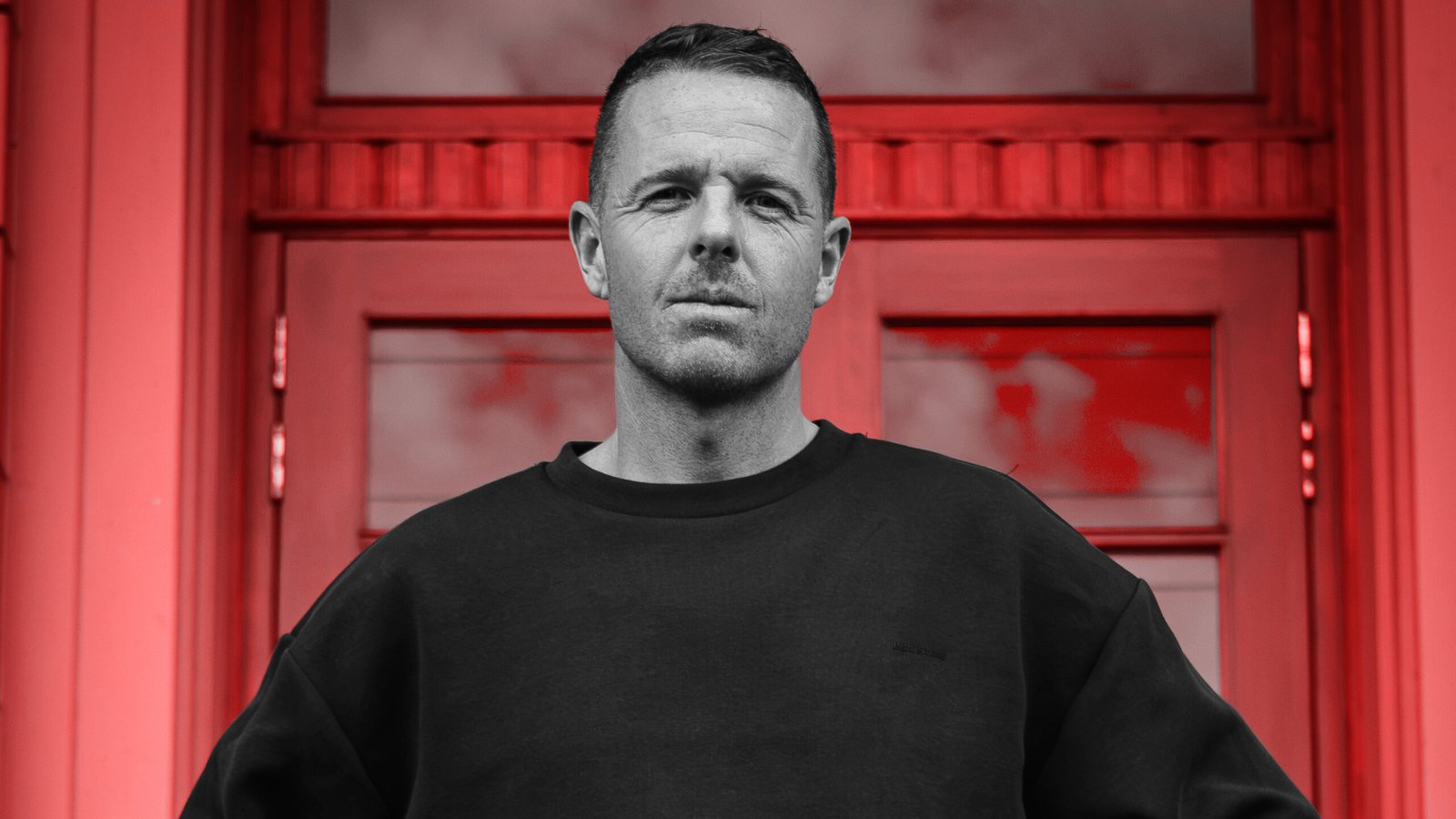
These days, Dan Cullen trades in a very different kind of heat.
The bleached‑blond hair of his youth is long gone. His Baggy Green is safely tucked away.
Twenty years after his sole Test appearance in the sweltering heat of Chattogram, Bangladesh, the former South Australian off-spinner now rushes toward the flames instead of trying to conjure them off a length.
Cullen, 42, is a firefighter with the Metropolitan Fire Service in Adelaide and after hopping between a series of different post-cricket jobs, says he’s found his calling.
“You’re always working in a team, and you get that rush like you do when you’re playing cricket,” he tells cricket.com.au. “It’s probably the most similar thing to being in that professional sporting environment that you can get.”
Cullen is into his sixth year with the “fireys”, a milestone he was bafflingly unable to achieve as a professional cricketer.
The span between his first and final games for South Australia was five years and 29 days.
His flame burned brightly but was extinguished far too soon.
***
Cullen never wanted to be an off-spinner.
Instead, the boy from Woodville was mesmerised by the ability, the spunk and the bravado of Shane Warne.
Like so many other kids of his generation, he set out to emulate the legendary leg-spinner.
He remembers spending countless hours in the backyard with his twin brother Nick with a ‘Shane Warne Kit’, a training aid in the form of a yellow rubber ball with indicators on where to place your fingers for the perfect Shane Warne grip.
There was only one problem.
“I couldn’t bowl leggies,” he chuckles. “I could only bowl wrong’uns.”
But it didn’t deter his love of spin bowling or his fascination with Warne.
As a teenager he would pop his collar and don the zinc cream to match his idol, and a chance encounter soon meant he had the same mentor as the legend as well.
A scrawny, 18-year-old Cullen approached former Test spinner Terry Jenner one afternoon at a suburban Adelaide indoor cricket centre asking for advice on spinning the ball more, and the relationship blossomed.
Jenner, who worked closely with Warne throughout his career, became one of Cullen’s biggest advocates.
“We have developed trust and the rest has been Dan’s great work ethic,” Jenner said in 2005. “I played most of my cricket with Ashley Mallett and Dan’s probably ahead of him at the same age. If he maintains what he’s doing I have no doubt he has the capacity to be the best we’ve had.”
With the backing of Jenner and a spot on South Australia’s contract list for the 2004-05 season, Cullen’s rapid rise began.
On the eve of the opening match of that season’s Sheffield Shield (then the Pura Cup) campaign, he got the nod to make his Redbacks debut.
The then-20-year-old received his ‘baggy red’ alongside four other debutants – Callum Ferguson, Tom Plant, Jack Smith and Matthew Weeks – in the start of a new era for SA.
His first full season was exceptional. He played all 10 of South Australia’s Pura Cup matches and claimed 43 victims at 30.37, with a flurry of wickets coming after Christmas.
“Every game I played, I got wickets,” he says. “I was taking twos and threes … and then we played Queensland on a green seamer and I took five-for (5-79). Then we played at the WACA Ground (against Western Australia) the next game and I took five-for again (5-38).
“In general, it was just a really consistent year.”
Cullen wasn’t just making an impact with the red ball either.
The spiky-haired upstart forced his way into the 50-over team and took nine wickets in the final six games, enough to see him receive the ING Cup’s Best New Talent award.
His state captain, Darren Lehmann, labelled him “the best off-spinner in Australia” after Cullen took 3-55 in a one-day game against Victoria.
The acceleration of Cullen’s career continued with a call-up to the Australia A side that off-season.
Come the new home summer, he took another 27 wickets in the Pura Cup and another nine in the ING Cup.
It saw him named the Bradman Young Cricketer of the Year at the 2005-06 Allan Border Medal awards night, and a couple of months later he earned his first Cricket Australia contract.
With the CA management planning for the imminent retirements of Warne and Stuart MacGill, they chose Cullen as the heir apparent.
***
A beaming Brett Lee strides across the Chattogram outfield armed with some news that can change a player’s life.
It’s 2006, and Cullen has been parachuted into the Aussie squad as cover for Warne, who has a sore shoulder.
After a nervous check of the wicket, the rookie spinner receives the extended hand of Lee.
“The morning of the second Test, I still didn’t know (if I was playing),” Cullen recalls.
“Then Brett came up to me and said, ‘Congrats mate, you’re playing’. That was the first I’d heard of it.”
The offie was always meant to be on this tour, just not so soon.
The rare Aussie trip to Bangladesh was scheduled to be two Tests followed by three ODIs, and weeks earlier he received the joyous news that he’d been picked in the ODI squad, his maiden call-up to the national side.
Then, on his 22nd birthday, with the wax on his birthday candles not yet dry, another call; this time the selectors instructed Cullen to begin his subcontinental sojourn earlier than planned. He was officially added to the second Test squad as cover for his childhood hero.
Days later, the novice touched down in Dhaka alongside crafty left-arm pacer Nathan Bracken, who had also been called up, and the pair slipped into a “tense” changeroom environment to see Ricky Ponting’s unbeaten 118 save Australia’s blushes in a three-wicket win.
“I remember Warnie getting out and then he had a little blow up in the rooms,” chuckles Cullen. “I was like, ‘Wow, this is pretty intense’.
“That was a pretty big eye-opener for me, because I hadn’t really been around that group before.”
With only three days between the end of the first Test and the start of the second in Chattogram, Cullen kept a close eye on Warne on the bus trips, at the hotel breakfasts and in the team room meetings, to see if he could get a read on how the star spinner’s shoulder was holding up.
Come gameday, and Cullen wouldn’t be replacing Warne but playing alongside him.
And fittingly, the ‘King’ did the honours and presented him with his Baggy Green, number 397.
“Warnie was the one cricketer I absolutely loved,” he says. “To get my cap from him… it was pretty special.”
Although Warne’s words are now just a blur, Cullen remembers squad member Andrew Symonds suggesting that he send a message to his parents to let them know the good news.
As the coin landed and Bangladesh captain Habibul Bashar chose to bat, the reality set in.
The pitch was flat. The mercury was rising. And for the first gamer, the conditions were unlike anything he knew.
“It was just extremely hot, humid conditions, (I was) sweating constantly,” Cullen says.
“I’d been to Pakistan on an Australia A tour and obviously that was hot and humid too, but I remember feeling those conditions (in Chattogram) I’d never experienced before.”
After short opening spells from Lee and Jason Gillespie, Warne and MacGill got stuck into their work. With the champion pair doing the heavy lifting – they combined for 99 overs and took 15 of Bangladesh’s 20 wickets – Cullen’s role was always going to be as a support act.
He waited until the 46th over to get his first bowl for Australia, by which point the Tigers were already seven wickets down.
And his second over in the big time brought about a big highlight.
Fast bowler Mashrafe Mortaza poked at a wide one and was caught behind by Adam Gilchrist. After a vociferous appeal, umpire Ian Howell’s finger went up. Titans of the game, Gilchrist, Ponting, Warne and co swamped him, with his trademark bleached hair getting one of the all-time rufflings.
It was his first, and turned out to be his last, Test wicket.
“I felt like I could have had a couple more (wickets) in that first innings … maybe I was a bit stiff, but I’m grateful that I’ve got one.”
After Gillespie’s famed double century set up an innings-and-80-run victory, celebrations commenced in the cramped, dank dressing room of the Chittagong Divisional Stadium.
Once the team song had been sung, Cullen finally peeled the Baggy Green off his head after five days in the Asian heat.
To his surprise, the fresh dye from his new felt hat, combined with litres of sweat (and perhaps a splash of celebratory beer) had turned his peroxide blond hair green.
He had made it to the pinnacle of the sport. Rather than feeling satisfied, he had become intoxicated by the feeling around the group, desperate to make this the first of many.
“Once you’re part of that setup, you just want more,” he says. “It was such an amazing environment to be in.”
***
There’s no singular reason Cullen’s career didn’t kick on.
His third season was patchy and he now had competition for his spot in South Australia’s XI.
After missing the start of the 2006-07 campaign as a non-playing squad member of Australia’s maiden Champions Trophy victory in India, he struggled for rhythm.
In his absence, leg-spinner Cullen Bailey appeared, and the SACA selectors chopped and changed which spinner was picked in the four-day side throughout the season.
With his opportunities now suddenly under threat, Cullen tried too hard to take wickets.
“Maybe people had higher expectations… and I put more pressure on myself too,” he says.
“In my third year, I was still only 22-23 (years old).
“Expectations were high … (I was) still really young and still learning, (as a spinner) not every game you’re going to take five-for and there are going to be some games where you’ll struggle.”
He also experimented heavily with variations, especially the doosra, a delivery he was eager to employ regularly having earned somewhat of a reputation as one of the few Aussies who possessed the mystery ball.
Inspired by Pakistan great Saqlain Mushtaq’s mastery, Cullen now wonders whether that was the right path to go down at that stage of his fledgling career.
“I probably should have stuck to what I was good at a bit more,” he reflects. “I loved experimenting, but maybe I focused too much on that.”
He remembers bowling the doosra regularly, even as far back as his Pura Cup debut, but admits it never accounted for too many wickets.
Desperate to rediscover his magic touch, Cullen spent hours honing his craft (in addition to his South Australia training) with Bailey, ironically the player keeping him on the sidelines, but also a close friend.
The pair would head to the indoor training facility in Woodlands and discuss their techniques and challenges with mentor Jenner and with each other.
In his fourth season, Cullen’s game time was on the way back up with eight Pura Cup matches, but his output was on the way down, with only 18 wickets at an average of 49.44.
From a One-Day Cup perspective, things were good, taking 13 wickets and being named in the team of the tournament.
But from a national standpoint, Cullen had been leapfrogged and by the end of 2008, three more rookie spinners in Beau Casson, Cameron White and Jason Krejza had been picked in the Test team ahead of him.
After taking 10 wickets (at 77.70) in five matches in 2008-09, his fifth state season, Cullen’s first-class career was done.
By 2010, he’d lost his state contract. The prodigy was gone from professional cricket just days before his 26th birthday.
***
Malaysia seems an unlikely place to host an ODI tri-series between Australia, India and West Indies, but ahead of the 2006 Champions Trophy, it was the sides’ final opportunity to prepare for the tournament.
In what turned out to be his final ODI, Cullen had the unenviable task of bowling to Brian Lara and Chris Gayle on a tiny ground in Kuala Lumpur.
With a partnership growing between the pair, Cullen was brought into the attack to quell the left-handed duo.
In his second over, he fired in an arm ball, and upon seeing that Lara had stepped out of his crease, most likely trying to target the short, straight boundary, Cullen thought he was in the game.
But with the time and skill only afforded to the champions of the game, Lara managed to rework his backlift and footwork all in a split-second, and despite being way down the pitch, simply late cut the ball for four.
What happened next is the point of some conjecture.
Teammate Stuart Clark wrote in 2010 that an irritated Cullen called Lara “cocky”.
Wicketkeeper Brad Haddin recalled that Cullen went against team directions and engaged in verbals with the champion.
The off-spinner remembers it a little bit differently.
“He was the best batter I ever bowled to,” Cullen says. “I said something under my breath out of frustration… but yeah, would’ve been nice to get his wicket.”
A few overs later, he almost did – an lbw shout that was so close that a resting Gilchrist later texted him to offer his commiseration.
“Gilly messaged me saying it was absolutely plumb.”
That huge appeal against the West Indian legend came at the end of Cullen’s penultimate over in international cricket. Lara scored 87 as West Indies won a forgettable ODI.
He wonders if a different decision and the scalp of one of the game’s greats would’ve changed anything.
***
In September, Cullen will become a Senior Firefighter with the MFS to signify six years of serving the community.
His cricket backstory is mentioned or raised by a keen-eyed member of the public “every now and then”, but for the most part, his playing career is just a distant memory.
However, Cullen still loves cricket.
He’ll switch on the Test matches over summer, follow the scores and he even dabbled in coaching a few years ago.
And the father of two might soon become even more invested if his eight-year-old son continues on the path laid out by his father many moons ago.
“He’s bowling leggies – the one thing I could never do,” Cullen laughs.
“He started bowling them out of the blue … he bowls them quite well actually.
“I even looked online to see if those old Shane Warne balls were still around. I might have to start playing some more Warnie videos for him.”
NRMA Insurance Bangladesh Test series
First Test: Bangladesh won by nine wickets
Second Test: August 22-26, Great Barrier Reef Arena, Mackay, 10am (local)
Australia squad: Pat Cummins (c), Scott Boland, Alex Carey, Cameron Green, Josh Hazlewood, Travis Head, Josh Inglis, Marnus Labuschagne, Nathan Lyon, Steve Smith, Mitchell Starc, Beau Webster, Matt Renshaw
Bangladesh squad (for first Test): Najmul Hossain Shanto (c), Mehidy Hasan Miraz (vc), Soumya Sarkar, Shadman Islam, Tanzid Hasan Tamim, Mominul Haque Showrab, Mushfiqur Rahim, Amite Hasan, Jaker Ali Anik, Taijul Islam, Taskin Ahmed, Hasan Mahmud, Syed Khaled Ahmed, Ebadot Hossain Chowdhury, Musfik Hasan, Litton Das
