

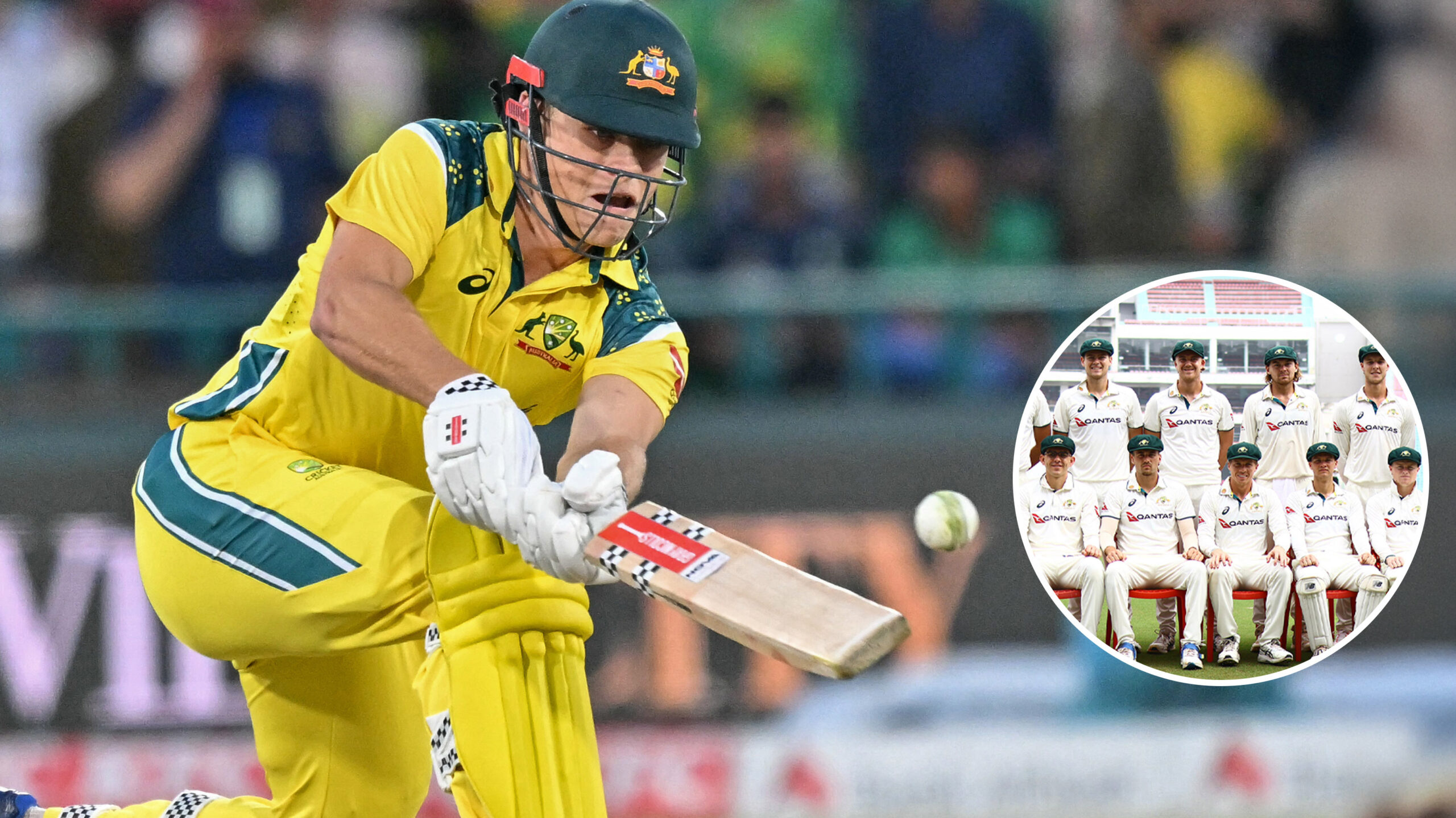
A simmering determination to topple India on their home soil could see Australia send players to the subcontinent for first-class games on a September A tour instead of playing ODIs at venues for next year’s World Cup.
With the average age of the 13-player squad for next month’s two-Test series against Bangladesh climbing above 33, selection boss George Bailey admitted there are parallel moves in motion to prepare a younger crop for the Border-Gavaskar Trophy tour beginning in January 2027.
“Repeat entries into India” is the buzz phrase for Bailey’s panel which is eager to ensure their emerging players are not thrown into the deep end if they are required for Australia’s first five-Test series in India since the 1970s.
The likes of Cooper Connolly, Xavier Bartlett and Ollie Peake would all ordinarily be in the mix to play 50-over matches in September against Zimbabwe and South Africa in Harare, Durban, Johannesburg and Potchefstroom.
Those four venues are among the grounds Australia could expect to see again when they defend their ODI title in October-November next year for a World Cup being jointly hosted by South Africa, Zimbabwe and Namibia. They shape as valuable matches given Australia’s recent struggles, recently losing back-to-back series in Pakistan and Bangladesh.
But there is a direct overlap between the pair of three-ODI series in Zimbabwe and South Africa and two Australia A four-day games in Puducherry against India A. It marks the second men’s A tour of India in as many years, with coach Tim Paine raving about the benefits of the 2025 tour that also featured a pair of first-class matches.
Bailey indicated some players could feature in both series. There are also three one-day A games in India that overlap with the start of Australia’s three-Test series against the Proteas.
“It’s always a really difficult thing to take an opportunity for someone to play international cricket away from them,” Bailey told reporters on Tuesday.
“But we certainly acknowledge that that’s a really key series for us, that A series. We’re pretty excited about the group that we’re putting together for that and the opportunity over there.
“We’re lucky enough to have a couple of repeat entries into India, so some guys are starting to get some good levels of experience over there. Hopefully when they do get their opportunities to tour there with the national team, that’ll hold them in really good stead.
“That will be a debate – and not trying to get too cute with it – but whether there are some (players) that can come across and play some of the white-ball series potentially in Zimbabwe and South Africa, and then join for part of the India (A) series.
“For some, potentially the India series will be prioritised.
“It’s actually been really fun to think about and work through to make sure that we strike the right balance where guys are continuing to build out their international experience, but also getting the opportunity to make sure they do get a bit of a look at some foreign conditions.
“Particularly for those ones that are in the mix for touring India in January and February for that that Test series, there’s certainly half an eye on that as well.”
Jake Weatherald, the incumbent Test opener, is another with minimal experience on the subcontinent who could be a candidate to play in the A games given he is not in the white-ball frame for Australia.
The 31-year-old has however done his own intensive training blocks in India, and planned to go again earlier this year before he took up a county deal with Leicestershire.
There are some Test players who have more playing experience there. Michael Neser and Brendan Doggett both played A matches in Alur and Bengaluru in 2018, while that pair have also carried the drinks on Test tours to the subcontinent.
Others currently in the Test frame like Sam Konstas, Campbell Kellaway, Nathan McSweeney, Corey Rocchiccioli and Fergus O’Neill went on last year’s A tour, which proved an invaluable introduction to many of the younger tourists as to how brutal long-form cricket can be in India.
The home side, led by Test veterans KL Rahul and Mohammad Siraj, overturned a 226-run first-innings deficit in the second match in Lucknow to beat a less experienced Australian group.
Bailey meanwhile indicated his panel was not naive as to the increased potential for injuries to their ageing side.
“Fully prepared that … I don’t think the XI will be the same across each of the next 21 Tests,” said Bailey. “There’ll be changes, and some of them will be (when) our hand will be forced through that period as well.”
Next year’s India trip will come during the tightest squeeze of Australia’s Test-heavy schedule. They will head there on the back of a home season that has them playing four Tests against New Zealand with no significant breaks. Including the 150th Test at the MCG against England, the Aussies will play nine Tests in 13 weeks between early-December and mid-March.
But while plenty could change between now and the Border-Gavaskar Trophy series opener in Nagpur, Australia will be confident of taking a more rounded squad to India than they did for their 1-2 series defeat in 2023.
The loss of Usman Khawaja is significant given his late-career improvements against spin. But Steve Smith, who Bailey suggested was “as invigorated” as he’d seen him ahead of Australia’s mammoth 20-Test, 12-month stretch, should have more credentialed subcontinental batting sidekicks in the form of Travis Head and Alex Carey.
Todd Murphy and Matthew Kuhnemann, the latter having taken 16 wickets in two Tests in Sri Lanka last year, performed admirably as international greenhorns in 2023. Four years on, the pair should be stronger spin options alongside Nathan Lyon, who might be Australia’s most irreplaceable player for the tour.
Questions on the durability of their crop of fast bowlers in their mid-to-late thirties will be less of a factor if Australia follow their recent trend of playing two or even three spinners in Asia.
Bailey suggested there was an overriding desire for Pat Cummins’ group to notch long-awaited series wins both in India and England next year, which remains a feat last achieved by the legendary teams of the late-1990s and 2000s.
“It’s another chance, isn’t it?” said Bailey, who was also at the helm of the selection panel when the Aussies fell short in India and England in 2023. “No two series will be the same, but there will be moments out of those series where they look back and wish that things could have gone differently.
“But they’ll also be great things that they would have learnt out of that. I know everyone fixates on the age, but in terms of the actual growth of the guys, they constantly want to learn, they’re constantly trying to get better.
“They’re constantly asking questions, particularly around some of those places that do provide different challenges around how they can be better and how they can make the entire team better the next time that we get that opportunity.
“All of that builds to something that – it’s going to be a challenge – but it’s going to be a really incredible, exciting 18 months.”
NRMA Insurance Bangladesh Test series
First Test: August 13-17, Marrara Stadium Darwin, 10am (local)
Second Test: August 22-26, Great Barrier Reef Arena, Mackay, 10am (local)
Australia squad: Pat Cummins (c), Scott Boland, Alex Carey, Cameron Green, Josh Hazlewood, Travis Head, Josh Inglis, Marnus Labuschagne, Nathan Lyon, Steve Smith, Mitchell Starc, Jake Weatherald, Beau Webster
