

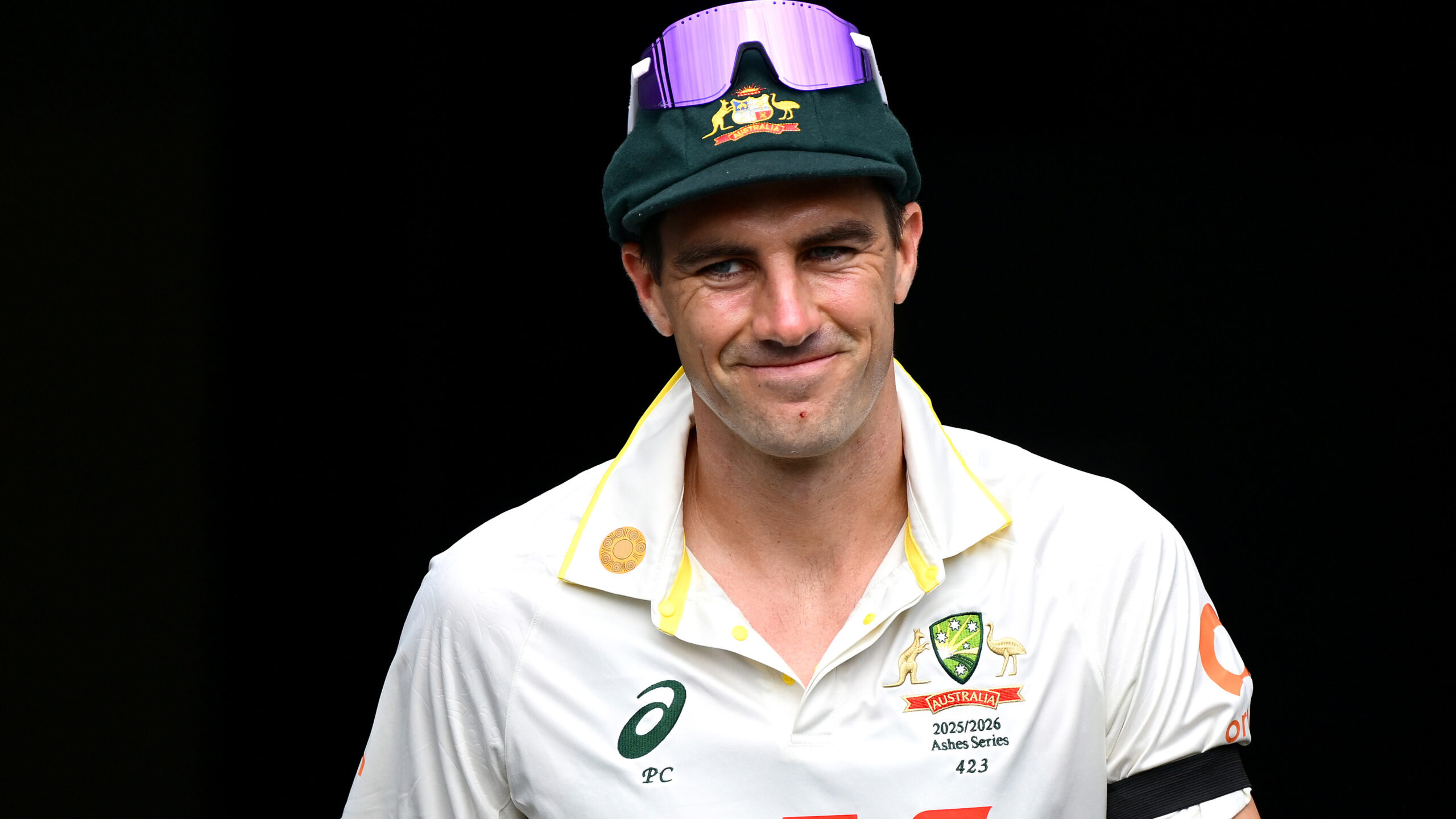
An unprecedented Test schedule looms for Pat Cummins’ side
Australia’s formidable but ageing Test side will, beginning next home summer, embark on arguably the most intense run of matches in the men’s team’s history.
Cricket Australia today revealed the full schedule for its 2026-27 home season, which commences in August in the country’s north (for two Tests against Bangladesh) and concludes with a showpiece day-night spectacle at the MCG (the 150th anniversary Test against England).
While the seven-month window of men’s and women’s international cricket is as long as it’s ever been, the men’s side’s run of 10 Tests in 14 weeks between early-December and mid-March shapes as the most taxing fixture ever handed to an Australian team.
The home series against New Zealand has been squeezed into a window barely longer than four weeks, believed to be the tightest Test campaign ever scheduled on these shores.
Given Australia’s Test tour of South Africa later this year runs until the end of October, before England visit for an eight-game white-ball series through November, the hands of CA’s scheduling boss Peter Roach were effectively tied.
There was also a hard stop on Australia’s Test summer after the traditional New Year’s match in Sydney given the ensuing five-Test tour of India is expected to begin around a fortnight later in mid- or late-January. The BCCI is yet to confirm the schedule.
That Border-Gavaskar Trophy tour, a final frontier for the likes of Cummins, Steve Smith, Mitchell Starc, Josh Hazlewood and Nathan Lyon who have never won a series in India, will also be a quick-fire campaign given CA’s anniversary Test begins back in Melbourne on March 11.
It’s a brutal run that will rule out Test stars from playing any part in the summer’s KFC BBL.
Sound management of Australia’s bowling stocks shapes as priority No.1 for coach Andrew McDonald and selection chief George Bailey.
The call to hold back all three of Starc, Cummins and Hazlewood from at least the first few rounds of the soon-to-begin IPL shows CA is wary of getting their trio to the finishing line of the intense ’26-27 run.
Starc, the oldest of the trio at 36, exhibited his remarkable durability by playing all five Ashes Tests this summer gone, as did Test specialist Scott Boland, who turns 37 next month. Michael Neser, 36 next week, also had a standout campaign.
Cummins, 32, however has played just one match in nine months – bowling Australia to the urn-clinching win in Adelaide in December – while Hazlewood, 35, has not played at all since November.
Lyon, 38, is currently recovering from his second major soft-tissue injury in the space of two-and-a-half years.
There will be some respite for the fast bowlers in India given there will likely be room for only one or two quicks in the Australia XI on spin-friendly wickets, but Lyon’s involvement will be vital to their chances there.
And it seems certain the likes of Jhye Richardson, Brendan Doggett and Lance Morris, and others, will get ample opportunity during the overall run of 20 Tests (21 if they make the World Test Championship final) Australia will play between the start of the Bangladesh series and the end of the 2027 Ashes.
Australia’s bumper Test schedule
August: Two Tests v Bangladesh (home)
October: Three Tests v South Africa (away)
December-January: Four Tests v New Zealand (home)
January-March: Five Tests v India (away)
March 11-15: 150th year anniversary Test v England (home)
June: WTC Final, if qualified (neutral, England)
June-August: Five Tests v England (away)
Australia have in some respects been victims of their own success in finding the group of players below their main stars have little Test experience.
The resilience and dominance of Starc, Cummins, Hazlewood, Lyon, and more recently Boland, has effectively shut out newcomers to the bowling attack until the recent Ashes series.
While less productive, the batting group has been also been relatively stable.
The newcomers will be as prepared as they can be; a second Australia A tour of India in the space of 12 months looks set to be held in September-October, mirroring the successful A trip there in the same window last year.
Former Test captain Tim Paine coached the side and raved of the benefits of the A program that has been revived in recent years following the pandemic.
It also seems likely a host of fresh faces will be seen in Australia’s white-ball teams for back-to-back tours of Pakistan and Bangladesh in late-May and early-June, especially given the ODIs in Pakistan could clash with the end of the IPL.
Likewise for more ODIs in southern Africa later this year, with South Africa confirming they will host the Aussies for three 50-over games in September, which is expected to follow another three-ODI series in Zimbabwe.
Those will form important preparation for the late-2027 ODI World Cup to be hosted by those two countries and Namibia, where champions Australia will be defending the title they won in Ahmedabad in 2023.
